


Listen to the article
Fact vs. Fiction: This Week’s Top Misinformation Debunked
A surge of misinformation followed the Bihar Assembly election results this week, alongside several fabricated claims involving prominent public figures. As the National Democratic Alliance (NDA) secured a decisive victory in Bihar, social media platforms became flooded with manipulated content aimed at distorting public perception.
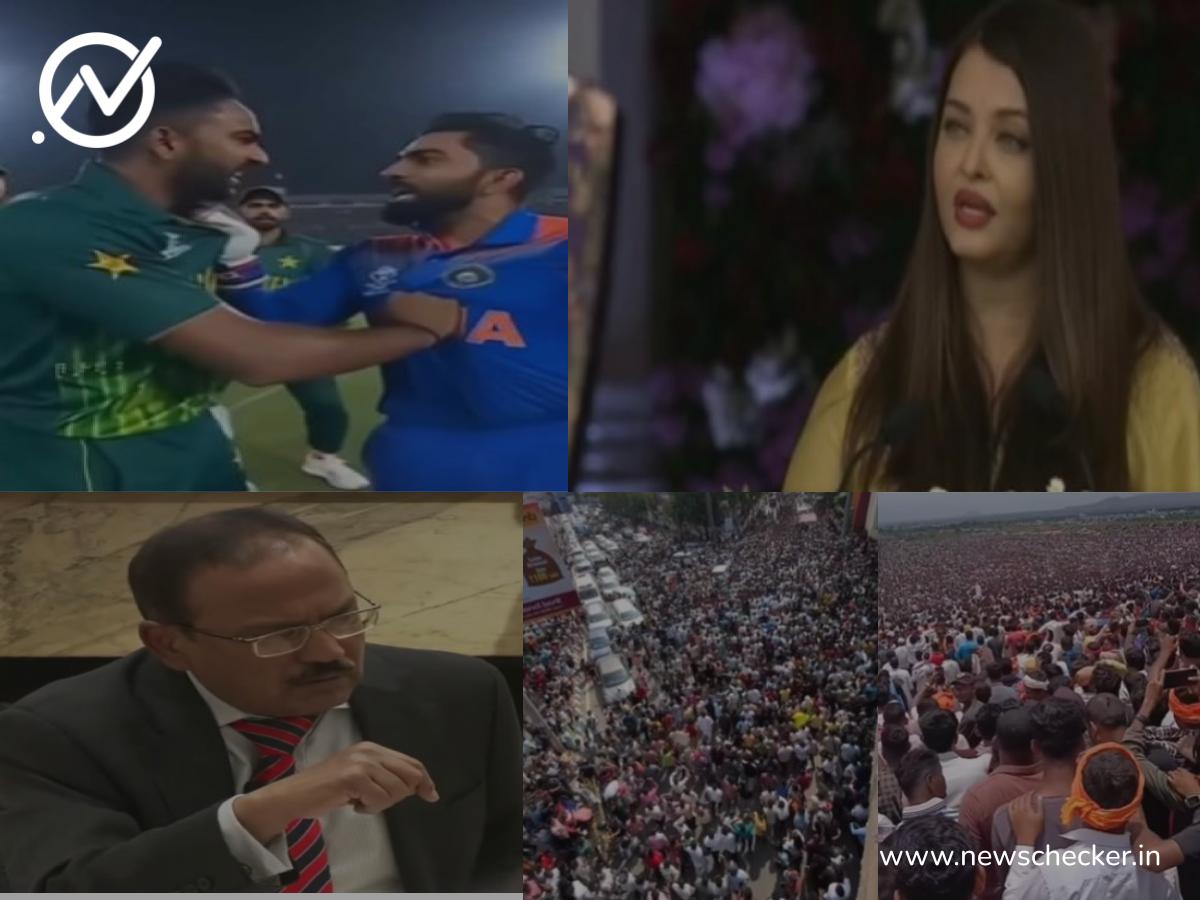
In the aftermath of the NDA’s sweeping win in Bihar, multiple videos allegedly depicting mass protests against the election results circulated widely across social media platforms. Fact-checkers investigating these clips discovered they were actually old footage, entirely unrelated to the recent Bihar polls. The videos appear to have been deliberately mislabeled to create a false impression of political unrest following the election results.
The spread of such misinformation comes at a sensitive time when the NDA coalition, led by the Bharatiya Janata Party (BJP), has significantly strengthened its political foothold in the eastern state. Political analysts note this pattern of sharing misleading content often intensifies following decisive electoral outcomes.
In another instance of false information, a CNN-News18 video report claimed National Security Advisor Ajit Doval had issued a “strong and unequivocal denial” regarding a video that allegedly showed him stating “more Hindus are attracted to ISIS than Muslims.” Investigation revealed this claim to be entirely fabricated. This type of misinformation targeting high-ranking security officials poses particular concerns as it could potentially impact national security perceptions.
Religious tensions were further exploited through a viral social media message falsely claiming that the National Investigation Agency (NIA) had issued helpline numbers specifically for reporting “suspicious Muslims.” The fabricated message encouraged people to report activities ranging from alleged “terrorist plots” to “love jihad,” “shrine construction,” and even certain social media posts. Authorities have confirmed no such directive exists, and the claim appears designed to heighten communal divisions.
The entertainment industry also became a target for misinformation, with a manipulated video showing actor Aishwarya Rai supposedly questioning Prime Minister Narendra Modi about India’s military engagement with Pakistan. Fact-checkers determined the footage was doctored, likely using deepfake technology that has become increasingly sophisticated and concerning for information integrity.
Sports was not spared either, as an artificial intelligence-generated video purporting to show Indian and Pakistani cricket players engaging in a physical altercation after a match in Sharjah gained significant traction online. The 15-second clip was completely fabricated, highlighting how AI tools are now being deployed to create convincing but entirely fictional content that can inflame nationalist sentiments.
The rise in sophisticated misinformation presents growing challenges for media literacy. Digital manipulation techniques have advanced to a point where distinguishing authentic content from fabrication requires increasing vigilance from both media consumers and verification experts.
Media analysts point out that politically and emotionally charged topics — particularly those involving elections, national security, religious communities, and India-Pakistan relations — remain the most fertile ground for misinformation campaigns. These false narratives often achieve rapid virality by exploiting existing social tensions and public concerns.
As digital literacy initiatives struggle to keep pace with evolving deception technologies, fact-checking organizations continue to play a critical role in identifying and debunking false claims before they can significantly impact public discourse. However, the speed at which misinformation spreads often outpaces verification efforts, highlighting the need for more robust detection systems and greater public awareness.
Fact Checker
Verify the accuracy of this article using The Disinformation Commission analysis and real-time sources.

14 Comments
This is a timely and important piece on the dangers of misinformation. Kudos to the fact-checkers for their diligent work in debunking these false claims.
Yes, the fact-checking efforts are commendable. Maintaining the integrity of the democratic process should be a top priority for all stakeholders.
Interesting to see the efforts to debunk misinformation around the Bihar elections. It’s crucial that facts and truth prevail, especially in sensitive political contexts.
Absolutely. Spreading false narratives can have serious consequences, so it’s good to see fact-checkers staying on top of these issues.
The article raises important points about the potential consequences of political misinformation. Fact-based reporting and public awareness are essential to combat the spread of these false narratives.
Absolutely. It’s crucial that citizens have access to accurate, reliable information to make informed decisions, especially around critical electoral processes.
It’s concerning to see the pattern of misleading content intensifying after decisive electoral outcomes. This highlights the need for ongoing vigilance and fact-checking, even after votes are cast.
Agreed. Maintaining transparency and trust in the democratic process should be a top priority, even in the face of coordinated disinformation campaigns.
The article highlights the sophisticated tactics used to spread misinformation, like mislabeling old footage. It’s a sobering reminder of the need for vigilance and critical thinking when consuming online content.
Agreed. Recognizing the various techniques employed is key to developing more effective counter-strategies and empowering citizens to identify and reject false narratives.
The fabricated claims involving public figures like Aishwarya Rai are particularly concerning. Fact-checking is so important to counter the spread of misinformation.
Agreed. Misleading content about prominent personalities can be especially damaging. Rigorous verification is key to maintaining public trust.
I’m curious to learn more about the specific tactics used to spread this misinformation, like mislabeling old footage. Understanding the methods helps us better identify and address the problem.
Yes, examining the techniques employed is crucial. Analyzing how misinformation is crafted and disseminated can inform more effective counter-strategies.