


Listen to the article
Growing Misinformation on Bioweapons in Congo Threatens Public Health Amid Conflict
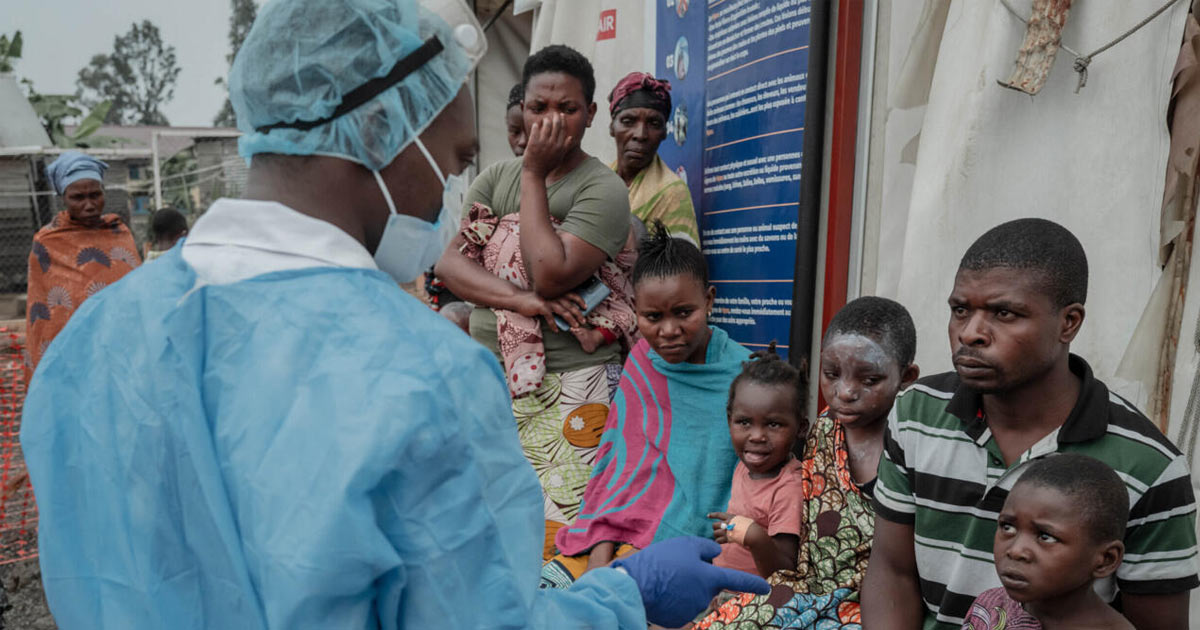
The Democratic Republic of Congo (DRC) has been battling multiple health crises, including what was initially labeled a “mysterious disease” between October and December 2024, later suspected to be malaria worsened by widespread malnutrition. Simultaneously, since October 2025, the country has been grappling with an Ebola outbreak that has strained its already fragile healthcare system.
These public health emergencies have been severely complicated by the ongoing Rwandan-Congo conflict, which has undermined the country’s ability to effectively treat local populations and contain disease outbreaks.
The conflict, which was supposed to end with a peace agreement signed in Washington in June 2025 and brokered by the United States and Qatar, continues to simmer due to deep-seated distrust, ineffective implementation, and the exclusion of the Rwanda-backed M23 rebel group from the peace accord.
This persistent climate of distrust has created fertile ground for misinformation, particularly regarding biological weapons and biosafety in the region. Russia has been actively deploying false narratives about alleged biological weapons in Africa, often pointing fingers at the United States as the culprit.
In October 2023, Russian Lieutenant General Igor Kirillov falsely claimed that the U.S. had relocated its biological weapons research from Ukraine to several African nations, including the DRC. Though these allegations were debunked by the U.S. State Department’s Global Engagement Centre, they represent a dangerous trend where geopolitical rivalries are weaponizing public health information.
“Unsubstantiated claims not only endanger international partnerships in global health but also exacerbate local suspicion, causing vulnerable populations to fear or reject the very institutions trying to protect them,” notes Shravishtha Ajaykumar, Associate Fellow at the Centre for Security, Strategy, and Technology.
The Institut National de Recherche Biomédicale (INRB) in Congo plays a crucial role in the country’s disease surveillance infrastructure, providing early warning mechanisms, tracking outbreaks, developing diagnostic tests, and supporting vaccination efforts. When misinformation campaigns target the legitimacy of such institutions, the consequences can be dire – healthcare workers face attacks, researchers receive threats, and communities withdraw from vital medical services.
The DRC’s experience with Ebola, COVID-19, and Mpox outbreaks has already revealed significant vulnerabilities in its health system. Campaigns that discredit essential medical facilities like the INRB only worsen the situation, putting countless lives at risk.
The problem extends beyond local health impacts to threaten international biosecurity norms. The Biological Weapons Convention (BWC), which prohibits the production and use of biological weapons and promotes transparency in biological science, lacks strong enforcement mechanisms. This creates a significant gap that allows states to make unfounded accusations without consequence, undermining the trust and cooperation that form the foundation of international biosecurity.
Experts suggest a multi-pronged approach to address these challenges. First, the BWC must prioritize accountability, ensuring that public allegations trigger immediate verification and investigation. Second, the convention needs stronger verification mechanisms, possibly including annual inspections or peer reviews to prevent unfounded accusations.
At the domestic level, research facilities handling pathogens should maintain transparency through public safety audits, community engagement initiatives, and open funding streams for global partnerships. Local populations must be informed and consulted on matters that affect them, with governments and health institutions working together to combat misinformation.
Additionally, central governments should invest in science diplomacy, employing trusted communicators to explain the importance of research facilities in accessible terms that emphasize human health and safety.
The spread of false information about bioweapons has exacerbated divisions and endangered public health in the DRC, where years of instability and frequent disease outbreaks have already placed enormous stress on healthcare systems. This misinformation not only threatens lives but also erodes confidence in medical facilities and international partnerships crucial for global biosecurity.
As disinformation increasingly becomes a tool of geopolitical manipulation, both global frameworks like the BWC and national governments must adapt by strengthening verification processes, improving communication, and prioritizing humanitarian principles to ensure that truth and cooperation remain the strongest defenses against both disease outbreaks and deliberate deception.
Fact Checker
Verify the accuracy of this article using The Disinformation Commission analysis and real-time sources.

14 Comments
This is a deeply complex and troubling situation. The ongoing conflict, public health emergencies, and the spread of misinformation create a perfect storm of challenges for the people of the DRC. I hope the international community can step up to support the Congolese government and civil society in restoring stability, trust, and effective disease control measures.
Absolutely. Addressing the root causes of conflict and strengthening local institutions will be crucial to building long-term resilience against future public health crises in the DRC.
This is a troubling situation. Ebola outbreaks are challenging enough without the added complication of misinformation campaigns. I hope the international community can work with the Congolese government to strengthen public health infrastructure and communication efforts to keep people safe.
Absolutely. Restoring trust and credibility in public health institutions will be critical to an effective Ebola response. Transparent, evidence-based messaging from reliable sources is key.
The role of Russia in spreading misinformation about bioweapons is very concerning. Using false narratives to undermine crisis response efforts is a cynical tactic that puts innocent lives at risk. I hope the international community can work to counter these malign influences and support the DRC in its fight against Ebola.
The persistent conflict in the DRC and the spread of misinformation around bioweapons are deeply concerning. These factors are severely undermining the country’s ability to respond to the Ebola outbreak and protect vulnerable populations. I hope the international community can work to support a durable peace agreement and fact-based public health communication to help the people of the DRC during this crisis.
It’s disheartening to see how political tensions and misinformation can exacerbate public health crises. The people of the DRC are already facing immense challenges, and this situation only adds to their burden. I hope the authorities and international organizations can work together to combat these false narratives and ensure an effective Ebola response.
Agreed. Strengthening cooperation and information-sharing between local and international actors will be crucial to overcoming these obstacles and protecting vulnerable communities.
The ongoing conflict in the DRC is deeply concerning, as it undermines the country’s ability to respond to public health emergencies like this Ebola outbreak. I hope the international community can help facilitate a lasting peace agreement to stabilize the region and allow for unimpeded disease control efforts.
The persistent conflict in the DRC is deeply troubling. Ongoing violence and distrust are exacerbating these health challenges and fueling misinformation. I hope the international community can help facilitate a durable peace agreement to stabilize the region and allow for effective disease response.
That’s a good point. Resolving the underlying political tensions will be key to addressing the public health issues. Sustained diplomatic efforts and support for local institutions will be vital.
The role of Russia in spreading false narratives around bioweapons is very concerning. Using misinformation to undermine crisis response efforts is a cynical tactic that puts vulnerable populations at grave risk. International cooperation and fact-based reporting are essential to counter these malign influences.
This is a concerning development. Misinformation about bioweapons and public health emergencies in conflict zones can have severe consequences for local populations. It’s critical that international organizations work to combat these false narratives and support factual, science-based reporting.
Agreed. Reliable information is crucial during public health crises, especially in regions destabilized by conflict. Responsible media coverage and transparency from authorities will be essential to counter dangerous misinformation.