


Listen to the article
Catholic Communicators in India Call for Media Responsibility Amid Rising Tensions
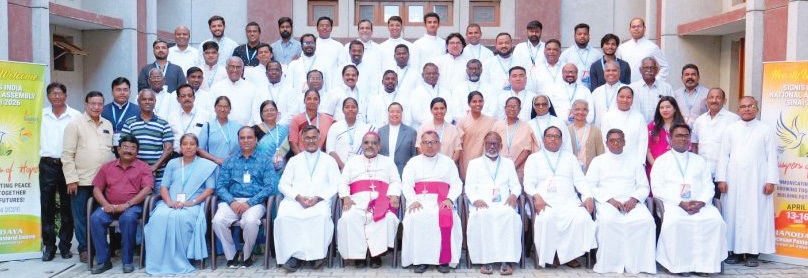
Catholic media professionals across India have issued a strong call for greater responsibility in communications, emphasizing the need to counter rising hostility and misinformation with truth and dialogue. The appeal came during the annual SIGNIS India assembly held at Gianodaya Pastoral Centre from April 13–16, where 72 media professionals from 12 regions gathered under the theme “Whispers of Hope: Communicating Peace, Growing Together, Building Futures.”
The assembly took place against a backdrop of increasing concern about religious tensions in various parts of India. Delegates expressed “deep concern” over escalating violence against marginalized communities, with particular attention to what they described as repeated attacks on Christian minorities and destruction of churches in certain regions of the country.
In their joint statement, the communicators highlighted the growing challenge of misinformation and harmful content spreading across media platforms. They specifically warned about the proliferation of fake news, violent content, and derogatory material that increasingly targets youth audiences.
The meeting responded to the late Pope Francis’ World Communications Day message, using it as a framework to analyze the current media landscape in both the Church and broader Indian society. Participants acknowledged the rapidly expanding role of artificial intelligence in communications while emphasizing the urgent need for enhanced media literacy programs for young people.
“This will enable them to transform confusion into clarity, and challenges into a vision for a purposeful future,” the statement noted, pointing to the importance of guiding digital natives through an increasingly complex information environment.
The assembly reaffirmed the mission of Catholic communicators to promote truth and credibility in reporting. Participants pledged to counter hostility in media with “a message of hope grounded in social reality and personal integrity,” signaling their commitment to responsible journalism that bridges divides rather than widening them.
Interreligious dialogue emerged as a central focus of the discussions. The communicators emphasized that building peace requires active collaboration across faith communities to foster mutual respect and unity—particularly important in India’s diverse religious landscape where tensions between different faith groups have occasionally flared into open conflict.
The gathering also highlighted the crucial role of women in promoting peace and bearing witness to Gospel values. Delegates called for greater platforms and opportunities for women to share stories of resilience and courage, recognizing their often-overlooked contributions to peacebuilding efforts.
As digital technologies continue transforming the media landscape, participants committed to responsible engagement with emerging tools like artificial intelligence. They pledged to use these technologies to amplify marginalized voices while exercising careful discernment about potential ethical concerns.
Drawing inspiration from testimonies shared during the four-day event, SIGNIS India resolved to strengthen three key areas: deepening faith formation among communicators, enhancing lay involvement in dialogue initiatives, and developing comprehensive digital safeguarding policies to protect vulnerable users.
The assembly concluded with a renewed commitment to ethical communication practices. The participants positioned Catholic media professionals as advocates for peace, integrity, and hope in what they described as an increasingly polarized information ecosystem.
This gathering comes at a critical moment for religious minorities in India, where some advocacy groups have reported increasing pressure on non-Hindu faith communities in certain regions. The communicators’ emphasis on truth and dialogue reflects growing concern about the role media plays in either exacerbating or healing social divisions.
The assembly’s recommendations will guide SIGNIS India’s work throughout the coming year as Catholic communicators seek to navigate these complex challenges while maintaining their commitment to truth and peaceful coexistence in one of the world’s most religiously diverse nations.
Fact Checker
Verify the accuracy of this article using The Disinformation Commission analysis and real-time sources.

20 Comments
The Catholic communicators raise valid concerns about the escalating religious tensions and attacks on minority communities in India. Promoting interfaith dialogue and responsible reporting is the way forward.
Indeed, combating misinformation and upholding freedom of religion are critical for social stability and progress. This is a complex issue that requires nuanced, ethical media coverage.
I appreciate the church leaders’ call for greater media responsibility. Reliable, ethical journalism is crucial for a healthy democracy and informed public. Tackling misinformation head-on requires a concerted effort from all stakeholders.
This is a laudable initiative by the Catholic communicators. Combating misinformation and promoting factual, responsible reporting should be a priority for all media professionals, regardless of their religious affiliation.
As an observer, I’m encouraged to see religious leaders taking a proactive stance against the proliferation of harmful content and divisive rhetoric in the media. This is a step in the right direction.
This is a timely and necessary call to action. Media outlets have a moral obligation to report truthfully and sensitively, especially on issues related to religion and minority rights.
This is an important call for truth and responsibility in media amid rising misinformation. Factual, balanced reporting is crucial to counter divisive rhetoric and protect vulnerable communities.
I agree, the rise of fake news and hateful content online is very concerning. Journalists and media professionals have a vital role to play in promoting understanding and social cohesion.
The Catholic communicators’ appeal for truth and responsibility in media is a timely and important one. Fostering a culture of ethical journalism is key to addressing the broader societal challenges.
Absolutely. Accurate, empathetic reporting is essential for building a more just, inclusive, and peaceful society. I hope this call leads to meaningful change in the Indian media landscape.
This is an important issue. The spread of misinformation and disinformation is a serious concern that can have real and harmful impacts, especially on vulnerable communities. I’m glad to see church leaders taking a stand and calling for more responsible communication.
This is a complex issue without easy solutions. I’m curious to learn more about the specific steps the church leaders and media professionals are proposing to tackle misinformation and promote responsible communications. What concrete actions can be taken?
As someone interested in the mining and commodities sector, I’m concerned about how misinformation and disinformation could impact public discourse and decision-making around critical issues like energy transition, resource development, and environmental protection. Clarity and truthfulness are vital.
That’s a good point. Misinformation in this space could lead to poor policy choices and undermine efforts to responsibly manage natural resources and address climate change. Rigorous, fact-based reporting is essential.
As a concerned citizen, I’m glad to see church leaders taking a stand against the spread of harmful rhetoric and fake news. Accurate, fact-based journalism is essential for a healthy democracy.
Absolutely. Responsible communication that fosters mutual understanding is the need of the hour. I hope this appeal leads to meaningful reforms in the Indian media landscape.
Tensions and violence against religious minorities are deeply troubling. Promoting truth, dialogue, and mutual understanding is crucial to addressing these challenges and building a more just, peaceful society. I hope the media can play a constructive role in this effort.
Agreed. The media has a responsibility to report accurately and avoid inflaming tensions. Fact-checking and ethical journalism are essential to countering misinformation and protecting marginalized groups.
The communicators raise valid concerns about the growing problem of misinformation and its impact on vulnerable communities. Promoting media accountability and ethical practices is crucial.
I agree. Fact-checking and balanced reporting are essential to counter the spread of false narratives that can incite violence and intolerance.