


Listen to the article
Soviet Misinformation Campaign Around Chernobyl Revealed in Declassified Stasi Files
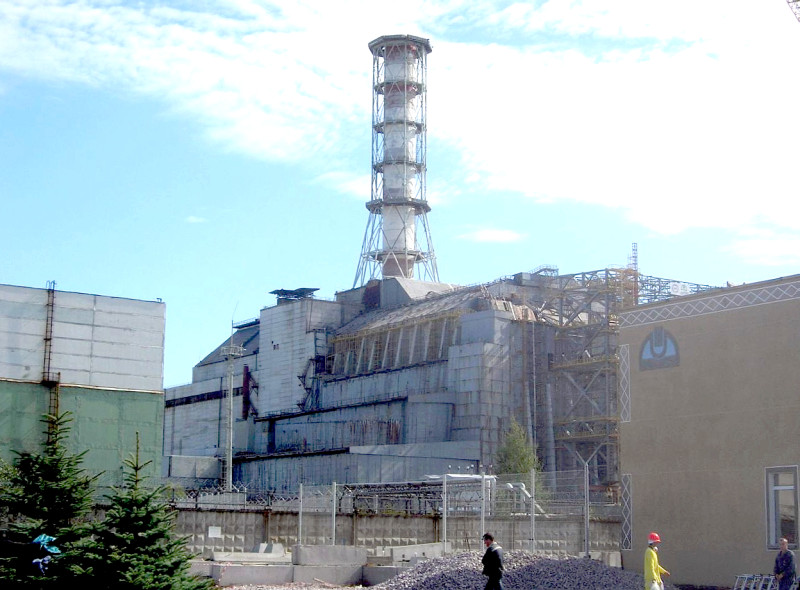
When reactor 4 at the Chernobyl nuclear power plant exploded on April 26, 1986, it wasn’t just radiation that spread across Europe—a calculated campaign of misinformation followed closely behind. Nearly four decades later, declassified East German intelligence files are shedding new light on how Soviet authorities manipulated information about one of history’s worst nuclear disasters.
The explosion, which occurred during a routine safety test at the facility north of Kyiv, Ukraine, released radioactive material hundreds of times greater than the atomic bomb dropped on Hiroshima. While radioactive particles quickly drifted across northern and central Europe, information about the true scale of the disaster moved much more slowly, deliberately impeded by Soviet officials.
For researchers attempting to piece together the full story of Chernobyl’s aftermath, one persistent challenge has been limited access to Soviet records. Many official documents, particularly KGB files, remain securely held in Moscow, accessible only to select Russian government agencies.
However, a significant breakthrough in understanding the Soviet response comes from an unexpected source: the archives of East Germany’s Stasi secret police. Following German reunification in 1991, the government passed legislation allowing the declassification of certain Stasi files, providing researchers with a rare window into communications between Soviet and East German intelligence services.
“Looking at formerly top secret communication between the KGB and Stasi, it is clear that despite publicly insisting everything was under control, both intelligence agencies knew the explosion was absolutely devastating,” explains Lauren Cassidy, a German and Russian Studies lecturer who has spent three years researching Stasi files and misinformation in the former Eastern bloc.
The declassified documents reveal that both agencies maintained detailed records of hospitalizations, casualties, contaminated livestock, damaged crops and radiation levels, yet this information was strictly limited to top officials. Their primary concern wasn’t radiation threatening civilian populations, but rather potential damage to their countries’ reputations.
The documents detail a sophisticated media management strategy orchestrated at the highest levels of Soviet leadership. In one classified document that later became public, Soviet leader Mikhail Gorbachev is recorded instructing officials to claim the power plant “was being renovated at the time, so it doesn’t reflect badly on our reactor equipment.”
Another senior Soviet official, Nikolai Ryzhkov, suggested preparing three different press releases: one for Soviet citizens, another for satellite states, and a third for Western nations. East German Stasi reports aligned with this messaging, instructing officials to reassure the public there was “absolutely no danger” despite internal knowledge to the contrary.
This information control strategy faced a significant challenge in East Germany, where many citizens could access Western television and radio broadcasts. The resulting propaganda wasn’t necessarily designed to completely convince people, but rather to create enough conflicting information to generate confusion, doubt and eventually exhaustion among the population.
The economic implications of the disaster were another major concern for East German authorities. As fear spread about potentially contaminated food products, domestic consumption of milk and produce plummeted. The Stasi’s solution was particularly cynical: increase exports of these goods to West Germany, reasoning that spreading consumption of radioactive products would prevent any one person from consuming unsafe levels.
“The problem for the East Germans was that West Germany quickly amended their regulations for border crossings from East to West,” Cassidy notes. “Vehicles emitting certain levels of radiation were no longer allowed across the border.” In response, lower-ranking Stasi employees were ordered to clean radioactive vehicles themselves, knowingly endangering their health.
The Soviet approach was equally calculated but focused internally—distributing contaminated meat products across “the majority of regions” in the Soviet Union while specifically exempting Moscow from receiving these shipments.
By the 1980s, many Stasi workers had grown disillusioned with their mission. What began in 1950 as an organization staffed by true believers in East Germany’s socialist project had evolved into an employer that mainly offered privileged government treatment and decent wages. This waning ideological commitment helps explain why the Stasi put up minimal resistance when protesters stormed their headquarters in 1990 after the Berlin Wall fell.
The handling of the Chernobyl disaster ultimately contributed significantly to growing opposition to both regimes. For East Germans in particular, the elaborate misinformation campaign reinforced the perception that their government prioritized maintaining appearances over public health and safety, accelerating the erosion of public trust that would help bring down the Iron Curtain just a few years later.
Fact Checker
Verify the accuracy of this article using The Disinformation Commission analysis and real-time sources.

11 Comments
It’s sobering to see how the Soviets actively suppressed information about the true scale of the Chernobyl disaster. These declassified Stasi files offer an important window into that dark chapter of history. Transparency is crucial, especially when it comes to major events with such far-reaching consequences.
Agreed. Uncovering the full truth, even decades later, is essential for understanding the past and ensuring we learn from it. This new information seems like a significant contribution to that process.
Interesting to see how the Soviet authorities tried to control the narrative around Chernobyl. I wonder what other bombshells might be uncovered as more historical records become available. This serves as an important reminder of the need for transparency, even in the face of catastrophic events.
Absolutely. Openness and accountability are critical, especially when it comes to the handling of major disasters with global implications. Hopefully this new information will lead to a fuller, more accurate historical record.
The Chernobyl disaster was a pivotal moment in history, and it’s important that the full truth comes to light, even if it takes years or decades. These declassified Stasi files provide valuable new insights into how the Soviet authorities tried to control the narrative. I’m curious to see what other revelations may emerge as more historical records become available.
The Chernobyl accident was a pivotal moment in history, with far-reaching consequences that are still being grappled with today. I’m glad to see more light being shed on the Soviet coverup through these declassified documents.
Agreed. Transparency around major disasters like this is crucial, both for historical accuracy and to ensure lessons are learned. Hopefully this new information will contribute to a fuller picture of what really happened.
Fascinating to see how the Soviets tried to cover up the true scale of the Chernobyl disaster. Declassified files from the Stasi provide valuable insights into the misinformation campaign. I wonder what other details about the accident’s aftermath will emerge as more records become available.
Yes, access to Soviet records has been a major challenge for researchers. Hopefully this new information will help fill in some of the gaps in our understanding of how the disaster unfolded and was handled at the time.
The Chernobyl disaster was a seminal moment, both in terms of the catastrophic event itself and the Soviet response. These declassified Stasi files provide a valuable new perspective on how the authorities tried to shape the narrative. I’m curious to see what other revelations may emerge as more records become available.
The scale of the Chernobyl disaster and the Soviet response to it is truly sobering. It’s important that the full truth comes to light, even decades later. These declassified Stasi files seem to provide a valuable new window into that dark chapter of history.