


Listen to the article
Bangladesh’s Information Minister Calls for Balanced Media Freedom Amid Digital Challenges
Information and Broadcasting Minister Zahir Uddin Swapon emphasized the need for appropriate checks and balances in media operations, cautioning that “freedom must not descend into anarchy” during a seminar marking World Press Freedom Day on Saturday.
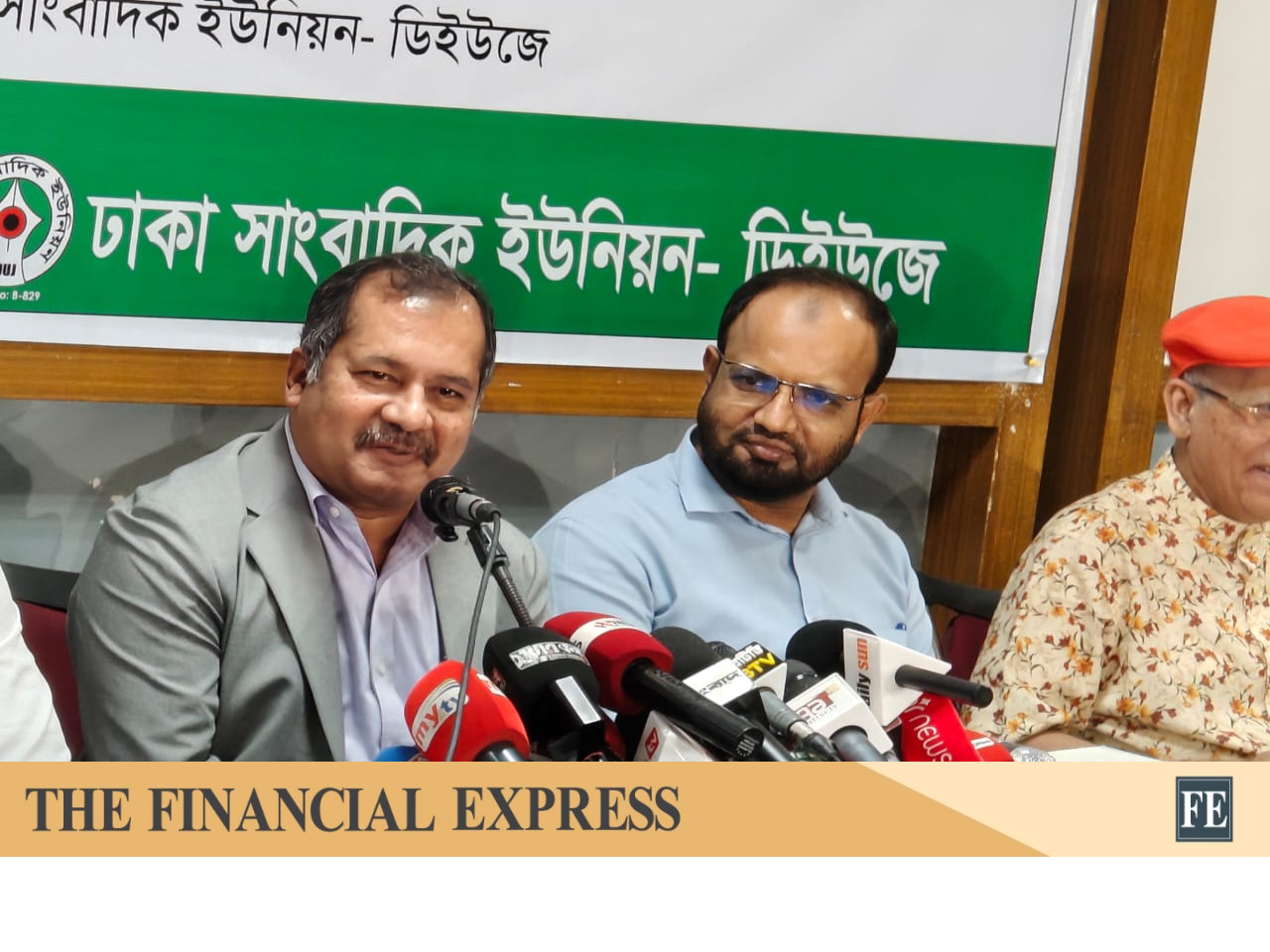
Speaking at an event titled “New Challenges to Independent Media: Misinformation and Our Course of Action,” organized by the Dhaka Union of Journalists (DUJ), Swapon outlined the government’s commitment to combating misinformation through collaborative efforts with all media stakeholders.
“We are trying to identify the problems in the media ecosystem first, just as a physician diagnoses an illness before prescribing medicine,” Swapon told attendees at the gathering chaired by DUJ President Md Shahidul Islam.
The minister identified journalists, media owners, editors, and readers as key stakeholders in Bangladesh’s media landscape. He stressed that a civilized state requires a robust and independent fourth estate, drawing comparisons with Nordic countries that have successfully strengthened their media institutions to enhance accountability across other societal pillars.
Swapon highlighted how the digital revolution has fundamentally altered information dissemination patterns, creating unprecedented challenges for traditional media outlets. He noted that individual content creators and YouTubers now often rival or surpass established media organizations in reach and influence, shifting power dynamics within the information ecosystem.
“False information can spread rapidly through digital platforms and often be presented in misleading ways,” the minister warned, using the analogy of water appearing different through differently colored glasses to illustrate how facts can be manipulated to mislead the public.
The minister also addressed evolving concepts of privacy in the digital era, noting that traditional notions no longer fully apply in a world dominated by social media and widespread digital surveillance. He warned that personal moments can now be leaked and circulated instantly, demonstrating the immense and sometimes destructive power of digital platforms.
DUJ President Shahidul Islam reinforced these concerns, highlighting the historical struggle for press freedom in Bangladesh and warning about the proliferation of misinformation across platforms like Facebook, YouTube, Twitter, and X. He urged citizens to verify information before forming opinions or taking action based on social media content.
“Combating misinformation is a collective responsibility,” Islam stated, while commending Minister Swapon’s approach to these challenges. He expressed optimism that the minister would incorporate public input alongside his expertise to foster a more media-friendly environment in the country.
Bangladesh Federal Union of Journalists (BFUJ) Secretary General Kader Gani Chowdhury presented alarming statistics, citing Rumor Scanner data that identified 837 incidents of misinformation in Bangladesh during the first quarter of 2026, with 41 percent reportedly politically motivated. Facebook remains the primary platform for disseminating false information, accounting for approximately 75 percent of such content.
Chowdhury described misinformation as having evolved beyond a mere digital problem into a comprehensive social, political, and cultural crisis threatening national cohesion. He characterized platforms like Facebook, YouTube, WhatsApp, and TikTok as fertile ground for what he termed “information terrorism.”
Referencing recent political transitions, Chowdhury alleged that under the previous Awami League government, numerous newspapers failed to report truthfully and instead deliberately spread false narratives against opposition voices. He expressed hope that media outlets would operate more responsibly under the current administration.
The seminar, which addressed critical issues facing Bangladesh’s media landscape, also featured remarks from prominent industry figures including Daily Jugantor Editor and poet Abdul Hai Shikder, among others, as the country grapples with striking a balance between press freedom and responsible reporting in an increasingly complex digital information environment.
Fact Checker
Verify the accuracy of this article using The Disinformation Commission analysis and real-time sources.

10 Comments
The minister’s emphasis on identifying the core issues in the media ecosystem is a logical first step. Understanding the unique challenges faced in Bangladesh will be crucial in developing effective solutions.
An independent and robust media is crucial for a healthy democracy. However, the minister raises a valid point about preventing media freedom from descending into anarchy. Striking the right balance requires nuance.
Agreed. Identifying the core issues in the media ecosystem first, as the minister suggests, is a sensible approach before prescribing solutions.
The minister’s comparison to Nordic media models is intriguing. Understanding how they have strengthened their media institutions could provide valuable insights for Bangladesh’s own media landscape.
Comparisons to Nordic media models are interesting, as they seem to have found ways to strengthen media accountability. Curious to learn more about the specific challenges faced in Bangladesh’s media landscape.
An independent and accountable media is essential for a healthy democracy. The minister’s call for balance is understandable, but the challenge will be finding the right approach.
Maintaining the right balance between media freedom and accountability is a delicate challenge. The minister’s call for collaborative efforts to tackle misinformation seems prudent, though the specifics will be key.
The minister’s emphasis on collaborative efforts with all media stakeholders is a prudent approach. Bringing various parties together to find solutions to misinformation could lead to more sustainable outcomes.
Tackling misinformation through collaborative efforts with media stakeholders is a sensible strategy. However, the specifics of how this will be implemented will be key to its success.
Maintaining media freedom while preventing it from descending into anarchy is a delicate balance. The minister’s caution is understandable, but the details of how to achieve this will be crucial.