


Listen to the article
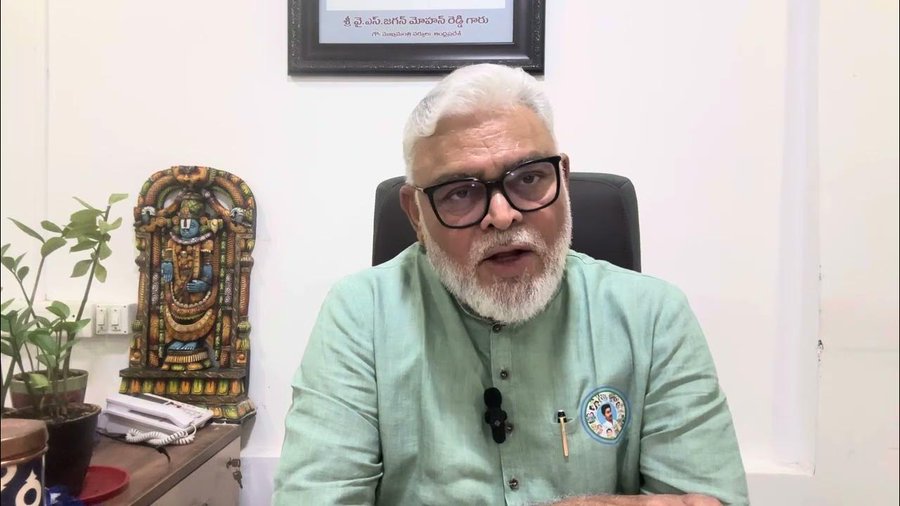
Former minister Ambati Rambabu launched a scathing critique of Andhra Pradesh Chief Minister N. Chandrababu Naidu on Monday, focusing primarily on the administration’s approach to developing Amaravati as the state capital while allegedly neglecting broader development priorities.
Speaking to reporters in Ongole, Rambabu accused Naidu of avoiding direct political engagement and instead resorting to what he described as “character assassination, false cases, and propaganda” to target political opponents. The former minister’s comments come amid growing tension between the ruling coalition and opposition parties in Andhra Pradesh.
“The Chief Minister is deliberately spreading misinformation about development models while refusing to engage in substantive policy debates,” Rambabu said. He specifically mentioned alleged misinformation regarding the proposed MAVIGUN development model, drawing connections to previous controversies that have plagued the state’s governance.
Central to Rambabu’s criticism was the government’s renewed focus on Amaravati, the planned capital city that has become a contentious political issue in Andhra Pradesh since the state’s bifurcation in 2014. Development of Amaravati has faced numerous hurdles, including changes in political leadership, funding challenges, and competing priorities for the state’s resources.
Rambabu questioned the financial viability of committing vast resources to Amaravati, noting that the government has proposed investments worth approximately Rs 75,000 crore without establishing a clear implementation timeline. “Where is the roadmap for these massive investments? How will they be funded, and over what period?” he asked.
The former minister argued that the administration’s singular focus on the capital region is creating regional imbalances in development. He suggested that alternative development approaches that would distribute economic growth more equitably across the state are being ignored in favor of concentrating resources in Amaravati.
According to Rambabu, the emphasis on capital development appears to be coming at the expense of critical welfare schemes. He specifically highlighted reductions in funding for healthcare initiatives like Aarogyasri, which provides medical insurance to lower-income residents, and educational support programs such as fee reimbursement schemes that assist students from economically disadvantaged backgrounds.
“While billions are being earmarked for constructing government buildings and infrastructure in Amaravati, essential social welfare programs that directly impact the lives of ordinary citizens are facing budget cuts,” Rambabu claimed.
The former minister also raised concerns about what he characterized as project cost inflation, suggesting that certain infrastructure projects have seen significant increases in their budgets without corresponding improvements in scope or quality. He specifically mentioned the Rayalaseema Lift Irrigation scheme, claiming the project has suffered from inconsistent policy direction and inadequate funding.
Rambabu’s criticism coincided with Chief Minister Naidu’s birthday, and he used the occasion to call for what he termed a return to “people-centric governance.” He claimed that public dissatisfaction with the current administration is growing due to unfulfilled promises and shifting priorities.
The comments highlight the ongoing political divisions in Andhra Pradesh, where development strategies—particularly regarding the capital city—have become deeply politicized. The debate over Amaravati reflects broader questions about resource allocation, regional development priorities, and governance approaches that have characterized state politics since reorganization.
Neither the Chief Minister’s office nor government representatives had responded to Rambabu’s allegations at the time of reporting. The controversy comes as the state government continues to navigate economic challenges while attempting to accelerate infrastructure development that was delayed during the previous administration.
Fact Checker
Verify the accuracy of this article using The Disinformation Commission analysis and real-time sources.

10 Comments
The debate over Amaravati’s development seems to be a complex political issue in Andhra Pradesh. It would be interesting to understand the different perspectives and rationales behind the government’s and opposition’s positions on this matter.
Allegations of misinformation campaigns are concerning. Factual, transparent discussions on development priorities could help clarify the situation for the public.
This seems to be a politically charged issue, with accusations of misinformation and character assassination on both sides. It would be helpful to get a more balanced perspective on the actual development plans and their potential impacts on the state’s economy and people.
I agree that transparency and open dialogue are important in resolving such complex policy debates. Objective analysis of the different proposals could inform a more constructive discussion.
The former minister’s criticisms of the government’s focus on Amaravati raise some interesting questions about development priorities and resource allocation. It would be valuable to understand the rationale behind the emphasis on the new capital city versus other regional development needs.
Fact-based analysis of the costs, benefits, and trade-offs of different development models could help move the debate in a more constructive direction, beyond just political posturing.
While the article focuses on the political tensions, I’m curious to know more about the technical and economic considerations around the proposed MAVIGUN model and Amaravati’s development. Are there any insights into the potential costs, benefits, and trade-offs involved?
Engaging in substantive policy debates, as the former minister suggests, could shed more light on the merits and drawbacks of the different development approaches being considered.
This appears to be a politically charged issue with both sides making accusations. While I don’t have a strong opinion on the specifics, I believe open and honest dialogue based on objective data and analysis could help resolve the tensions and find the best path forward for the state’s development.
Ultimately, the goal should be to identify policies and plans that truly benefit the people of Andhra Pradesh, regardless of political affiliations. A collaborative, evidence-based approach seems crucial in this case.