


Listen to the article
Tanzania’s Presidential Advisor Warns Against Misinformation Threat to National Peace
As Tanzania navigates a rapidly shifting global landscape marked by evolving security dynamics, political realignments and the growing influence of digital communication, a quiet but consequential threat continues to loom large – misinformation.
Presidential Advisor on Diplomacy, Ambassador Lazaro Nyalandu, has sounded a timely warning: citizens must remain vigilant against false or misleading information, particularly on social media platforms that have increasingly become fertile ground for confusion, tension and at times, unrest.
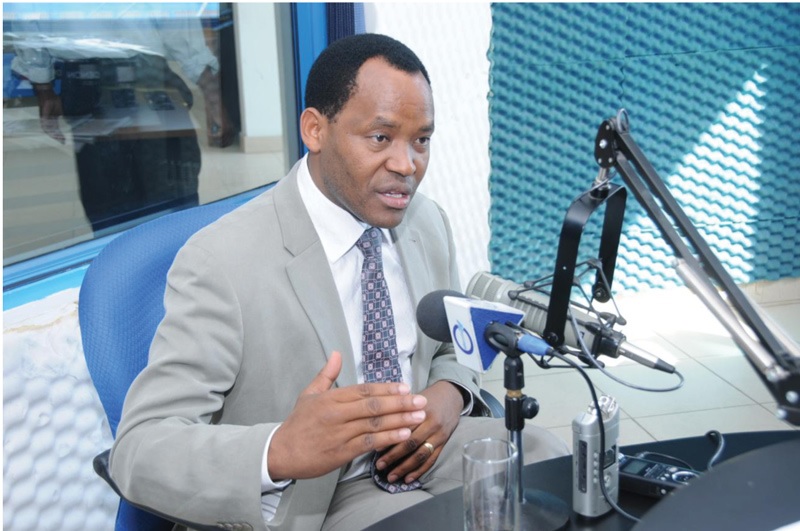
In an exclusive interview, Nyalandu underscored that safeguarding national peace is no longer solely the responsibility of state institutions. Rather, it is a shared duty that requires citizens to critically assess the information they consume and share.
“We are living in an era where information spreads instantly, but not all of it is accurate or harmless,” he noted. “It is essential for citizens to rely on trusted sources and to work closely with institutions that are mandated to ensure stability.”
Nyalandu’s remarks come at a time when the world is witnessing profound changes across security, diplomacy and governance. From geopolitical tensions to digital warfare and information manipulation, nations are increasingly being tested not just by traditional threats, but by invisible ones that spread through screens and networks.
Despite these pressures, Tanzania has continued to stand out as a beacon of peace and stability in East Africa. According to Nyalandu, this is no accident – it is the result of deliberate policies, strong institutions and a national culture that values unity.
“Tanzania prides itself on its long-standing peace,” he said. “But peace is not self-sustaining. It requires continuous effort, adaptation and vigilance, especially in today’s complex environment.”
The government, he explained, has been proactive in reinforcing security frameworks and modernising institutions to respond to emerging challenges. This includes enhancing the professionalism of defense and security agencies, ensuring they operate within the law while effectively protecting citizens and their property.
Equally important, Nyalandu emphasized, is leadership. The direction provided by President Dr. Samia Suluhu Hassan reflects a strong commitment to creating a safe, just and inclusive society.
“Leadership sets the tone,” Nyalandu observed. “When the highest office prioritizes accountability, fairness and security, it strengthens public confidence and institutional integrity.”
A notable example of this commitment, he said, is the government’s handling of sensitive national issues through independent inquiry. He pointed to the report of the Judge Chande Commission as a critical step toward transparency. The commission’s findings helped clarify events that had sparked public debate, offering citizens a clearer understanding of how challenges were addressed.
By allowing an independent investigation and making the results public, the government demonstrated a willingness to self-examine—an approach that reinforces both domestic and international trust.
“Transparency is not a weakness,” he said. “It is a strength. It shows that a government is confident enough to confront issues openly and take corrective action where necessary.”
While reaffirming the importance of civil liberties, Nyalandu also issued a caution regarding their misuse. The right to peaceful assembly, he noted, is protected by law—but it must not be distorted into actions that incite violence or threaten public safety.
“There is a clear distinction between peaceful expression and actions that endanger lives and property,” he said. “Understanding that boundary is essential for maintaining order.”
This perspective highlights a broader principle: rights and responsibilities must go hand in hand. A society that values freedom must also cultivate discipline and respect for the rule of law.
At the heart of Tanzania’s resilience, Nyalandu stressed, is its tradition of unity. In a nation rich with diverse political views, cultures and ideologies, differences should not become fault lines. Instead, they should serve as a foundation for constructive dialogue and innovation.
“Diversity should strengthen us, not divide us,” he said. “When citizens engage in respectful debate, they contribute to a more dynamic and progressive nation.”
As Tanzania looks to the future, the message is clear: peace is a shared achievement, but also a shared responsibility. The foundations of unity, solidarity and stability carefully built over decades must be protected by every generation.
Nyalandu’s call is ultimately a call for awareness: to question what we read, to verify before we share, and to act with a sense of national duty. In an age where a single post can influence thousands, the power each citizen holds is immense.
“The responsibility lies with all of us,” he concluded. “Government plays its role, but the true guardians of peace are the people themselves.”
Fact Checker
Verify the accuracy of this article using The Disinformation Commission analysis and real-time sources.

11 Comments
This is a timely warning from the Tanzanian ambassador. Misinformation is a complex issue that requires a multi-pronged approach, including strengthening information verification processes and promoting critical thinking among the public.
Well said. Partnerships between government, media, and civil society will be crucial in tackling this challenge effectively.
The ambassador makes a valid point. In today’s interconnected world, the rapid spread of misinformation on social media can have real-world consequences for societal cohesion. This is a challenge governments and citizens must work together to address.
Absolutely. Fostering media literacy and digital citizenship skills is key to combating the misinformation problem.
The ambassador’s warning about the threat of misinformation is well-founded. In the digital age, the rapid spread of false or misleading information can indeed pose a serious risk to social cohesion and national unity. This is an issue that requires a multi-stakeholder approach.
The ambassador’s concerns about the threat of misinformation to national unity are valid. In an era of digital information overload, citizens must be discerning consumers of news and content. Fact-checking and media literacy education are essential.
This is an important warning from the Tanzanian ambassador. Misinformation can indeed pose a serious threat to national unity and stability, especially in the digital age. Citizens must be vigilant and rely on trusted sources to stay informed.
Agreed. It’s critical that people think critically about the information they consume online and fact-check claims before sharing them further.
This is a concerning issue that the Tanzanian ambassador has highlighted. Misinformation can have far-reaching consequences for national unity and stability. Promoting trusted sources of information and critical thinking skills among citizens is crucial.
Absolutely. Governments, media, and civil society must collaborate to address this complex challenge effectively.
The ambassador raises an important point. Misinformation can indeed undermine social cohesion and stability, especially in today’s highly connected world. Strengthening digital citizenship and media literacy skills should be a priority for governments and communities.