


Listen to the article
# # # #
Iran’s Parliament Speaker Denies US Negotiations Amid Regional Tensions
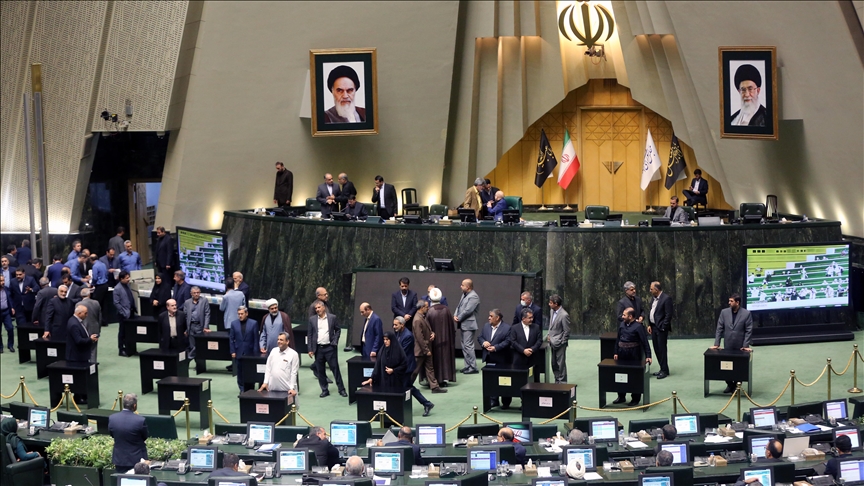
Iran’s Parliament Speaker Mohammad Bagher Qalibaf forcefully rejected reports of negotiations with the United States on Monday, characterizing such claims as “fake news” designed to manipulate financial and oil markets.
“No negotiations have been held with the United States. These fake news reports are meant to manipulate financial and oil markets and to escape the quagmire the US and Israel are stuck in,” Qalibaf stated in a post on X, the social media platform formerly known as Twitter.
The parliamentary leader’s statement directly contradicts earlier comments from US President Donald Trump, who had claimed he ordered a five-day postponement of planned strikes against Iranian energy infrastructure due to what he described as “very good and productive” talks with Tehran over the previous 48 hours.
Qalibaf emphasized that Iranian officials remain unified in their position, stating that the Iranian people demand a “complete and regret-inducing punishment of aggressors.” He added that all government officials stand firmly behind both the country’s leadership and the public until that objective is achieved.
The conflicting narratives emerge against the backdrop of the most severe Middle East conflict in decades. Tensions dramatically escalated on February 28 when the United States and Israel launched a joint military offensive against Iran, resulting in over 1,340 fatalities, including Iran’s then-Supreme Leader Ali Khamenei.
In response, Tehran has conducted multiple drone and missile strikes targeting Israel and several countries hosting American military installations, including Jordan, Iraq, and various Gulf states. These retaliatory actions have caused significant casualties and infrastructure damage while creating ripple effects across global markets and disrupting international aviation.
The current crisis represents the most direct confrontation between Iran and the US-Israel alliance in years, with implications extending far beyond the immediate region. Oil prices have exhibited extreme volatility in recent weeks, with benchmark crude prices fluctuating by as much as 8% in single trading sessions as markets react to each military development and political statement.
Energy analysts suggest that any significant military action against Iran’s energy infrastructure could remove between 2 and 3 million barrels of oil per day from global markets, potentially driving prices above $120 per barrel. Iran currently produces approximately 3.2 million barrels daily, making it the seventh-largest oil producer worldwide.
Regional security experts note that the information war being waged through public statements may be as strategically important as the physical conflict. Claims and counterclaims about negotiations serve multiple purposes: potentially dividing domestic constituencies, influencing market behavior, and creating diplomatic leverage.
“Public denials of talks don’t necessarily mean communications aren’t happening through back channels,” explained Ellie Geranmayeh, senior policy fellow at the European Council on Foreign Relations. “During periods of acute crisis, maintaining plausible deniability while exploring de-escalation options is standard diplomatic practice.”
The European Union and several regional powers, including Qatar and Oman, have reportedly been working to establish dialogue channels between the conflicting parties, though no breakthrough has been publicly acknowledged.
Meanwhile, civilian populations throughout the region continue bearing the conflict’s burden. International humanitarian organizations report severe disruptions to essential services in areas affected by military operations, with limited access to medical supplies and food in some locations.
As the situation remains fluid, global powers are closely monitoring developments, with particular concern about the conflict potentially expanding to include additional regional actors or targeting critical energy infrastructure that could trigger a worldwide economic crisis.
# # # #
Fact Checker
Verify the accuracy of this article using The Disinformation Commission analysis and real-time sources.

18 Comments
This seems like a complex geopolitical situation with high stakes on all sides. It will be interesting to see how the negotiations unfold, if any, and whether the energy and financial markets remain volatile as a result.
Agreed, the rhetoric seems to be escalating. I hope the parties can find a diplomatic resolution to ease tensions in the region.
The claims of ‘fake news’ and market manipulation are concerning. Reliable, transparent communication from all parties involved will be essential to maintain stability and avoid further escalation of tensions.
I agree, the language being used is quite charged. Cooler heads and a focus on diplomatic solutions will be needed to de-escalate the situation.
This situation underscores the importance of verifying information, especially when it comes to sensitive geopolitical and energy-related issues. Maintaining market stability and avoiding escalation should be a priority.
This news highlights the challenges of navigating geopolitical tensions and their impact on energy markets. It will be important to closely monitor developments and seek reliable information to understand the true nature of any negotiations or agreements.
Absolutely. Misinformation and conflicting narratives can have serious consequences, both in the financial markets and on the ground. Objective, fact-based reporting is crucial.
It’s concerning to see the conflicting narratives around potential negotiations. Clear and consistent communication will be crucial to avoid further market instability and potential military escalation.
Exactly, transparency and good-faith efforts at diplomacy are needed to de-escalate the situation. Misinformation and posturing could have serious consequences.
Interesting to see the conflicting narratives around potential US-Iran negotiations. Reliable information and transparency will be crucial to avoid further market volatility and geopolitical tensions.
Absolutely, misinformation and mixed signals could have serious repercussions. Diplomacy and open communication are needed to de-escalate the situation.
This is a complex geopolitical issue with significant implications for energy markets and regional security. Careful analysis of the facts and balanced perspectives from all sides will be crucial going forward.
Well said. Simplistic narratives or partisan posturing won’t help resolve this. A nuanced, evidence-based approach is needed to navigate these challenging waters.
The contradictory statements regarding potential US-Iran negotiations are concerning. Clarity and consistency from all parties involved will be critical to prevent further market disruptions and regional instability.
I agree, the lack of unified messaging is troubling. Diplomacy and transparency will be key to finding a peaceful resolution to this complex situation.
This news highlights the complexities of geopolitics and the energy sector. It will be important to monitor developments closely, as the potential impacts on commodity markets and global security could be significant.
Yes, the stakes are high. I hope the various parties can find common ground and work towards a peaceful resolution that addresses the underlying issues.
The conflicting claims around US-Iran negotiations are concerning. Maintaining open, honest communication and a focus on diplomacy will be essential to prevent further market volatility and potential military escalation.