


Listen to the article
In a sweeping global assessment released Tuesday, human rights group Freedom House warns that governments are increasingly manipulating social media to undermine democratic processes, contributing to a troubling decline in internet freedom worldwide.
The organization’s annual “Freedom On The Net 2017” report found that online manipulation and disinformation tactics played a significant role in elections across at least 18 countries over the past year, including Russia’s documented interference in the U.S. electoral process.
“The use of paid commentators and political bots to spread government propaganda was pioneered by China and Russia but has now gone global,” said Michael J. Abramowitz, president of the U.S.-based Freedom House. “The effects of these rapidly spreading techniques on democracy and civic activism are potentially devastating.”
The comprehensive 44-page assessment evaluated internet freedom in 65 countries, representing 87 percent of global internet users. According to the findings, less than one-quarter of internet users in the surveyed nations have access to a web environment that can be considered “free” – defined as having no major obstacles to access, onerous content restrictions, or serious violations of user rights.
China ranked as the worst offender in the assessment, followed by Ethiopia and Syria. While Iran and Uzbekistan showed modest improvements, they still placed among the six worst-scoring nations, ranking fourth and sixth respectively.
Russia, which placed 15th-worst, saw its internet freedom further decline due to what the report describes as a “hypocritical link between state propaganda and legal restrictions on the media.” Meanwhile, countries like Belarus (ranked 18th-worst) actively disrupted mobile connectivity to prevent live-streamed footage from reaching wider audiences during periods of civil unrest.
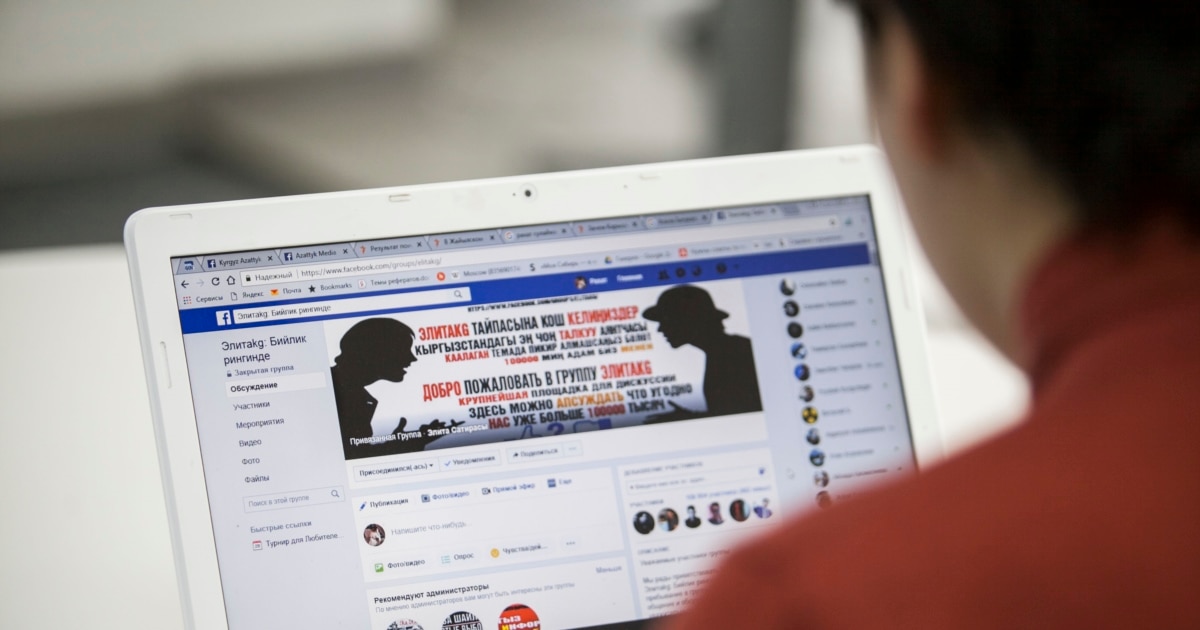
“Governments are now using social media to suppress dissent and advance an antidemocratic agenda,” explained Sanja Kelly, director of the Freedom on the Net project. “Not only is this manipulation difficult to detect, it is more difficult to combat than other types of censorship, such as website blocking, because it’s dispersed and because of the sheer number of people and bots deployed to do it.”
Kelly noted that this manufactured grassroots support creates a dangerous dynamic: “The fabrication of grassroots support for government policies on social media creates a closed loop in which the regime essentially endorses itself, leaving independent groups and ordinary citizens on the outside.”
The report highlights that while most government manipulation targets domestic public opinion, Russia’s campaign to influence the November 2016 U.S. presidential election exemplifies efforts with significant cross-border impact. Russian operatives systematically spread fabricated news stories and divisive content designed to affect American voters and polarize public discourse.
In response to similar tactics, Ukrainian authorities blocked Russia-based online services, including the country’s most widely used social network and search engine, after Russian agents flooded these platforms with manufactured narratives advancing Kremlin interests.
The report documents a worrying trend: “Governments in a total of 30 countries deployed some form of manipulation to distort online information, up from 23 the previous year.” These manipulation efforts employed various techniques including paid commentators, automated bots, false news sites, and state-sponsored propaganda outlets to artificially inflate popular support for government positions.
At the opposite end of the spectrum, Iceland, Estonia, and Canada earned the highest scores for internet freedom. The United States placed fifth overall, though its score declined due to what the report identified as the proliferation of fake news and “aggressive trolling” of journalists both during and after the presidential election.
Freedom House’s findings suggest that as digital platforms have become central to civic discourse, governments worldwide are adapting their control mechanisms, moving beyond traditional censorship toward more sophisticated information manipulation strategies that threaten the very foundations of democratic debate and informed citizenship.
Fact Checker
Verify the accuracy of this article using The Disinformation Commission analysis and real-time sources.

5 Comments
This report paints a concerning picture of the growing threat of state-sponsored social media manipulation to democratic processes worldwide. It’s a sobering reminder of the need for greater transparency and accountability around online political influence campaigns.
Agreed, the proliferation of disinformation tactics like coordinated bot networks is a major challenge that undermines public discourse and trust. Policymakers need to find ways to address this while upholding free speech principles.
The report’s findings on China and Russia pioneering these techniques, which have now spread globally, is very concerning. It highlights the need for robust journalism and fact-checking to combat the deluge of online disinformation.
Interesting to see the scale of the problem quantified – 18 countries impacted by these tactics in the past year alone. I wonder what specific measures could be taken to counter this threat to democratic integrity?
That’s a great question. Greater platform transparency, user education, and international cooperation on policy responses could all be part of the solution. But it’s a complex issue with no easy fixes.