


Listen to the article
SCOTUSblog Co-Founder’s Defense Rests in Tax Fraud Trial
SCOTUSblog co-founder Tom Goldstein concluded his defense Tuesday in a lengthy tax fraud trial, with final testimony focusing on what his attorneys characterize as missing evidence from his accounting firm. The jury in the federal case could begin deliberations as early as Wednesday afternoon after six weeks of proceedings.
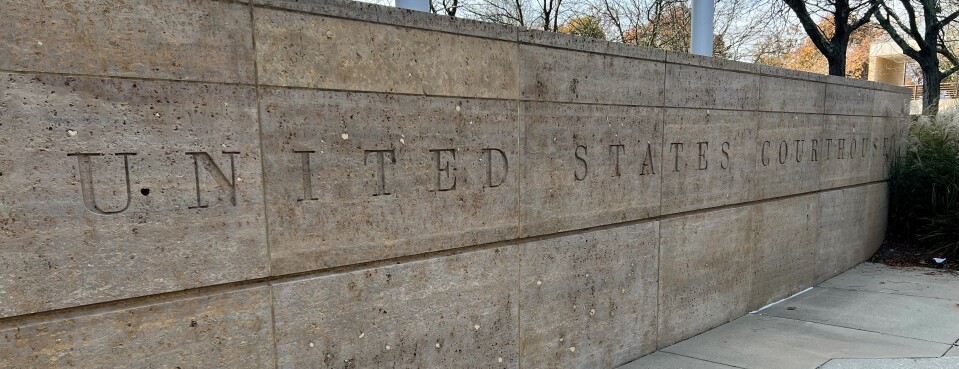
The trial, taking place in the U.S. District Court for the District of Maryland before Judge Lydia Kay Griggsby, has seen 15 total days of evidence presentation. Goldstein’s defense took approximately two days, including his personal testimony in his own defense.
Goldstein’s final witness, an employee from e-discovery company Epiq, testified about documents produced by Goldstein’s outside accounting firm, GRF CPAs & Advisors, in response to grand jury subpoenas. According to the witness, GRF produced over 2,470 emails, but only 12 reflected internal GRF communications related to Goldstein’s accounts, all from between 2020 and 2022.
This testimony appears designed to support the defense’s central claim that the government’s investigation was inadequate. However, during cross-examination, prosecutors challenged the significance of this evidence, with the witness acknowledging several limitations to their analysis. The witness admitted they didn’t know whether emails had been “manually deleted,” made no effort to recover any potential internal communications, and lacked familiarity with GRF’s document retention policies.
Although Goldstein had initially planned to call the government’s lead case agent as a witness, the parties instead agreed to a list of facts that were read to the jury. This information primarily concerned statements made by one of Goldstein’s outside accountants to investigators that allegedly contradicted testimony given during the trial.
The government presented a brief rebuttal case, introducing emails intended to establish proper venue in Maryland for one of three mortgage fraud counts against Goldstein. The loan application in question was signed on March 1, 2021, a date on which Goldstein testified he was in the U.S. Virgin Islands. The prosecution’s emails appear to support their contention that Goldstein was directing activity in Maryland at the time.
Goldstein faces a substantial array of charges: one count of tax evasion, eight counts of aiding and abetting in the preparation of false and fraudulent tax returns, four counts of willful failure to pay taxes, and three counts of making false statements on loan applications. Judge Griggsby denied the defense’s renewed motion for acquittal.
The trial represents a significant fall from grace for Goldstein, who co-founded SCOTUSblog, a widely respected website covering the U.S. Supreme Court that has become an essential resource for legal professionals, journalists, and scholars tracking developments at the nation’s highest court. The blog has won multiple awards for its comprehensive coverage of Supreme Court cases and decisions.
Tax fraud cases of this nature typically involve allegations that the defendant deliberately underreported income or claimed improper deductions to reduce tax liability. The additional charges related to mortgage applications suggest prosecutors believe Goldstein misrepresented financial information when applying for loans.
The case highlights the increasing focus by federal authorities on prosecuting high-profile professionals for tax-related offenses. Such prosecutions serve not only to recover allegedly unpaid taxes but also to deter others from similar conduct.
Goldstein is represented by the prominent law firm Munger Tolles & Olson LLP. The case, United States v. Goldstein (No. 8:25-cr-00006), began on February 17, 2026, in the U.S. District Court for the District of Maryland and has now reached its critical final stages as the jury prepares to deliberate on Goldstein’s fate.
Fact Checker
Verify the accuracy of this article using The Disinformation Commission analysis and real-time sources.

8 Comments
This case is a reminder of the importance of thorough investigations and the challenges of uncovering all the relevant evidence in white-collar crime cases. The defense’s focus on the accounting firm’s communications will be a key part of the deliberations.
The testimony about the limited internal communications from the accounting firm is an interesting development. The defense seems to be implying that the government may have overlooked or failed to obtain crucial evidence. This could be a critical point in their case.
The defense’s strategy of highlighting potential gaps in the government’s investigation is a common tactic in complex fraud cases. It remains to be seen whether they can successfully cast doubt on the strength of the prosecution’s case.
This is a high-profile case involving a prominent legal figure. The defense’s focus on alleged missing evidence from the accounting firm suggests they may be trying to poke holes in the government’s investigation. It will be interesting to see how the jury weighs the evidence presented on both sides.
Fraud cases involving high-profile individuals can be politically charged and draw a lot of public attention. It will be important for the jury to remain objective and focus solely on the evidence presented, rather than being swayed by any external factors.
It’s not surprising that the defense is trying to highlight potential gaps or shortcomings in the government’s investigation. Tax and loan fraud cases often come down to the details, so both sides will be scrutinizing the evidence very closely.
The testimony about the limited internal communications from the accounting firm is an intriguing development. It could suggest that the government’s investigation may have overlooked important evidence, which could be a pivotal point in the defense’s case.
The sheer volume of emails and documents in a complex fraud case like this can make it challenging to uncover all the relevant evidence. The defense’s argument about the limited internal communications from the accounting firm is an intriguing angle that could sway the jury if substantiated.