


Listen to the article
Poland’s Prime Minister Accuses Opposition of Destabilizing Energy Market Amid Middle East Crisis
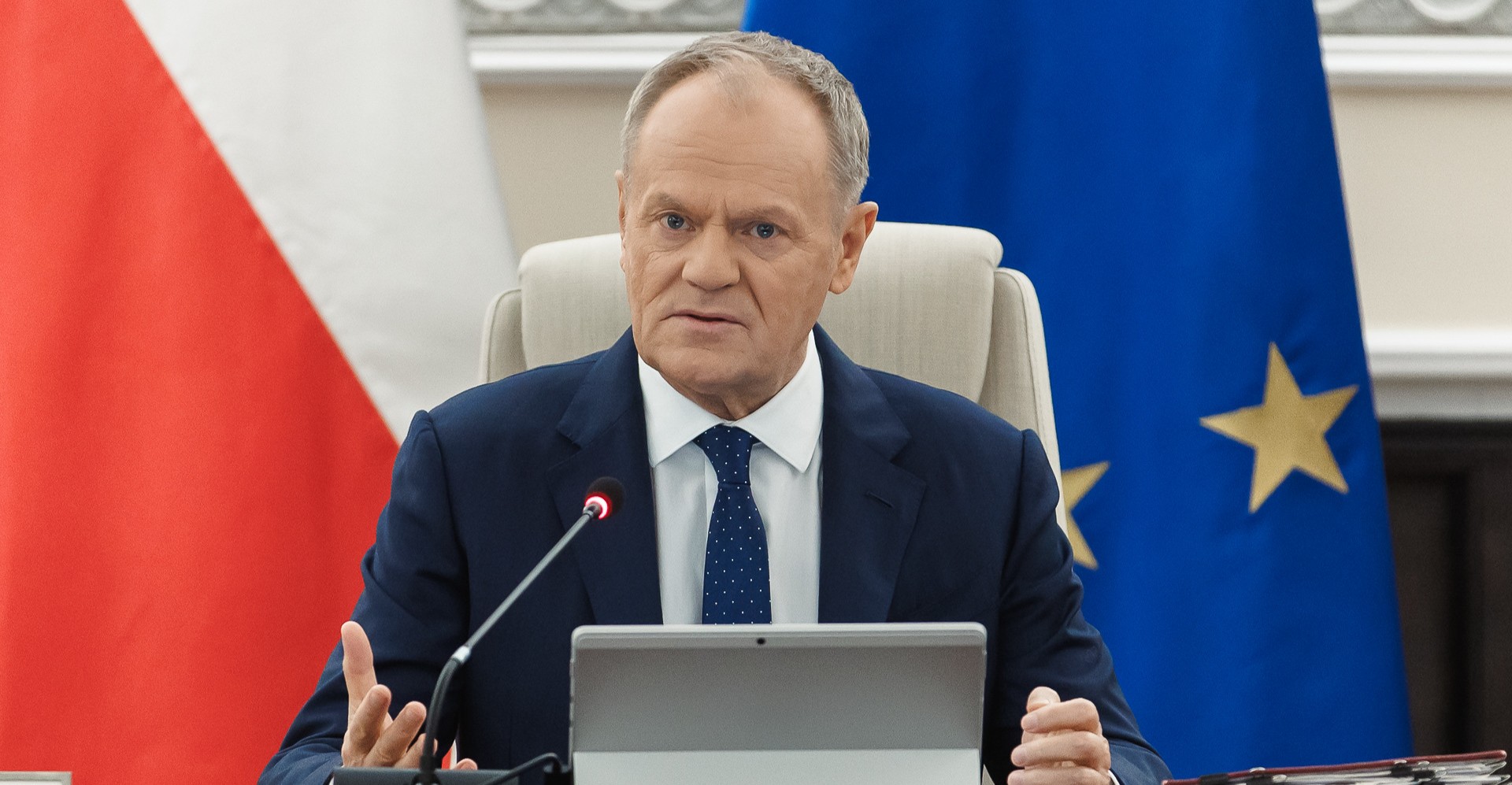
Prime Minister Donald Tusk has sharply criticized Poland’s opposition for what he called attempts to “destabilize the situation” by suggesting the country faces potential energy shortages due to the escalating conflict in the Middle East following US and Israeli attacks on Iran.
Speaking ahead of a cabinet meeting on Tuesday, Tusk noted “signs of a rather nasty narrative from some politicians regarding fuel,” warning that such statements could trigger panic buying and create real problems where none existed. Though he didn’t specifically name individuals or parties, the national-conservative Law and Justice (PiS) party has been vocal in accusing the government of failing to secure Poland’s energy supplies amid the regional turmoil.
“You have to be very ill-willed to, in the midst of such a powerful geopolitical crisis, with wars raging in several places, try to destabilize the situation in our country for no reason at all,” Tusk declared.
The prime minister emphatically stated that Poland has “no problems with fuel supplies,” echoing earlier reassurances from the energy ministry and fuel infrastructure operators PERN and Gaz-System. These entities have consistently maintained that Poland faces no risk of shortages thanks to diversified supply sources and substantial reserves.
Poland’s energy security is bolstered by its diversified import portfolio. In 2024, the country sourced most of its crude oil from Saudi Arabia (50.7%), Norway (31.2%), and the United States (7.9%). Meanwhile, liquefied natural gas (LNG) deliveries in 2025 have primarily come from the United States (around 76%) and Qatar (20%).
While Saudi Arabian oil can bypass the strategically critical Strait of Hormuz via alternative routes, Qatar recently announced a halt to LNG production following Iranian attacks that disrupted regional energy infrastructure. Despite this development, Poland maintains robust safeguards, including access to the spot market and gas storage facilities that are approximately 50% full – sufficient to cover roughly 40 days of demand at current consumption levels, according to news service Energetyka24.
The energy ministry reinforced these assurances, stating on Monday that emergency stocks contain a 90-day supply of oil and other fuels.
Tusk’s comments came in response to a series of social media posts by PiS questioning the government’s handling of the situation. Since Saturday, the opposition party has published posts asking “Will there be a fuel shortage?” and claiming “Poles have rushed to petrol stations fearing rising fuel prices,” while asserting that “the government is asleep.”
State energy giant Orlen forcefully rejected these allegations, describing PiS’s graphics as “Russian propaganda.” The company stated: “For the record: this is completely untrue [that there will be a fuel shortage], our refineries are operating normally, raw material supplies are running smoothly, and we have diversified sources of supply.”
The accusations come against a backdrop of surging global energy prices. According to Reuters, oil prices have risen more than 15% since Friday, with Brent crude climbing to over $82 per barrel on Tuesday – its highest level since July 2024. European gas prices have skyrocketed, surging approximately 40% on Tuesday alone, building on a similar jump the previous day.
The global price increases have already impacted domestic fuel costs in Poland. Polish news service WNP reports that the wholesale price of diesel at Orlen rose by 0.43 zlotys per liter on Tuesday – the largest one-day increase since March 9, 2022, during the early weeks of Russia’s invasion of Ukraine. Diesel prices have now reached their highest level since April 2024.
Beyond energy concerns, Tusk also addressed the situation of Polish citizens in the Middle East. He announced that while the government is “logistically prepared” to evacuate Poles if necessary, he has so far decided against launching such an operation. The prime minister noted that more than 480 people who were in Israel, Jordan, and Lebanon have already received assistance returning to Poland, and approximately 14,000 Poles are currently registered in the United Arab Emirates.
“We are prepared, in terms of logistics, for an evacuation operation,” Tusk explained. “The planes are ready… [But] for now, the situation does not pose a direct threat to our citizens in this area.”
On Sunday, the Polish foreign ministry established a special helpline for Polish citizens stranded in the Middle East but ruled out organizing an evacuation at this time, further indicating that the government considers the situation manageable despite regional tensions.
Fact Checker
Verify the accuracy of this article using The Disinformation Commission analysis and real-time sources.

12 Comments
It’s concerning to see the opposition accused of spreading false information and destabilizing the energy market, especially with the ongoing regional conflicts. Maintaining public trust and avoiding panic should be the top priority for the government right now.
The Prime Minister’s strong rhetoric suggests there may be more to this story than meets the eye. I hope both sides can set aside political differences and work together to ensure Poland’s energy security and stability during this challenging period.
This highlights the challenges of navigating complex geopolitical situations and managing public perception. It will be important for the government to provide clear, factual information to counter any misleading narratives. Transparency is crucial during times of uncertainty.
Absolutely. Transparent and consistent communication from the authorities is essential to maintain stability and public trust, especially when dealing with sensitive energy and security matters.
This is a delicate situation that requires nuanced handling. While I understand the government’s desire to project calm, they should also be transparent about any potential risks or contingency planning. Overconfidence could backfire if the situation deteriorates further.
The accusation of ‘destabilizing the situation’ is a serious one. It will be interesting to see if the opposition’s concerns have any merit or if they are indeed attempting to sow panic for political gain. Either way, the government needs to address the issue head-on with verifiable facts.
Accusations of political maneuvering during a geopolitical crisis are concerning. I hope the government and opposition can find common ground and work together to ensure Poland’s energy needs are met, rather than engaging in a public blame game.
This seems like a classic case of political posturing and finger-pointing during a time of heightened geopolitical tensions. While I appreciate the government’s efforts to reassure the public, I’m curious to hear more about the specific data and analysis behind their claims of no fuel supply issues.
The Prime Minister’s comments raise more questions than answers. I’d like to see detailed data and analysis from both sides to better understand the true state of Poland’s fuel supplies and energy security. Avoiding politicization of this issue is crucial.
Interesting to see the accusations of destabilization tactics from the opposition. It’s important to maintain calm and avoid panic during geopolitical crises like this. I wonder what the full context is around the fuel supply concerns.
You’re right, avoiding panic is key. It seems the government is trying to assure the public that there are no real supply issues, despite the opposition’s claims.
This is a complex situation that demands a measured, fact-based response. While I appreciate the government’s efforts to project calm, they should also be transparent about any contingency planning or potential risks. Maintaining public trust is paramount.