


Listen to the article
False Allegations of Blood Exports Threaten Kenya’s Critical Donation Program
Health Cabinet Secretary Aden Duale has forcefully rejected claims that Kenya is exporting donated human blood to international markets, warning that those spreading such misinformation could face serious legal consequences. The Cabinet Secretary emphasized that all blood collected through Kenya’s national transfusion network is exclusively reserved for domestic medical use.
This controversy emerges at a particularly vulnerable moment for Kenya’s healthcare system, which already struggles with chronic blood shortages. Public health officials worry that rumors suggesting donated blood is being sold abroad for profit could devastate the country’s already insufficient donation rates.
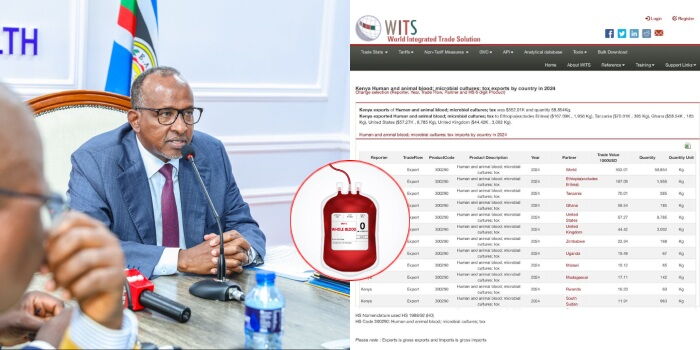
The misunderstanding appears to have originated from a misinterpretation of global trade data. Reports citing export figures under the international customs classification for “human and animal blood” sparked public concern. However, Duale clarified that this broad tariff category encompasses various specialized pharmaceutical and laboratory products, not bags of whole human blood meant for transfusions.
Products exported under this classification actually include vaccines, antisera, toxins, microbial cultures, and refined blood derivatives used specifically for research and diagnostic manufacturing. According to health ministry officials, confusing these specialized biological materials with hospital blood reserves demonstrates a dangerous misunderstanding of medical supply chains.
Kenya’s reality stands in stark contrast to the rumors. The country actually imports certain specialized blood products to meet complex medical needs rather than exporting blood. The domestic demand for whole blood—critical for trauma cases, postpartum hemorrhage treatment, and cancer patient support—consistently exceeds available supply.
“These baseless rumors directly endanger lives,” said a ministry spokesperson. “When healthy citizens avoid donating due to unfounded suspicions, the immediate victims are accident survivors and mothers experiencing childbirth complications in our public hospitals.”
To address the nation’s blood supply challenges, the Ministry of Health has made significant investments in expanding regional processing capacity. Recently, CS Duale commissioned the Samburu Blood Satellite Centre at the Samburu County Referral Hospital, equipped with modern processing technology that substantially reduces emergency transfusion wait times in remote areas.
This facility represents a critical component of the government’s Universal Health Coverage agenda. By decentralizing blood testing and storage capabilities beyond Nairobi, authorities aim to make life-saving care more accessible to rural populations—a strategy that directly contradicts claims that national blood reserves are being exported.
Healthcare workers on the frontlines express frustration with how such misinformation affects their daily struggle to save lives. Dr. Faith Mwangi, a trauma surgeon at Kenyatta National Hospital, notes, “Every week we delay critical surgeries because we lack sufficient blood. The idea that we would export such a precious resource while our patients suffer is not just false—it’s offensive to medical professionals.”
The Ministry has adopted a firm stance against the misinformation, indicating it may utilize the cybercrimes act to prosecute individuals generating unnecessary public panic. Duale has appealed directly to Kenyan citizens, urging them to continue volunteering as donors and to disregard unverified social media claims that undermine the health system.
Kenya’s blood donation system follows strict international protocols for collection, testing, processing, and distribution. Each unit is carefully tracked through a secure supply chain to ensure it reaches patients in need within the country.
As the government works to strengthen medical supply networks nationwide, maintaining public trust in the blood transfusion service remains essential. Health officials continue to emphasize the facts: every unit of whole blood donated in Kenya stays in Kenya, serving as a lifeline for citizens during medical emergencies.
For a nation working to achieve healthcare self-sufficiency, addressing such misinformation becomes not just a matter of correcting the record, but of protecting a vital public health resource.
Fact Checker
Verify the accuracy of this article using The Disinformation Commission analysis and real-time sources.

8 Comments
This is a complex issue with a lot of nuance. I appreciate the Cabinet Secretary’s efforts to provide clarification and push back against misinformation. Effective communication from authorities will be key to resolving this situation.
The distinction between ‘human and animal blood’ as a customs category and actual exported blood products is an important clarification. Rumors can quickly spiral, so it’s crucial for officials to provide clear, factual information to the public.
It’s good to see the Kenyan government taking a strong stance against the spread of misinformation about critical healthcare programs. Maintaining public trust in blood donation efforts is vital, especially in the face of blood shortages.
While I understand the public’s concern, threatening legal action against those spreading false claims may not be the most constructive approach. Perhaps a public education campaign could help address the underlying misunderstandings more effectively.
The distinction between ‘human and animal blood’ as a customs category and actual exported blood products is an important point. I wonder if more granular trade data could help provide additional transparency and address public concerns.
The Kenyan healthcare system’s struggle with blood shortages is concerning. I hope this incident doesn’t further discourage blood donations, which are so vital. Maintaining a stable, domestic supply of donated blood should be the top priority.
Agreed. Any disruption to blood donation rates could have serious consequences for patient care. Rebuilding public trust will be crucial.
It’s concerning to see this kind of false information spreading, especially around something as vital as blood donations. I hope the Kenyan government can find a way to address the root causes and restore confidence in the system.