


Listen to the article
Former Minister Defends Jonathan’s Legacy Against Atiku’s Criticism
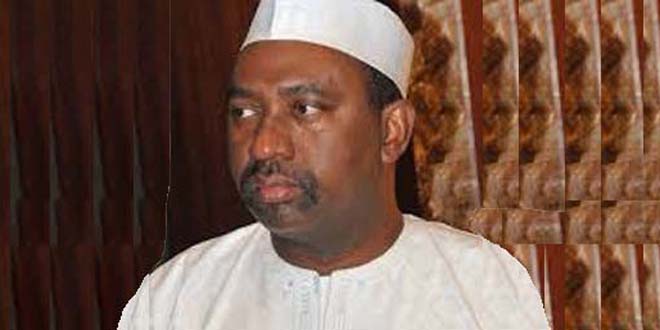
Former Minister of National Planning and Minister of State for Finance, Bashir Yuguda, has issued a robust defense of former President Goodluck Jonathan following critical remarks by former Vice President Atiku Abubakar about Jonathan’s leadership capabilities.
In a statement released to journalists on Friday, Yuguda, who also served as Nigeria’s Ambassador to the United Arab Emirates and Qatar, challenged Atiku’s characterization of Jonathan as an inexperienced leader whose administration struggled amid national challenges.
The controversy stems from Atiku’s recent interview on “Prime Time Special” on ARISE News Channel, where he suggested many young Nigerian leaders fail because they lack adequate preparation for governance. Atiku specifically cited Jonathan as an example, stating: “I know Jonathan very well — a decent young man — but he was inexperienced, and that, I believe, also contributed to his failure to manage the affairs of the country, particularly when he was faced with challenges.”
Yuguda called these assertions “inaccurate and inconsistent with the facts,” pointing to Jonathan’s extensive political career before assuming the presidency. According to Yuguda, Jonathan had served in substantive executive roles as Deputy Governor, Governor, Vice-President, and Acting President during Yar’Adua’s illness—positions that provided critical leadership experience.
“These were not ceremonial roles but critical leadership experiences that prepared him for governance at the highest level,” Yuguda emphasized.
The former minister highlighted significant economic achievements during Jonathan’s tenure, noting that Nigeria attained status as Africa’s largest economy while attracting strong investor confidence. “Poverty levels declined to some of the lowest recorded since the return to democratic rule in 1999. These are not retrospective claims; they are outcomes documented by credible institutions,” he stated.
Yuguda detailed specific policy accomplishments across various sectors. In agriculture, he noted the administration shifted focus “from subsistence to sustainability,” improving food availability and earning international recognition for hunger reduction efforts. In transportation, Jonathan revived train routes nationwide after decades of neglect, with Yuguda personally commissioning the rehabilitation of the Zaria–Gusau–Kaura Namoda rail line after 26 years of deterioration.
The former minister also pointed to Jonathan’s educational initiatives, including the establishment of 12 new federal universities—nine of them in Nigeria’s North—and approximately 165 Almajiri schools to enhance educational access across the country.
Beyond policy achievements, Yuguda praised Jonathan’s temperament and democratic values. “He possessed a calmness that steadied governance, even in moments of pressure,” Yuguda recalled, noting how Jonathan discouraged sharp responses to critics, including former leaders, preferring instead to maintain dignified discourse.
This disposition extended to Jonathan’s relationship with his predecessor, the late President Umaru Musa Yar’Adua, and continues in his respectful engagement with subsequent administrations, including that of President Bola Ahmed Tinubu. Yuguda contrasted this with “the well-known strains that existed between Vice-President Atiku Abubakar and President Olusegun Obasanjo during their time in office.”
Yuguda identified Jonathan’s “most enduring legacy” as his respect for democratic values, particularly during the 2015 elections when, despite security challenges, he ensured voting proceeded and introduced technological enhancements to improve electoral transparency. Jonathan’s peaceful concession of power, prioritizing national stability over personal ambition, “profoundly shaped Nigeria’s democratic culture,” according to Yuguda.
The statement concluded with a pointed challenge to Atiku’s criticism: “We must reflect on what might have become of our nation’s democracy if those who now criticise Jonathan had found themselves in his position when his former boss, President Yar’Adua of blessed memory, fell ill. Would they have acted with the same wisdom, decorum, and restraint that Jonathan demonstrated?”
This exchange highlights ongoing tensions within Nigeria’s political landscape as former leaders continue to shape narratives around their respective legacies and contributions to the nation’s democratic development.
Fact Checker
Verify the accuracy of this article using The Disinformation Commission analysis and real-time sources.

11 Comments
Sounds like a complex political situation, with opposing views on Jonathan’s leadership. I appreciate the former minister defending his record, though I’d need to look at the full context to form my own opinion.
Good point. It’s important to consider multiple viewpoints and not jump to conclusions without understanding the full picture.
This article highlights the ongoing political debates in Nigeria. It’s valuable to have these discussions and ensure leaders are held accountable, while also recognizing the nuances involved in governance.
Well said. Evaluating political figures and their legacies requires a balanced and thoughtful approach.
The contrast between Atiku’s critique and the former minister’s defense is interesting. I wonder what specific aspects of Jonathan’s tenure are being debated and how that might inform Nigeria’s political future.
It’s good to see the former minister pushing back on the characterization of Jonathan as an inexperienced leader. Political legacies are often complex, and it’s important to examine the full context.
Absolutely. Oversimplifying leaders’ records can lead to an incomplete understanding of the challenges they faced and the decisions they made.
The contrast between the different perspectives on Jonathan’s tenure is thought-provoking. I’m curious to learn more about the specific issues and challenges that shaped his time in office.
This article highlights the ongoing discussions around Nigeria’s political history. It’s valuable to have these debates and ensure leaders are held accountable, while also recognizing the nuances involved in governance.
Well said. Evaluating political figures and their legacies requires a balanced and thoughtful approach.
Interesting to see the debate around Jonathan’s legacy. It’s always good to get different perspectives and dig deeper into the facts. I’m curious to learn more about his time in office and the challenges he faced.