


Listen to the article
Iran Rebuffs Trump’s Claims About Strait of Hormuz Agreement
Iran has issued a stern response to U.S. President Donald Trump’s recent assertions regarding the status of the Strait of Hormuz and purported diplomatic breakthroughs, accusing him of spreading misinformation about ongoing negotiations between the two nations.
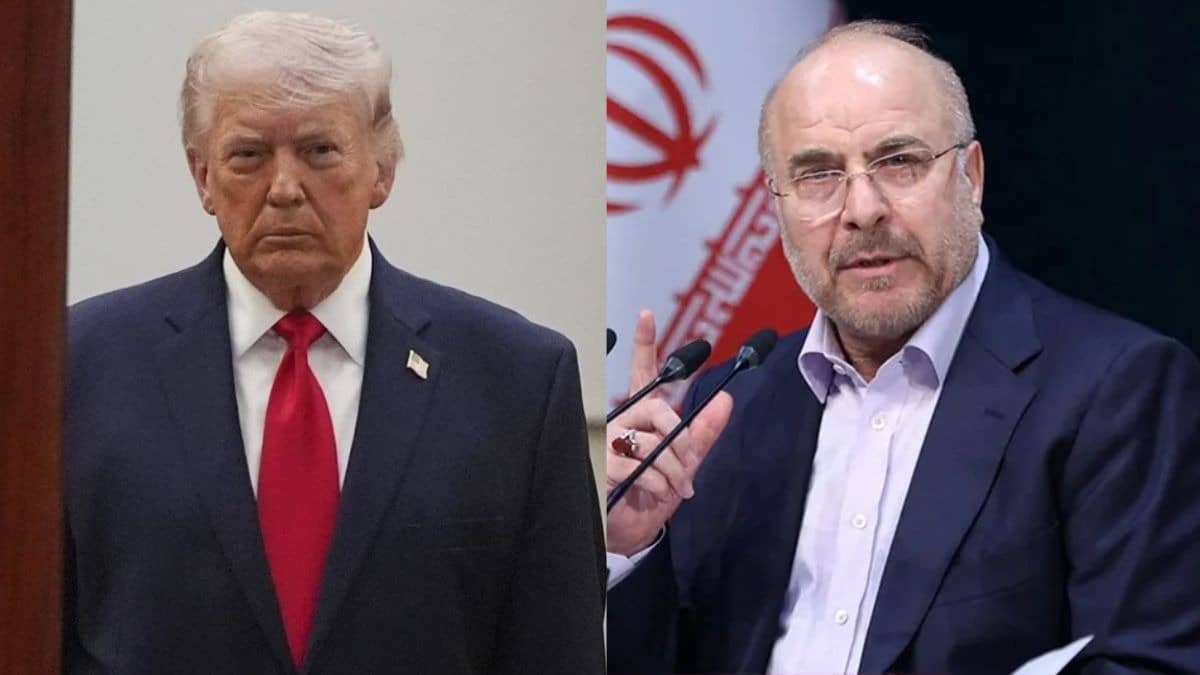
Iranian Parliament Speaker Mohammad Bagher Ghalibaf dismissed Trump’s statements as completely unfounded, claiming the U.S. president made “seven false claims in one hour.” Ghalibaf emphasized that conditions on the ground, rather than “social media” declarations, would ultimately determine the status of the strategically vital waterway.
The diplomatic clash follows Trump’s series of posts claiming that Iran had agreed to major concessions, including permanently keeping the Strait of Hormuz open and making significant compromises on its nuclear program. Trump specifically stated that the strait was “completely open” for global shipping and that Iran had committed to never blocking it again, while also suggesting a broader U.S.-Iran deal was close to completion.
Iranian officials quickly contested these characterizations, clarifying that the waterway has only been temporarily opened under a limited ceasefire framework. According to Tehran, maritime movement remains restricted to designated routes under specific conditions, and any reopening is tied to a temporary ceasefire involving Lebanon, not a comprehensive agreement with the United States.
The Strait of Hormuz represents one of the world’s most critical maritime chokepoints, with approximately 20% of global oil supply passing through this narrow waterway between Iran and Oman. Any disruption to shipping in this region has immediate implications for global energy markets and economic stability, which explains the international attention on its operational status.
Despite Trump’s description of the strait as open, he confirmed that the U.S. naval blockade targeting Iran will remain “in full force” until negotiations conclude. This blockade, implemented earlier this month after failed diplomatic talks, specifically targets Iranian-linked shipping and forms a central component of Washington’s pressure campaign against Tehran.
Global shipping interests have responded cautiously to developments in the region. While Iran’s announcement of a partial reopening temporarily eased market concerns, shipping companies continue to exercise significant caution due to ongoing security risks and the continued U.S. military presence in the vicinity. Insurance premiums for vessels operating in the region remain elevated, reflecting the persistent uncertainty.
The dispute highlights the complex geopolitical dynamics shaping Middle Eastern maritime security. Iran has historically viewed the strait as falling within its sphere of influence and has threatened to close it during previous diplomatic standoffs. The United States, alongside regional allies and international partners, has consistently maintained that the waterway must remain open for international navigation as a matter of global economic security.
Negotiations between Washington and Tehran are expected to continue, though significant obstacles remain. Key sticking points include Iran’s nuclear program, which the United States seeks to constrain more effectively than under the 2015 Joint Comprehensive Plan of Action (JCPOA) that Trump withdrew from in 2018. Regional security issues, including Iran’s support for various militia groups across the Middle East, also remain contentious.
Energy analysts note that the ongoing uncertainty surrounding the strait contributes to market volatility. Even temporary disruptions can trigger price spikes in global oil markets, with ripple effects throughout interconnected commodity exchanges. Major oil importers in Asia, particularly China, Japan, and South Korea, are especially vulnerable to shipping disruptions in this corridor.
For now, the sharp exchange between Trump and Iranian officials underscores the deep distrust characterizing U.S.-Iran relations. Tehran has made it clear that it rejects Washington’s narrative and maintains its sovereign rights regarding the waterway, warning that developments on the ground—not political messaging—will determine future conditions in the Strait of Hormuz.
As shipping companies and global markets closely monitor the situation, the status of this vital maritime passage remains a key indicator of broader regional tensions and the prospects for diplomatic resolution between the United States and Iran.
Fact Checker
Verify the accuracy of this article using The Disinformation Commission analysis and real-time sources.

12 Comments
This is a delicate situation that requires careful diplomacy. While the US and Iran may have different narratives, maintaining open access to the Strait of Hormuz is critical for ensuring the smooth functioning of international trade and the global economy.
Agreed. Both sides need to exercise restraint and focus on finding a negotiated solution that addresses the underlying concerns. Unilateral actions that disrupt the free flow of commerce through this strategic waterway should be avoided.
The Strait of Hormuz is a pivotal chokepoint for global energy and commodity flows. Any disruption or closure of this waterway could have far-reaching economic consequences, impacting industries and consumers worldwide. It’s in everyone’s interest for the US and Iran to find a diplomatic solution that ensures the free and secure passage of ships through the strait.
Absolutely right. The Strait of Hormuz is a vital artery for global trade, and any instability or blockage there could spark a major economic crisis. Cooler heads need to prevail, and the two sides must work together to maintain open access through this strategic chokepoint.
The Strait of Hormuz is a vital chokepoint for global energy and commodity flows. Any heightened tensions or potential closure of the strait could have serious ramifications, not just for the US and Iran, but for the entire global economy. It’s crucial that the two sides find a way to de-escalate the situation through diplomacy.
Absolutely right. The impact of a closure or disruption at the Strait of Hormuz would be felt far beyond just the US and Iran. It’s in everyone’s interest to maintain open and secure access through this critical maritime chokepoint.
This dispute over the Strait of Hormuz highlights the delicate geopolitical and economic balance in the region. While the US and Iran may have their differences, they both have a shared interest in ensuring the free flow of global trade and energy supplies through this strategic waterway.
Well said. Maintaining open access to the Strait of Hormuz is crucial for the stability of international markets, particularly for critical commodities like oil, natural gas, and minerals. Both sides need to prioritize diplomacy and compromise to resolve this issue constructively.
This looks like a complex geopolitical dispute. I’m curious to learn more about the actual status of negotiations between the US and Iran regarding the Strait of Hormuz. There seem to be conflicting claims, so I’d be interested in getting a more objective assessment of the situation.
Agreed, it’s important to look past the rhetoric and understand the facts on the ground. This strategic waterway is critical for global energy markets, so tensions here could have far-reaching impacts.
The Strait of Hormuz has long been a flashpoint between the US and Iran. I’m not surprised to see the two sides trading accusations, but it’s concerning to hear threats of closing the strait again. This could seriously disrupt oil and commodity flows.
Absolutely. The stakes here are very high, both economically and geopolitically. Any disruption to shipping through the strait would ripple through global markets for energy, metals, and other key commodities.