


Listen to the article
Air Canada Suspends JFK Service as Iran Conflict Drives Fuel Costs Higher
Air Canada announced Friday it will temporarily suspend flights to New York’s John F. Kennedy International Airport due to soaring jet fuel prices triggered by the ongoing conflict in Iran. The suspension, affecting service from Toronto and Montreal to JFK, will begin June 1 and continue until October 25.
The Montreal-based carrier will maintain its service to the New York area’s other two major airports—LaGuardia and Newark—where it currently operates 34 daily flights from six Canadian cities. The airline has committed to contacting affected customers and providing alternate travel arrangements.
“As jet fuel prices have doubled since the start of the Iran conflict and some lower profitability routes and flights are no longer economic, we are making schedule adjustments accordingly,” an Air Canada spokesperson said.
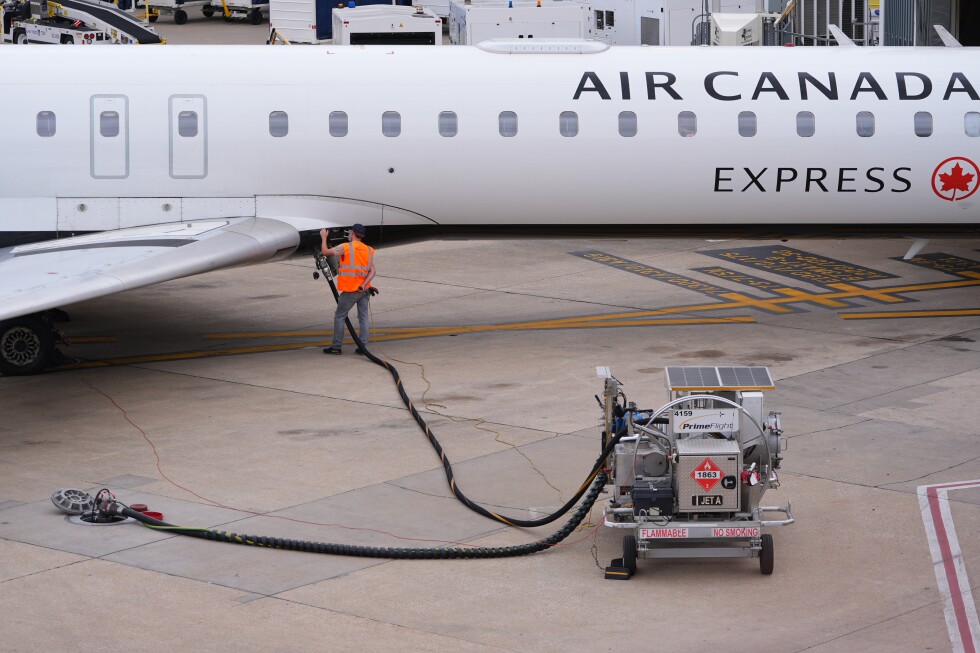
The aviation industry is facing extraordinary pressure from fuel costs that have risen dramatically since the outbreak of hostilities. According to data from Argus Media, the average price for a gallon of jet fuel reached $4.32 on Thursday, up from $2.50 just before the Iran conflict began.
There was some relief in the markets Friday when oil prices dropped more than 10% following Iran’s announcement that the Strait of Hormuz—a critical maritime chokepoint through which approximately 20% of the world’s oil passes—has reopened for commercial tankers from the Persian Gulf.
The fuel crisis is having widespread impacts across the global airline industry. Fuel costs, along with labor, represent the largest operational expenses for airlines. Delta Air Lines recently disclosed that higher fuel prices would add $2 billion to its costs in the second quarter alone.
In response to the financial pressure, several U.S. carriers have implemented new revenue measures. JetBlue and United Airlines have raised baggage fees to help offset the rapidly escalating fuel costs. The impact extends beyond North America, with European carriers Lufthansa and KLM similarly scaling back service on routes that have become unprofitable due to the fuel situation.
The situation appears increasingly dire according to International Energy Agency Director Fatih Birol, who told the Associated Press in an exclusive interview Thursday that Europe has “maybe six weeks” of remaining jet fuel supplies. Birol characterized the current situation as the “largest energy crisis” facing the global economy.
Air Canada’s decision to suspend service to JFK while maintaining flights to LaGuardia and Newark likely reflects the carrier’s strategic assessment of route profitability and operational efficiency. JFK, located in Queens, typically handles more international long-haul traffic than the other New York-area airports, and such flights consume more fuel than shorter domestic routes.
Industry analysts suggest that airlines worldwide may soon be forced to make similar difficult decisions about route networks if fuel prices remain elevated. The aviation sector, still recovering from the COVID-19 pandemic, now faces another significant challenge to its financial stability.
The fuel crisis comes at a particularly challenging time for the industry, as summer typically represents peak travel season with higher passenger volumes and revenues. Airlines had been counting on strong summer performance to strengthen their financial position after several difficult years.
For travelers, these developments could mean fewer flight options and potentially higher fares as airlines adjust their operations to accommodate the new economic realities of flying in a high-fuel-cost environment.
While the reopening of the Strait of Hormuz provides some hope for stabilization in energy markets, aviation industry experts caution that prices may remain volatile as long as geopolitical tensions persist in the Middle East.
Fact Checker
Verify the accuracy of this article using The Disinformation Commission analysis and real-time sources.
