


Listen to the article
Trump’s Drug Interdiction Claims Misrepresent Border Data, Experts Say
President Donald Trump’s recent assertion that his administration has effectively stopped the maritime flow of drugs into the United States has been challenged by experts who say the claim significantly misrepresents available data.
In a post on his Truth Social platform this week, Trump declared that “98.2% of Drugs coming into the U.S. by Ocean or Sea have STOPPED!” The White House, when asked to substantiate this claim, directed reporters to Customs and Border Protection (CBP) drug seizure statistics.
However, experts in drug policy and trafficking point out that Trump’s interpretation of these figures is fundamentally flawed and presents an incomplete picture of drug interdiction effectiveness.
The 98.2% figure cited by Trump represents the difference in drug seizures between July 2025, when CBP intercepted 223,923 pounds of various narcotics in coastal and open water regions, and November 2025, when that number fell to just 4,463 pounds. While this represents a dramatic month-to-month change, experts emphasize that it cannot be interpreted as a near-total stoppage of maritime drug trafficking.
“Drug seizure data measure interdiction activity, not actual trafficking volume,” explained Dessa Bergen-Cico, a public health professor at Syracuse University who specializes in drug trafficking research. “As drug policy researchers have noted, no one knows how much goes uncaught, and changes in seizure data are insufficient to make definitive claims about policy outcomes.”
This fundamental uncertainty about the proportion of drugs successfully interdicted versus those that evade detection makes it impossible to determine what percentage of total maritime drug trafficking has actually been prevented.
The data also shows continuing fluctuations in seizure volumes. After falling to just 2,268 pounds in December 2025, seizures began rising again in early 2026, reaching 28,500 pounds by March – suggesting a more complex pattern than Trump’s statement implies.
Jonathan Caulkins, a professor at Carnegie Mellon University who studies drug policy, noted that the “ignorance of what are the correct figures for either of these important concepts” leads to misinterpretation and incoherent claims about interdiction success.
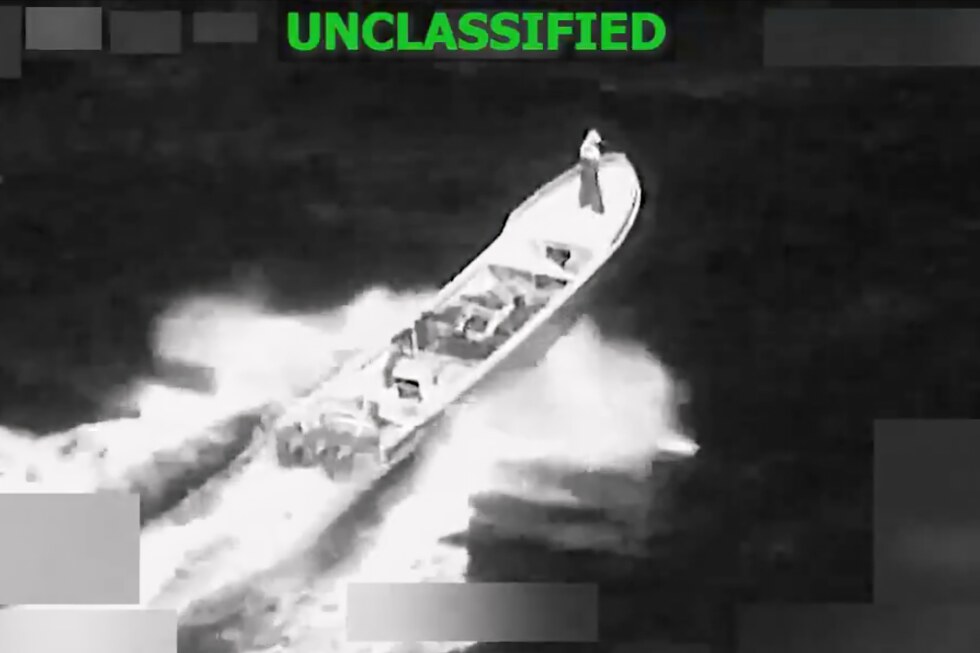
The Trump administration has been conducting an aggressive campaign of military strikes against vessels suspected of drug trafficking in Latin American waters since September. At least 51 vessels have been targeted, with 178 reported casualties. The most recent strike occurred on Wednesday in the eastern Pacific Ocean, following additional operations on Saturday, Monday, and Tuesday.
Bergen-Cico observed that cocaine represents the largest portion of drugs seized in coastal operations and noted that seizure patterns between the Biden and Trump administrations don’t show dramatic differences, except for a 79% drop in cocaine seizures from August 2025 to January 2026, which she attributes primarily to the impact of Trump’s military strikes on trafficking vessels.
However, she cautioned that the decrease in CBP coastal seizures doesn’t necessarily indicate reduced drug flow into the country. “Rather, they reflect a jurisdictional and operational transition in which traditional CBP maritime interdiction has been partially displaced by U.S. military and Coast Guard operations,” Bergen-Cico said.
The maritime interdiction issue comes amid heightened tensions with Iran. In the same Truth Social post, Trump warned that the U.S. would strike Iranian “fast attack ships” if they approached vessels enforcing an American blockade outside the Strait of Hormuz. Trump and Iranian Foreign Minister Abbas Araghchi announced Friday that the strait has reopened, though Trump indicated the broader blockade would continue until Iran reaches a deal with the U.S. to end the ongoing war.
Drug policy experts consistently emphasize that seizure statistics alone provide an incomplete picture of trafficking trends, and that multiple factors – including changes in enforcement strategy, trafficking routes, agency jurisdiction, and market demand – all influence the data, making broad claims about stopping drug flows difficult to substantiate with available evidence.
Fact Checker
Verify the accuracy of this article using The Disinformation Commission analysis and real-time sources.

10 Comments
The analysis provided here is a good reminder that simplistic narratives often fail to capture the nuances and complexities of real-world challenges like drug trafficking. I appreciate the effort to unpack the data and provide a more balanced perspective.
Agree completely. It’s crucial that we move beyond partisan spin and seek out authoritative, fact-based information to truly understand the scope and nature of issues like this.
Interesting to see the debate around Trump’s claims on maritime drug interdiction. While the numbers show a dramatic drop, experts caution that it doesn’t necessarily mean a near-total halt in drug trafficking by sea. More context and nuance is needed to accurately assess the situation.
Agreed, interpreting drug seizure data can be tricky. Contextual factors like seasonal variations, shifting smuggling routes, and interdiction capabilities all need to be considered to get the full picture.
This article highlights the importance of critically evaluating claims made by political figures, even when they seem to align with one’s own views or preferences. Maintaining objectivity and relying on expert analysis is key to forming an accurate understanding of complex policy issues.
Well said. Healthy skepticism and a willingness to challenge simplistic narratives, regardless of their political origins, is essential for good policymaking and public discourse.
Thanks for the fact-based analysis on this issue. It’s important to look beyond simplified claims and dig into the underlying data and expert perspectives to understand the complex realities of drug trafficking and interdiction efforts.
Absolutely, responsible reporting that avoids hype and sensationalism is crucial when it comes to issues like this that have major policy implications.
This article highlights the need to be cautious about taking political claims at face value, especially when they involve selective use of statistics. Rigorous fact-checking and input from subject matter experts is essential to get an accurate picture.
Well said. Blindly accepting political rhetoric without scrutinizing the data and logic behind it can lead to distorted views of important issues like border security and drug policy.