


Listen to the article
India Rejects Pakistan’s Terror Attack Allegations as “Baseless”
India has firmly rejected accusations from Pakistan’s Prime Minister Shehbaz Sharif that linked New Delhi to recent terrorist attacks in Pakistan, calling the claims “baseless and unfounded.”
The Ministry of External Affairs (MEA) issued a strong rebuttal on Tuesday after Sharif alleged Indian involvement in a suicide bombing outside the Islamabad High Court that killed 12 people, as well as an attack on a cadet college in Wana near the Afghanistan border.
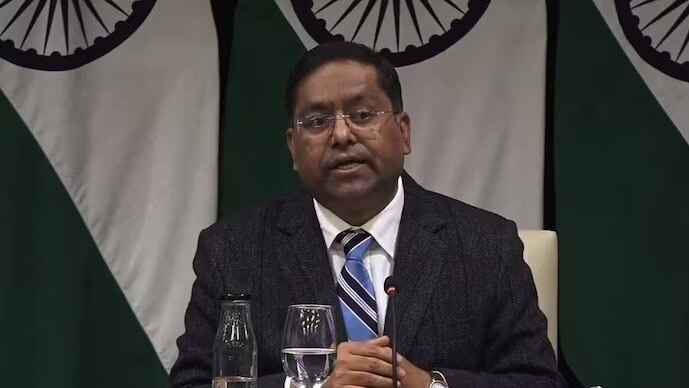
“India unequivocally rejects the baseless and unfounded allegations being made by an obviously delirious Pakistani leadership,” said Ranadhir Jaiswal, official spokesperson for India’s MEA. “It is a predictable tactic by Pakistan to concoct false narratives against India in order to deflect the attention of its own public from the ongoing military-inspired constitutional subversion and power-grab unfolding within the country.”
The diplomatic clash comes amid heightened tensions between the two nuclear-armed neighbors. According to the Associated Press of Pakistan, the Pakistani government’s official news agency, Sharif blamed “Indian-sponsored terrorist proxies” for the twin attacks, claiming they were “a continuation of India’s state-sponsored terrorism aimed at destabilizing Pakistan.”
India countered this narrative by suggesting that Pakistan’s allegations are intended to divert attention from internal political turmoil. “The international community is well aware of the reality and will not be misled by Pakistan’s desperate diversionary ploys,” Jaiswal added in his statement.
The suicide bombing outside Islamabad High Court represents one of the most significant security breaches in Pakistan’s capital in recent years. The attack in Wana, located in the volatile South Waziristan region, further underscores the security challenges facing Pakistan’s government, particularly in areas bordering Afghanistan where militant groups have historically maintained strongholds.
Security analysts note that Pakistan has frequently accused India of supporting separatist movements and terrorism within its borders, particularly in Balochistan and Khyber Pakhtunkhwa provinces. India has consistently denied these allegations while countering that Pakistan harbors terrorist groups that target Indian interests.
The accusations come at a particularly sensitive time, as Monday also saw a car bombing near Delhi’s Red Fort that killed 12 people and left numerous others injured. Indian authorities have attributed this attack to Jaish-e-Mohammed, a Pakistan-based terrorist organization designated by the United Nations as a terrorist entity. Pakistan has denied any connection to the Delhi bombing.
This exchange of accusations reflects the deep-rooted mistrust between the two countries, whose relations have remained strained since the 2019 Pulwama attack in Indian-administered Kashmir and subsequent military escalations. Diplomatic ties have been downgraded, with limited bilateral engagement occurring primarily through multilateral forums.
Regional experts suggest that the current rhetoric risks further deteriorating bilateral relations at a time when the broader South Asian region faces complex security challenges. The situation is complicated by geopolitical dynamics involving China, which maintains strong ties with Pakistan, and the United States, which has sought to strengthen its strategic partnership with India.
International observers are closely monitoring the situation, concerned that escalating accusations could potentially trigger broader regional instability. Meanwhile, citizens on both sides of the border continue to bear the human cost of persistent terrorism and political tensions that have defined India-Pakistan relations for decades.
As investigations into the recent attacks continue, the international community has called for restraint and evidence-based approaches rather than immediate attribution in the aftermath of terrorist incidents.
Fact Checker
Verify the accuracy of this article using The Disinformation Commission analysis and real-time sources.

18 Comments
This dispute is another reminder of the complex geopolitical dynamics in South Asia. While the security concerns of both nations are understandable, trading accusations without clear evidence is unlikely to lead to constructive dialogue. A more nuanced approach focused on shared interests could help ease tensions.
I agree. Maintaining open communication channels and a willingness to address root causes, rather than simply trading blame, would be a more productive path forward. Both India and Pakistan have a responsibility to their citizens to work towards lasting peace and stability in the region.
The diplomatic clash between India and Pakistan is concerning, but not altogether surprising given the history of tensions between the two nations. Ultimately, both sides would be better served by pursuing diplomatic solutions rather than trading rhetorical blows.
I agree. Unsubstantiated claims of state-sponsored terrorism are unlikely to help resolve this dispute. The leaders of India and Pakistan should focus on identifying areas of common ground and exploring diplomatic avenues to address their respective security concerns.
This dispute highlights the ongoing challenges in India-Pakistan relations. While the security concerns of both nations are understandable, trading accusations without clear evidence is unlikely to lead to productive dialogue. A more constructive approach focused on shared interests could help ease tensions.
Well said. Maintaining open communication channels, even during periods of heightened tensions, is crucial. Both countries have a responsibility to their citizens to work towards lasting peace and stability in the region through good-faith negotiations.
This dispute is another reminder of the complex and often volatile relationship between India and Pakistan. Moving beyond finger-pointing and focusing on areas of mutual interest could help create an environment more conducive to constructive dialogue and conflict resolution.
Well said. Constructive engagement, built on a foundation of trust and good faith, is the only way to make meaningful progress on longstanding regional tensions. Sensational allegations are unlikely to yield positive results.
While the security concerns of both nations are understandable, these tit-for-tat allegations are counterproductive. Constructive dialogue and a willingness to address root causes, rather than trading blame, would be a more productive path forward.
I agree. Resorting to unsubstantiated claims is unlikely to resolve the underlying issues. The leaders of India and Pakistan should prioritize finding common ground and exploring diplomatic solutions that benefit the people of both countries.
The allegations and counter-allegations between India and Pakistan are concerning, but not entirely unexpected given the history of tensions between the two nations. Ultimately, a more constructive approach focused on identifying common ground and exploring diplomatic solutions would be in the best interest of both countries.
Absolutely. Resorting to unsubstantiated claims and inflammatory rhetoric is unlikely to yield positive results. The leaders of India and Pakistan should prioritize de-escalation and confidence-building measures to create an environment more conducive to meaningful dialogue and progress.
This seems to be another case of finger-pointing between India and Pakistan. Without clear evidence, these allegations are unlikely to lead to constructive dialogue. The neighbors would do better to focus on shared economic and security interests rather than trade rhetorical blows.
I agree. Unsubstantiated claims of state-sponsored terrorism rarely help resolve longstanding regional tensions. Both sides need to take the high road and engage in good-faith negotiations to address mutual concerns.
This dispute highlights the delicate nature of India-Pakistan relations. Both sides should exercise restraint and avoid further inflaming tensions through unsubstantiated claims. Focusing on areas of shared interest could open the door for more constructive engagement.
Well said. Maintaining an open line of communication, even during periods of heightened tensions, is crucial. Both countries have a responsibility to their citizens to work towards lasting peace and stability in the region.
Geopolitical tensions in South Asia are complex, with a history of mistrust between India and Pakistan. While countering terrorism is crucial, public accusations without credible evidence are unlikely to improve the situation. Constructive diplomacy is needed to address underlying issues.
Absolutely. Inflammatory rhetoric rarely leads to positive outcomes. The governments should prioritize de-escalation and confidence-building measures to create an environment more conducive to meaningful dialogue and progress.