


Listen to the article
Hungary Places Gas Pipeline Under Military Protection Amid Election Tensions
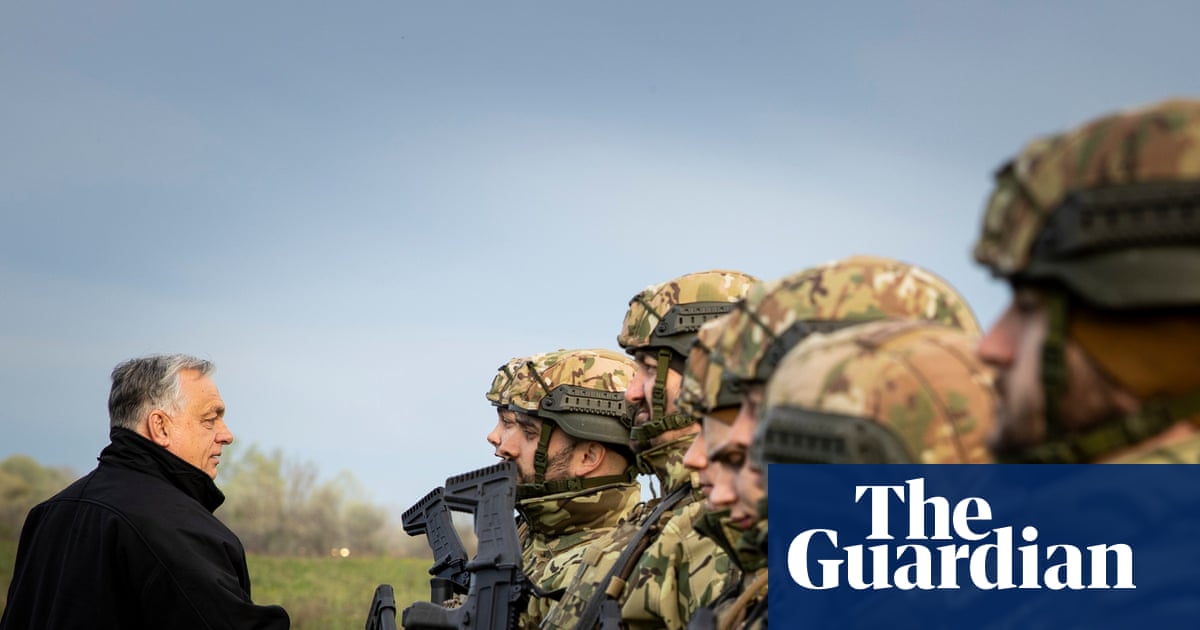
Hungary has placed a crucial gas pipeline on its Serbian border under military protection, Prime Minister Viktor Orbán announced Monday, following Serbian authorities’ claims of discovering “explosives of devastating power” near the infrastructure. The development comes just days before a pivotal election in Hungary and amid an official visit by U.S. Vice President JD Vance.
“This pipeline is important, it is our lifeline,” Orbán declared in a social media video after visiting the southern border region. “We conducted an inspection, and I can report to the Hungarian public that the Hungarian defence forces are capable of placing this pipeline under military protection and, if necessary, defending it.”
The timing of the incident has sparked controversy, with Hungary’s leading opposition candidate, Péter Magyar, suggesting it could be a “false-flag” operation designed to influence the upcoming election on April 12. Magyar, a former top Fidesz party member who now challenges Orbán, described the prime minister’s remarks as “nothing more than the cheap theatre of a fearful regime.”
Several Hungarian government officials have implied Ukrainian involvement in the incident, a charge Kyiv firmly denies. Ukraine instead suggested it was likely “a Russian false-flag operation as part of Moscow’s heavy interference in Hungarian elections.”
The Kremlin added to the speculation Monday, with spokesperson Dmitry Peskov claiming without evidence that Ukraine had planted the explosives. Meanwhile, Đuro Jovanić, director of Belgrade’s counterintelligence Military Security Agency, contradicted the Hungarian government’s narrative, stating claims of Ukrainian responsibility were “not true” and noting that markings on the explosives were American.
Adding to the intrigue, former senior Hungarian counterintelligence officer Peter Buda told The Guardian that plans for such an incident had been circulating since February. “Plans for this false-flag attack had been an open secret among many,” he said.
The pipeline controversy unfolds against the backdrop of Hungary’s most contested election in years. Polls show Orbán trailing Magyar in many surveys, suggesting the prime minister’s messaging about external threats and positioning himself as the safest leader during volatile times may be falling flat with voters.
Orbán, who has ruled Hungary since 2010 and transformed it into what he terms an “illiberal democracy,” stands as the European Union’s most Moscow-friendly leader. He has consistently blocked aid packages for Ukraine and maintained close ties with Russia despite the ongoing conflict.
The political drama intensifies with the arrival of U.S. Vice President JD Vance for a two-day visit. The timing has raised eyebrows, particularly as the U.S. faces potential escalation in its conflict with Iran. Vance is scheduled to hold a joint press conference with Orbán and speak at a mass rally celebrating “Hungarian-American friendship day.”
Political analysts view the visit as symbolic of the Trump administration’s admiration for Orbán’s Hungary. Jacob Heilbrunn, editor of National Interest, remarked: “Hungary is their El Dorado. Vance has always been besotted with Hungary for political and religious reasons.”
The connection between Orbán and former U.S. President Donald Trump’s circle runs deep. Trump’s former adviser Steve Bannon has described Orbán as “Trump before Trump,” while Kevin Roberts, head of the Heritage Foundation that produced the controversial Project 2025, once called Hungary “not just a model for conservative statecraft, but the model.”
Should Orbán lose the election, Heilbrunn suggests it would deliver a “crashing blow” to right-wing movements globally. “They have staked almost everything on Hungary as a vanguard to erode and undermine the EU and to bolster Putin’s ability to threaten Ukraine,” he noted.
The election results on April 12 will not only determine Hungary’s political future but could also significantly impact the trajectory of populist movements across Europe and beyond.
Fact Checker
Verify the accuracy of this article using The Disinformation Commission analysis and real-time sources.

10 Comments
Interesting move by Hungary to deploy the military to protect their gas pipeline. It’s concerning to hear allegations of a potential false-flag operation, but safety of critical infrastructure is understandable given the tensions. I’m curious to see how this plays out leading up to the election.
You raise a good point. Protecting energy infrastructure is crucial, but the timing and allegations of a false-flag scenario are certainly concerning and worth scrutinizing further.
This seems like a politically-charged situation. I appreciate Hungary taking steps to safeguard their energy security, but the false-flag allegations are troubling. I hope the election process remains fair and transparent despite the heightened tensions.
Agreed. Maintaining the integrity of the election process should be the top priority here, even with legitimate national security concerns around critical infrastructure.
This is a delicate situation that highlights the intersection of energy, geopolitics, and domestic politics. While protecting critical infrastructure is understandable, the false-flag concerns warrant careful investigation to preserve democratic integrity.
Well said. Balancing national security and electoral fairness will require nuanced policymaking and a commitment to transparency from all stakeholders.
The decision to deploy the military to guard the gas pipeline is a significant one, and the allegations of a false-flag operation add an extra layer of complexity. It will be important to monitor the situation closely and ensure that the democratic process is not compromised.
Absolutely. Safeguarding critical energy infrastructure is important, but not at the expense of a free and fair election. Transparency and impartial oversight will be key in this delicate situation.
The decision to deploy the military to protect the gas pipeline is a bold move, but the false-flag allegations add an unsettling layer of complexity. It will be important to closely monitor the situation and ensure transparency as the election approaches.
Exactly. With high stakes on both the energy security and electoral fronts, impartial oversight and clear communication from all sides will be crucial in the coming days.