


Listen to the article
DOJ’s Politically Charged Indictment Against SPLC Raises Serious Concerns
The Trump administration’s Department of Justice has filed an indictment against the Southern Poverty Law Center, signaling what legal experts describe as a politically motivated attack on the long-standing civil rights organization. The case, which accuses the SPLC of money laundering and fraud, appears designed to undermine the organization’s decades-long work tracking and exposing white supremacist groups.
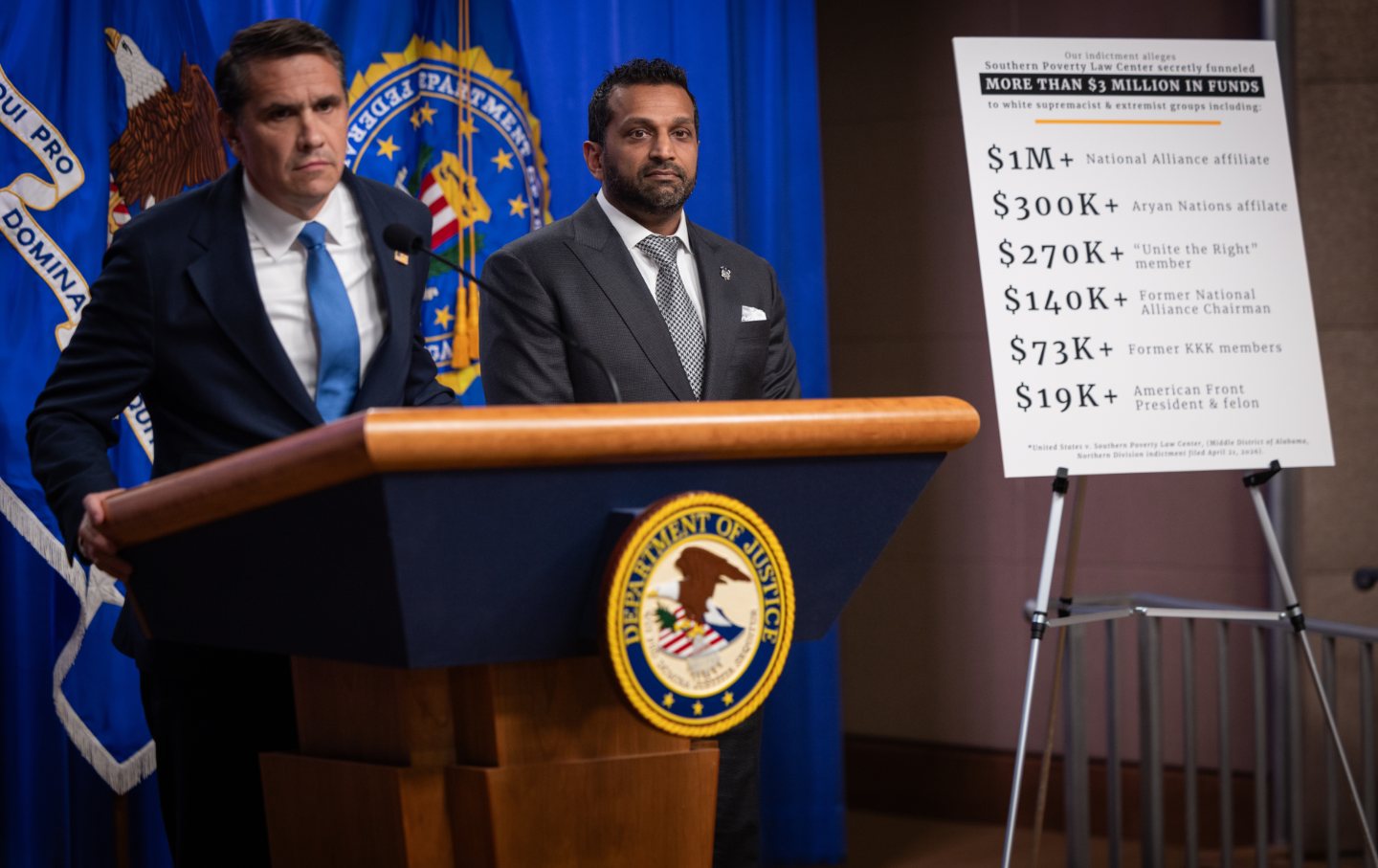
Acting Attorney General Todd Blanche and FBI Director Kash Patel announced the charges at a press conference last Tuesday, framing the case as one where the SPLC was “manufacturing the extremism it purports to oppose by paying sources to stoke racial hatred.” They claimed the organization had been “funding” rather than “dismantling” extremism.
However, a close examination of the actual indictment reveals that these dramatic allegations are nowhere to be found in the formal charges. Instead, the indictment focuses on much narrower technical violations: one count of conspiracy to commit money laundering, four counts of making false statements to federally insured banks, and six counts of wire fraud.
“This is, above all, a deeply dishonest indictment—politically motivated, intellectually bankrupt, and designed to leave a lasting false impression in the minds of people who will never look past the headline,” said Harry Litman, a former US Attorney and deputy assistant attorney general for the DOJ.
The core of the government’s case centers on the SPLC’s use of accounts with generic business names like “Rare Books Photography” and “North West Tech” to pay informants embedded within hate groups such as the Ku Klux Klan, the Aryan Nation, and the National Alliance. The DOJ argues this practice constituted fraud against both the banks that held those accounts and donors who supported the SPLC.
Legal experts have quickly pointed out the practical necessity of such arrangements. The SPLC’s success in fighting hate groups has relied partly on information from well-placed informants whose lives could be endangered if their connection to the civil rights organization were revealed through banking records.
Former DOJ official Litman notes that the wire fraud statute requires proof of an explicit lie told to defraud victims, yet “stunningly, the indictment has no allegation, let alone evidence, of the supposed lie or material omission.” The government’s theory seems to be that because the SPLC solicited donations to “dismantle” extremism while simultaneously paying informants inside those groups, donors must have been deceived.
This argument falls flat, however, when actual SPLC donors are consulted. The Intercept identified 20 verified SPLC contributors who described the indictment as “farcical.” Donor Maya Lenox told the publication, “This is an organization that has been providing very detailed information about how these hate groups have been moving, and of course, in order to have that information, you essentially are going to need spies.”
The irony of the DOJ’s position is particularly striking given the FBI’s own extensive history of using paid informants, often with far more troubling results. The Bureau’s informants have included individuals who committed violent crimes while on the government payroll, including KKK leader Gary Thomas Rowe Jr., who was allegedly involved in the 1965 murder of civil rights activist Viola Liuzzo, and Irish mobster Whitey Bulger, whose FBI relationship helped him conceal 19 murders.
The SPLC, founded in 1971, has built its reputation on landmark civil rights cases, including helping secure a $7 million verdict in 1987 against the United Klan of America that bankrupted the organization. Its Hatewatch program, established in 1998, has monitored hate group activities and shared intelligence with law enforcement agencies for decades.
Until recently, the FBI openly collaborated with the SPLC. A 2007 FBI press release even boasted of the agency’s partnerships with the organization. This relationship changed after the SPLC added groups like Moms for Liberty, the Family Research Council, and Turning Point USA to its Hatewatch list—organizations aligned with Trump’s political base.
President Trump himself undermined the DOJ’s case during a recent 60 Minutes interview where he veered into unfounded accusations against the SPLC, including claims that it funded the 2017 Charlottesville Unite the Right rally—an assertion even white nationalist organizer Richard Spencer has dismissed as false.
The indictment comes as the DOJ is simultaneously seeking to clear records of January 6 insurrectionists charged with seditious conspiracy, despite the FBI’s own assessments in 2006, 2015, and 2021 that white supremacist violence represents the greatest domestic terror threat to national security.
For many observers, the timing and nature of this case suggest it is less about securing convictions than sending a message to white nationalists that the government now stands with them rather than with those who seek to expose their activities. It represents a stark departure from the DOJ’s original mission, established in 1870 amid white backlash to Black enfranchisement, which was to protect African Americans’ voting rights.
Fact Checker
Verify the accuracy of this article using The Disinformation Commission analysis and real-time sources.

7 Comments
While the technical charges against the SPLC may have some merit, the DOJ’s inflammatory rhetoric is concerning. We should be cautious about efforts to delegitimize organizations that shine a light on extremism, even if we don’t always agree with their approach.
Absolutely. The DOJ’s statements about the SPLC “funding” extremism are very problematic and not backed up by the actual indictment details. This appears to be a politically motivated attack, not a genuine legal case.
This seems like a politically motivated attack on the SPLC. The DOJ’s allegations against the civil rights organization are concerning and warrant closer scrutiny. We should be wary of attempts to undermine groups that expose extremism.
This DOJ action against the SPLC sets a dangerous precedent. Using the justice system to target and discredit civil rights organizations that expose extremism is deeply concerning. We must remain vigilant against such politically motivated attacks on watchdog groups.
It’s troubling to see the DOJ targeting a respected civil rights group like the SPLC. This seems like an attempt to discredit and undermine an organization that has been effective at exposing white supremacist activity. We should be vigilant about such political attacks on watchdog groups.
The narrow technical charges against the SPLC appear to be a smokescreen for a broader political agenda. I’m curious to see how this plays out and whether the DOJ can substantiate its dramatic claims about the organization “funding” extremism.
Agreed. The DOJ’s rhetoric about the SPLC “manufacturing extremism” is quite alarming and not backed up by the actual indictment details. This bears close watching.