


Listen to the article
Peru’s electoral authority has been plunged into crisis after right-wing forces orchestrated the removal of its chief amid the country’s ongoing vote count, raising serious concerns about the integrity of the nation’s democratic process.
Piero Corvetto, head of Peru’s National Office of Electoral Processes (ONPE), was forced out of his position last week while the commission was still tallying votes from the April 12 presidential election’s first round. The development represents an unprecedented breach in Peru’s electoral system, which had remained a trusted institution throughout the country’s tumultuous decade of political instability.
Prosecutors raided Corvetto’s home as part of an investigation prompted by claims from right-wing figures who seized on logistical problems during the voting process. These issues, while notable, have been leveraged by political actors as evidence of alleged impropriety despite no substantive proof of electoral fraud.
The controversy comes at a critical juncture as Peru determines which candidate will face Keiko Fujimori in the June 7 presidential runoff. Fujimori, a perennial right-wing contender and daughter of former dictator Alberto Fujimori, has secured her place in the second round.
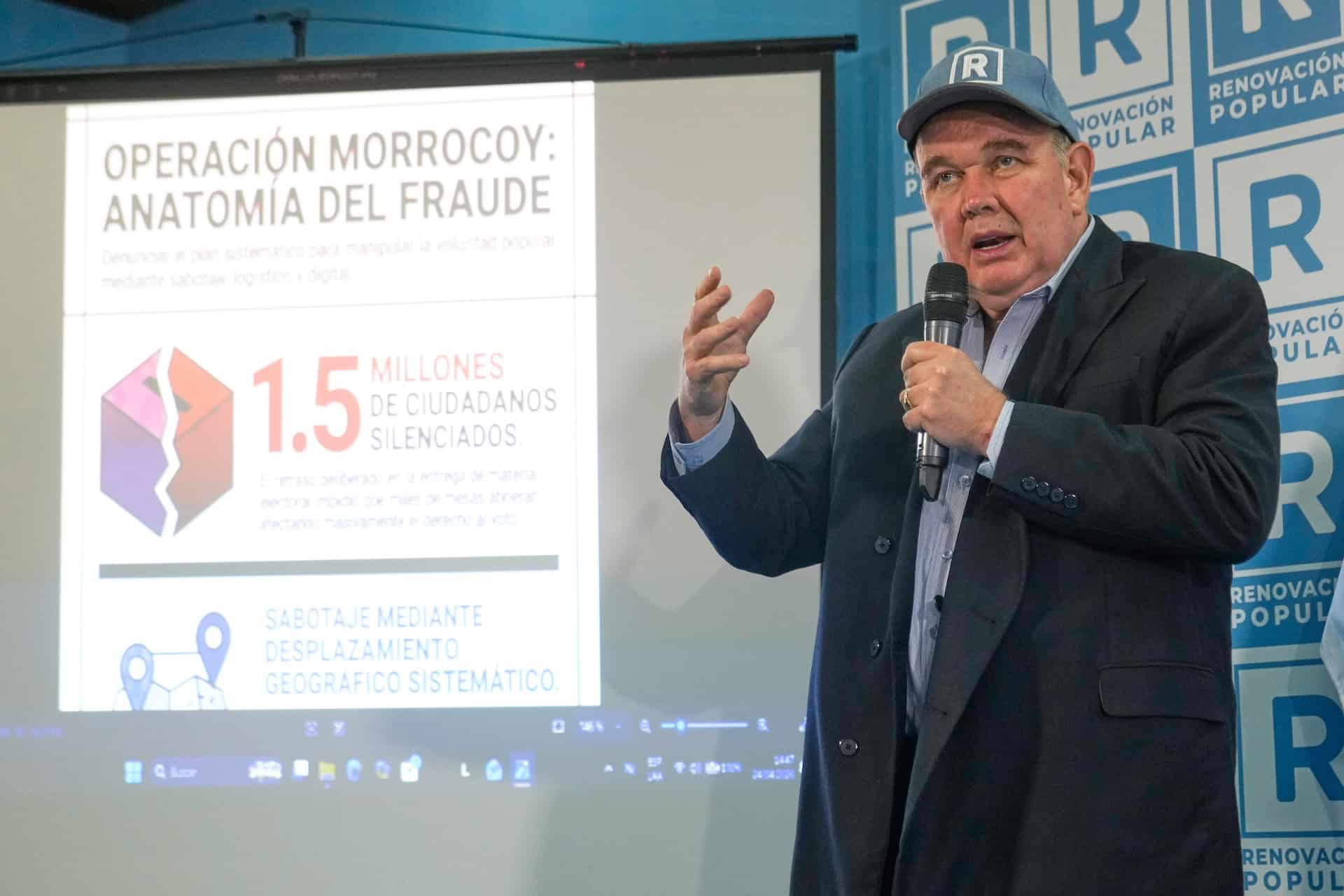
At the center of the attacks against the electoral commission is Rafael López Aliaga, a businessman and former Lima mayor frequently dubbed “the Peruvian Trump.” López Aliaga, himself a presidential candidate, appears to be narrowly losing the second runoff position to leftist Roberto Sánchez, who is allied with former President Pedro Castillo, currently imprisoned following his 2022 attempt to dissolve Congress.
With 96 percent of votes counted, Sánchez maintained a slim lead of approximately 23,000 votes over López Aliaga, having secured just under 2 million votes in total.
Political analysts note that López Aliaga began laying groundwork for electoral challenges well before voting took place, repeatedly warning of “fraud” without presenting evidence. Since election day, his unsubstantiated attacks have intensified against both the ONPE and the National Elections Jury (JNE), the tribunal responsible for resolving electoral disputes.
“This represents a dangerous precedent for Peru’s democracy,” said Carlos Meléndez, a political scientist at Universidad Diego Portales in Chile. “Electoral institutions have been one of the few pillars of stability in Peru’s fractured political landscape. Undermining them serves only those who wish to delegitimize results they don’t favor.”
Peru’s electoral crisis unfolds against the backdrop of extreme political fragmentation. The country has seen six presidents in the past five years, with endemic corruption scandals and institutional conflicts creating profound governability challenges.
International election observers from the Organization of American States have expressed concern about the developments, urging all political actors to respect institutional independence and wait for the complete official results before making claims about the electoral process.
The targeting of electoral authorities follows a pattern seen elsewhere in Latin America, where losing candidates have increasingly challenged results and questioned electoral bodies as a political strategy. Similar scenarios have played out recently in countries like Bolivia, Brazil, and Mexico.
For ordinary Peruvians, the turmoil represents yet another chapter in their country’s ongoing struggle to achieve political stability. Market reactions have been cautious, with the Peruvian sol experiencing moderate volatility as investors weigh the potential for prolonged uncertainty.
“What makes this situation particularly concerning is that electoral authorities have historically been seen as competent and trustworthy by Peruvians across the political spectrum,” said Paula Muñoz, political scientist at Universidad del Pacífico in Lima. “Attacking this institution threatens one of the few remaining sources of democratic legitimacy in the country.”
As the vote count concludes in the coming days, the focus will shift to whether the electoral crisis deepens or whether Peru’s institutions can withstand this latest challenge to their authority and independence.
Fact Checker
Verify the accuracy of this article using The Disinformation Commission analysis and real-time sources.

9 Comments
The removal of Peru’s electoral chief amid the vote count is troubling. Maintaining the independence and impartiality of electoral institutions is crucial for upholding democratic norms. I’ll be following this story closely.
Allegations of electoral fraud can be damaging, even if unproven. Peru’s institutions need to uphold democratic norms and resist political pressure. I’m curious to see how this plays out as the runoff approaches.
Agreed. Maintaining faith in the electoral system is crucial, especially during a transition of power. I hope Peruvian officials can de-escalate the situation and focus on a transparent, credible process.
This is a complex situation that requires a measured, fact-based response. Ensuring the integrity of Peru’s elections should be the top priority, regardless of political affiliations. I’m curious to see how this unfolds in the coming weeks.
Unsubstantiated claims of electoral fraud can be damaging, even if they’re politically motivated. Peru needs to ensure its democratic processes are transparent and accountable. I hope the authorities can navigate this crisis responsibly.
Unfounded claims of fraud can erode public trust in elections. Peru needs to ensure its democratic processes are robust and resilient to such allegations. Careful scrutiny of the facts is essential.
Absolutely. Protecting the integrity of elections should be the top priority, regardless of political affiliations. I hope Peru’s authorities can restore confidence in the system.
This is a concerning development for Peru’s democracy. Allegations of fraud require solid evidence, not political posturing. I hope the electoral authorities can restore faith in the process and ensure a fair outcome.
This is a concerning development for Peru’s democracy. While logistical issues can arise in any election, it’s crucial that they are addressed transparently and without unsubstantiated claims of fraud. I hope the electoral process can proceed in a fair and impartial manner.