


Listen to the article
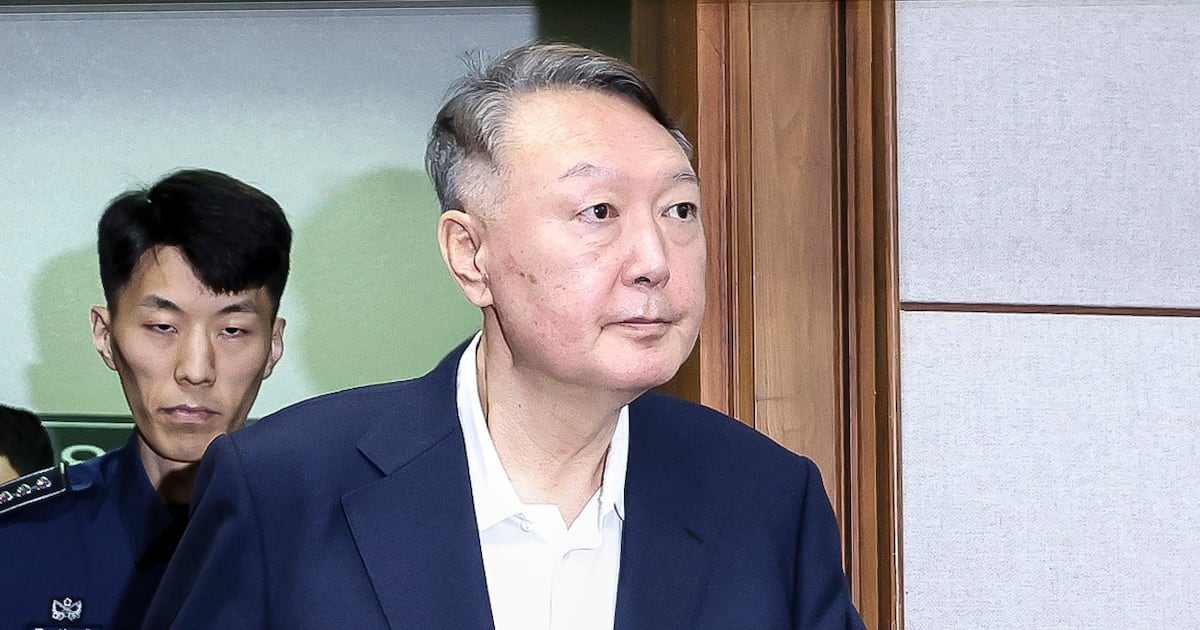
In an emphatic rejection of allegations that have swirled through South Korean political circles, former President Yoon Suk-yeol has firmly denied accusations that he sought spiritual guidance from a shaman during his electoral campaign.
The denial came during testimony at a high-profile election trial where Yoon addressed one of the most controversial claims that has shadowed his political career. The former prosecutor-turned-politician characterized the allegations as baseless rumors designed to damage his reputation and undermine public confidence in his leadership.
“These claims are completely unfounded and represent a calculated attempt to discredit me,” Yoon stated during the proceedings. “My campaign decisions were based on policy considerations and strategic planning, not spiritual consultations.”
The allegations first emerged during the heated presidential race when opposition figures suggested Yoon had consulted with shamans to determine auspicious dates for campaign events and to receive guidance on political strategy. Such claims hold particular weight in South Korea, where shamanism remains culturally significant but is often viewed with skepticism in mainstream politics.
South Korea’s relationship with shamanism is complex. The traditional spiritual practice, which predates Buddhism and Christianity in the Korean peninsula, involves communication with spirits and deities. While shamanic practices remain part of Korea’s cultural heritage, their intersection with modern politics typically generates controversy.
This is not the first time a South Korean leader has faced such accusations. Former President Park Geun-hye was embroiled in a scandal involving her confidante Choi Soon-sil, who was accused of exerting undue influence over state affairs despite holding no official position. The scandal, which included elements of spiritual influence, ultimately led to Park’s impeachment and removal from office in 2017.
Political analysts suggest the allegations against Yoon reflect the increasingly polarized nature of South Korean politics. Kim Min-ho, a political science professor at Seoul National University, notes that “accusations of shamanic influence have become a common political weapon, particularly effective because they question a politician’s independence and rationality.”
The trial has attracted significant public attention, with polling data indicating that nearly 65% of South Koreans have followed the proceedings closely. The case highlights ongoing tensions between traditional spiritual practices and modern governance expectations in one of Asia’s most technologically advanced democracies.
Yoon’s defense team has presented evidence of his decision-making process during the campaign, including meeting minutes and strategy documents that they claim demonstrate rational planning rather than spiritual guidance. They have characterized the allegations as part of a broader smear campaign orchestrated by political opponents.
The opposition party has maintained that their concerns are legitimate, citing unusual scheduling patterns during Yoon’s campaign and reports from former staff members who claimed to have witnessed discussions about shamanic consultations.
The trial occurs against a backdrop of economic challenges for South Korea, with inflation concerns and housing affordability issues affecting public sentiment. Some political observers suggest the focus on these allegations diverts attention from more pressing policy matters.
Media coverage has been extensive, with conservative outlets generally supporting Yoon’s denials while progressive publications have taken a more skeptical stance. Social media platforms have seen intense debate, with hashtags related to the trial trending consistently since proceedings began.
As the trial continues, its outcome could have significant implications for Yoon’s political legacy and the broader question of how traditional beliefs intersect with modern governance in South Korea. Legal experts suggest that while proving spiritual influence in decision-making is inherently difficult, the court will focus on whether campaign funds were misappropriated for consultations with spiritual advisors.
The case represents yet another chapter in South Korea’s complex political landscape, where traditional values and modern democratic principles continue to coexist, sometimes uneasily, in one of Asia’s most dynamic societies.
Fact Checker
Verify the accuracy of this article using The Disinformation Commission analysis and real-time sources.

13 Comments
Interesting to see a former head of state having to defend against such unorthodox claims. While the cultural context is important, using spiritual guidance for political gain raises ethical concerns. Looking forward to seeing how this trial progresses.
The role of shamanism in South Korean politics is quite fascinating. While it may hold cultural significance, using it for political gain seems questionable. Curious to see how this trial unfolds.
You make a good point. Separating spiritual beliefs from government decision-making is an important principle, regardless of cultural context. This trial will likely provide more clarity on the situation.
These types of accusations often seem more politically motivated than based on facts. However, the cultural significance of shamanism in South Korean politics means the former president needs to address the claims head-on. The trial will hopefully provide clarity and restore public trust.
As an outsider, it’s hard to assess the credibility of these claims against the former president. Seeking spiritual guidance could be culturally acceptable, but using it for political maneuvering is more problematic. Transparency is key in these cases.
Absolutely. Maintaining public trust in the political process is critical, so any perception of undue influence or manipulation needs to be thoroughly investigated and addressed.
Interesting to see the former president deny these spiritual guidance claims. Sounds like a politically-motivated attack to discredit him. Wonder if there’s more to the story or if it’s just baseless rumors.
I agree, these types of allegations often seem designed to undermine political opponents rather than reflect reality. Glad to see the president forcefully reject the claims.
Regardless of one’s political leanings, the integrity of the electoral process should be paramount. These allegations, if true, could seriously undermine public trust. The former president’s denial is understandable, but the trial will hopefully provide clarity.
As an observer, it’s difficult to assess the validity of these claims without more information. The cultural significance of shamanism in South Korean politics adds an intriguing layer of complexity. I’ll be following this trial closely to see how it unfolds.
The intersection of politics and spirituality can be a tricky and divisive issue. I’m curious to see if the former president can convincingly refute these allegations or if there is more to the story. Transparency and accountability are key in these situations.
Allegations of this nature can be quite damaging, so I’m not surprised the former president is pushing back so strongly. It will be interesting to see if any credible evidence comes to light, or if this turns out to be more political theater than substantive scandal.
The former president’s forceful denial suggests these claims may indeed be politically motivated. Still, the cultural context around shamanism in South Korean politics warrants close examination. Curious to see what evidence emerges from this trial.