


Listen to the article
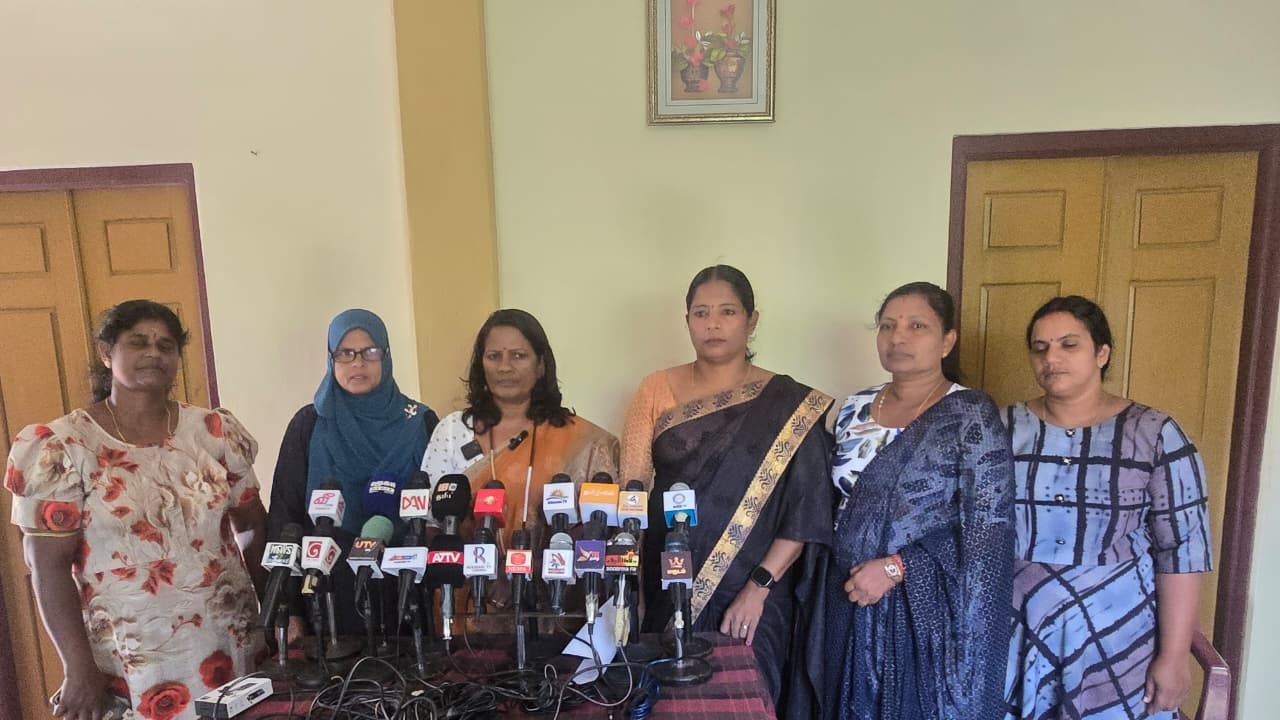
Female activists in the northern Sri Lankan district of Mannar have launched a unified campaign against a rising tide of online harassment targeting women engaged in political and social activism. At a press conference held last week at the Mannar Women’s Development Union office, participants issued a forceful call for legal action against perpetrators using fake social media accounts to spread defamatory content.
The briefing, organized under the leadership of Union President Mahalaxmi Guru Santhan, brought together women members of local government bodies, social activists, representatives from fishermen’s organizations, and other community stakeholders to address what they described as a systematic attempt to silence female voices in the region.
“The sustained effort to intimidate women activists through online platforms represents a direct threat to our democratic foundations,” said one participant, highlighting how the harassment extends beyond mere political disagreement to gender-based attacks on women’s personal character, appearance, and private lives.
The Mannar region, still recovering from Sri Lanka’s decades-long civil conflict that ended in 2009, has seen women playing increasingly prominent roles in post-war reconstruction and governance. However, this growing female presence in public life appears to have triggered backlash in the form of coordinated social media campaigns designed to undermine their credibility.
Speakers at the event emphasized that while political differences are natural in a democratic society, targeting women specifically because of their gender crosses a critical line. They described how the online harassment often includes threats of violence, humiliating comments about women’s bodies, and attempts to expose details of their private lives—tactics rarely employed against male counterparts in similar positions.
The harassment carries real-world consequences, according to representatives from the Women’s Development Union. They pointed to declining rates of female participation in community meetings, increasing hesitancy among women to speak publicly on controversial issues, and psychological distress experienced by those targeted. Several women have reportedly withdrawn from public roles entirely following particularly aggressive harassment campaigns.
Human rights organizations operating in northern Sri Lanka have documented similar patterns across the Tamil-majority regions, suggesting this represents a broader challenge to women’s participation in post-conflict governance structures. The phenomenon mirrors global trends where online harassment disproportionately affects women in public-facing roles.
“When women are silenced through intimidation, we lose essential perspectives in decision-making that affects entire communities,” explained a local government representative at the briefing. “This isn’t merely a women’s issue—it undermines the quality of our democracy itself.”
The gathering outlined specific demands, including prompt investigation of fake social media accounts by law enforcement authorities, implementation of existing laws against cyber harassment, and establishment of support mechanisms for women targeted by such campaigns. They also called on social media platforms to respond more effectively to reports of gender-based harassment.
Sri Lankan law technically prohibits online harassment through the Computer Crime Act and other legislation, but enforcement has been sporadic, especially in regions like Mannar where institutional presence remains limited. Activists highlighted the gap between legal protections on paper and actual implementation.
The Union emphasized that their campaign is not seeking special protection but rather equal application of existing laws and a recognition that gender-based harassment represents a form of discrimination that inhibits women’s constitutional right to participate in public life.
As the meeting concluded, participants reaffirmed their commitment to creating a safer environment for women in politics and social activism, announcing plans for a district-wide awareness campaign about online harassment and training sessions on digital safety for women in public roles.
The situation in Mannar reflects broader challenges facing female political participation across post-conflict societies, where women’s increased visibility often collides with entrenched gender norms, creating new forms of resistance through digital platforms.
Fact Checker
Verify the accuracy of this article using The Disinformation Commission analysis and real-time sources.

12 Comments
These coordinated online attacks against female activists in Mannar are deeply troubling. Silencing women’s voices through smear campaigns and harassment is a direct assault on democratic principles and the hard-won progress towards gender equality. I hope the authorities take decisive action to protect these courageous women and hold the perpetrators accountable.
Absolutely. In a region still recovering from conflict, it’s vital that all citizens can freely engage in the political process without fear of reprisal. The unified response from the Mannar community is an important step in addressing this challenge and safeguarding the democratic rights of women activists.
The women of Mannar are rightfully demanding action against these fake accounts used to spread defamatory content. In an era of rampant disinformation, protecting vulnerable groups from online harassment is essential for upholding democratic principles and the rule of law. I hope the authorities respond swiftly and decisively to this issue.
Absolutely. The sustained effort to intimidate female activists through coordinated online attacks is a serious threat that must be confronted. Strengthening digital safety and combating gender-based harassment should be top priorities for policymakers in the region.
These fake social media accounts are a disturbing tactic to discredit and intimidate women activists. In a region still recovering from conflict, it’s crucial that all citizens, regardless of gender, can freely engage in the political process without fear of reprisal. I hope the authorities take swift action to identify and prosecute those responsible.
I agree. Online harassment targeting women’s appearance and personal lives is a particularly pernicious form of gender-based violence that must be addressed. The women of Mannar are showing tremendous courage in speaking out against these attacks.
The concerted effort to intimidate female activists in Mannar through fake social media accounts is a concerning development that deserves serious attention. Online harassment and disinformation campaigns targeting women’s personal lives and character are a pernicious form of gender-based violence that undermines democratic participation. I hope the authorities take swift action to identify and prosecute those responsible.
I agree. Protecting the right to free expression and political engagement, especially for marginalized groups, is crucial for building a more inclusive and resilient democracy. The courage of the Mannar women in speaking out against these attacks is commendable, and I hope their call for action leads to meaningful change.
It’s encouraging to see the Mannar community come together to address this concerning issue of fake social media accounts targeting women activists. Protecting the right to free expression and political participation, especially for marginalized groups, is crucial for building a more inclusive and resilient democracy.
I agree. The women of Mannar are showing tremendous courage in speaking out against these attacks. Authorities must take swift action to identify and prosecute the perpetrators in order to send a clear message that this kind of harassment will not be tolerated.
It’s deeply concerning to see these coordinated attacks targeting female activists in Mannar. Online harassment and smear campaigns are a serious threat to democratic participation and free speech. Local authorities must take strong action to protect these courageous women and hold the perpetrators accountable.
Absolutely. Silencing female voices through online abuse is unacceptable and undermines the progress made towards gender equality and inclusive governance. The community’s unified response is an important step in addressing this challenge.