


Listen to the article
Misinformation Surges Following Japan’s Recent Earthquake
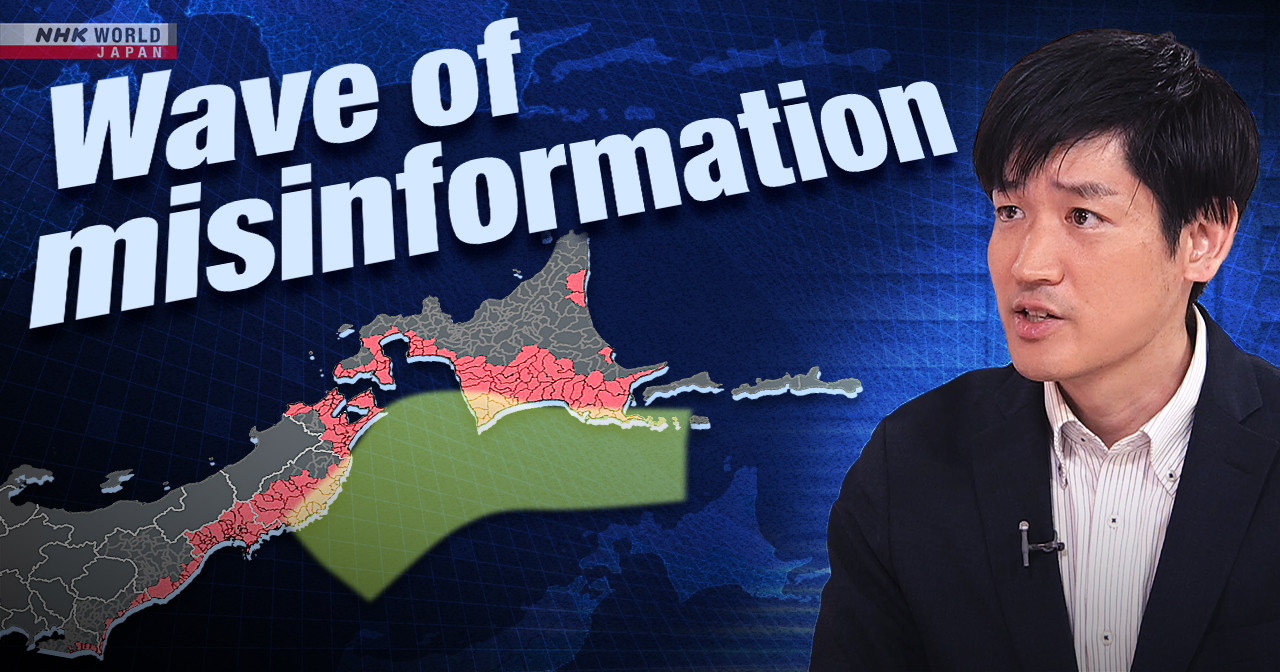
Communities across northeastern Japan remain vigilant following the magnitude 7.7 earthquake that struck off Iwate Prefecture on April 20. The seismic event generated tsunami waves reaching 80 centimeters high, prompting authorities to place residents in coastal areas across 182 municipalities from Hokkaido to Chiba Prefecture on alert until April 27 for a potential mega quake.
As residents cope with the physical aftermath, another challenge has emerged: a flood of misinformation spreading across social media platforms.
In the hours following Monday’s tsunami warning, social media channels became inundated with fake posts. One widely circulated post on X claimed to show footage of a tsunami while warning of immediate danger. The video, which garnered over 1.9 million views, was actually footage from the 2011 Great East Japan Earthquake, repurposed to appear current.
Even more concerning, some users shared AI-generated videos purporting to show tsunami waves hitting Japanese shores. These sophisticated fakes, created using generative artificial intelligence technology, present a new challenge for disaster communication as they appear increasingly realistic and difficult to distinguish from authentic footage.
Experts note this pattern is becoming common during natural disasters. When people feel anxious and seek immediate information about unfolding events, opportunistic users exploit this vulnerability by posting false content for attention and engagement.
“During emergencies, the public’s hunger for information creates a perfect environment for misinformation to flourish,” said Takashi Moriyama, a digital media analyst at Tokyo University who studies crisis communication. “The incorporation of AI-generated content represents a dangerous evolution in this problem.”
Another troubling trend involves accounts that claim to predict earthquakes. These accounts post continuous predictions about potential seismic events, ensuring that when earthquakes inevitably occur in seismically active regions like Japan, they can point to their “successful” forecasts.
One such account on X makes near-daily earthquake predictions. It happened to mention the possibility of an earthquake in the same region before Monday’s event, creating an illusion of predictive ability. However, experts emphasize that seismic activity is common off the Sanriku coast, making such “predictions” meaningless coincidences rather than scientific insights.
The Japan Meteorological Agency has issued clear warnings about these prediction claims. “It is scientifically impossible to predict the exact date, location or strength of an earthquake with current technology,” the agency stated in a public advisory. “Any individual or organization claiming such ability should not be trusted.”
Beyond misinformation, financial opportunists are exploiting the disaster by flooding social media with investment schemes. NHK, Japan’s public broadcaster, tracked spam messages on X that targeted users searching for earthquake information. These posts, often published every few seconds, encouraged people to make investments or purchase stocks, potentially leading to financial fraud.
In a single day following the earthquake, NHK documented over 15,000 such posts published by more than 2,500 accounts. Many directed users to messaging applications where further solicitation could occur away from public view.
Digital literacy experts recommend several steps for identifying reliable information during disasters. Users should verify the regular posting patterns of accounts sharing disaster information, check whether sources are clearly identified, and prioritize updates from official government agencies and established news organizations.
“The emotional impact of disasters makes people particularly vulnerable to misinformation,” said Yuko Tanaka, a crisis communication specialist at Tohoku University. “Checking multiple reliable sources before sharing content is crucial during these events.”
As parts of Japan remain under seismic advisory, authorities emphasize the importance of preparedness coupled with information vigilance. The Japan Meteorological Agency continues to monitor the situation closely, providing regular updates through official channels.
For residents in affected areas, maintaining access to battery-powered radios and official emergency notification systems remains the most reliable way to stay informed as the situation develops.
Fact Checker
Verify the accuracy of this article using The Disinformation Commission analysis and real-time sources.

13 Comments
The use of old footage and AI-generated videos to spread misinformation is really troubling. It’s imperative that people be vigilant about verifying information, especially during crisis situations when accurate data is vital. Social media platforms need to do more to curb the spread of these deceptive posts.
I agree. The speed at which misinformation can spread online is alarming. Better content moderation and public awareness campaigns are crucial to combat this issue and ensure people can access reliable information during emergencies.
This is a worrying trend that highlights the need for better public education and more robust fact-checking measures. Misinformation can have severe consequences, especially during crisis situations when timely, accurate information is vital. Authorities and social media companies must work together to combat this issue.
The proliferation of AI-generated fake videos is a major concern. These sophisticated tools make it increasingly difficult to distinguish truth from fiction, which can be extremely dangerous during crises. Stricter regulations and better detection methods are needed to address this growing problem.
Agreed. The potential for these AI-generated fakes to cause widespread panic and confusion is alarming. It’s critical that social media platforms and authorities work together to combat this issue and ensure the public has access to reliable, fact-based information.
This is a worrying trend, as misinformation can have serious consequences, especially in the aftermath of natural disasters. It’s crucial that authorities and social media companies work together to quickly identify and remove false content, while also educating the public on how to spot and verify information.
The use of old footage and AI-generated videos to spread misinformation is extremely concerning. Accurate information is crucial during emergencies, and the proliferation of these deceptive posts can cause unnecessary panic and confusion. Stronger measures are needed to combat this issue.
I agree. With the increasing sophistication of these AI-generated fakes, the public needs to be more vigilant than ever in verifying information from reliable sources. Social media platforms have a responsibility to address this problem more effectively.
This is a troubling development, as the spread of misinformation can have serious consequences, especially in the aftermath of natural disasters. It’s crucial that authorities and social media companies work together to quickly identify and remove false content, while also educating the public on how to spot and verify information.
The spread of misinformation following natural disasters is a serious concern. It’s critical that the public be vigilant in verifying information, and that authorities and social media platforms take strong action to identify and remove false content. Educating the public on how to spot misinformation is also crucial.
Absolutely. The use of AI-generated videos to spread false information is particularly alarming, as it makes it even harder for people to distinguish fact from fiction. Stricter regulations and more advanced detection methods are urgently needed to address this growing problem.
It’s really concerning to see misinformation spreading after a natural disaster like this earthquake. Social media has become a breeding ground for fake news, which can cause a lot of unnecessary panic. Fact-checking and verifying sources is crucial during emergencies.
Absolutely. With AI-generated videos becoming more realistic, it’s getting harder to spot fakes. Authorities need to act quickly to combat this problem and ensure people have access to accurate, trustworthy information.