


Listen to the article
BPSC Warns Against Fake TRE 4.0 Notification Circulating Online
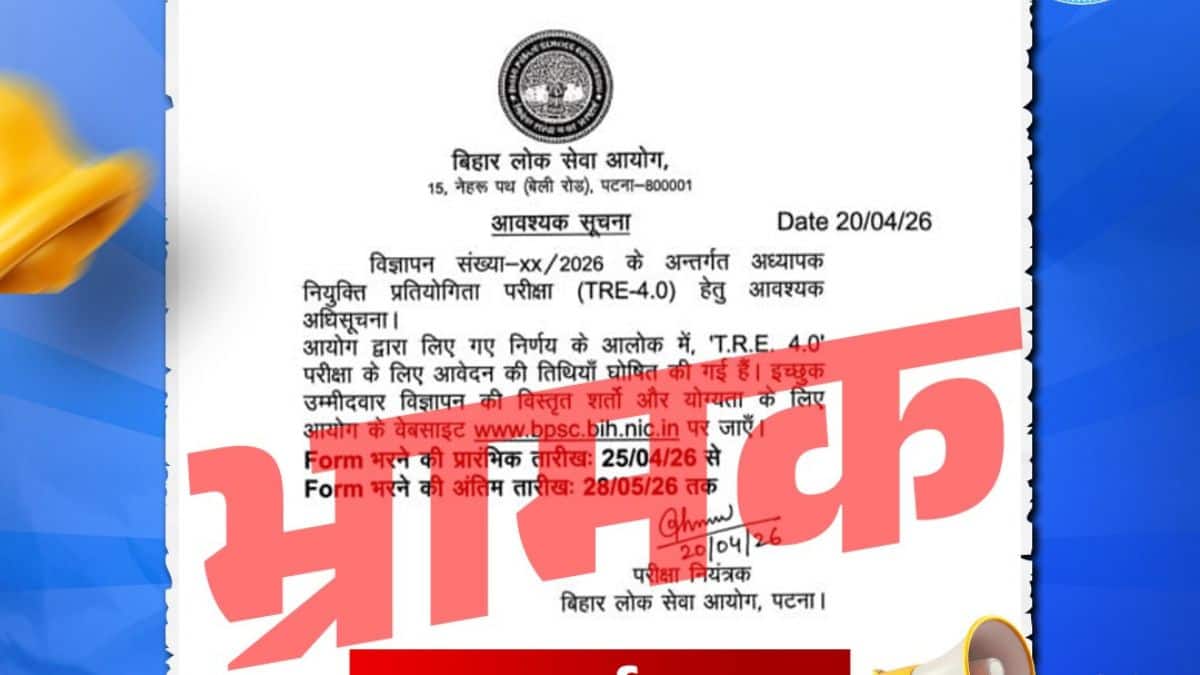
The Bihar Public Service Commission (BPSC) has issued an official clarification regarding a fraudulent notification for Teacher Recruitment Examination (TRE 4.0) that has been circulating widely on social media and messaging platforms.
The fake notice, which claimed applications for 46,882 teaching positions would open on April 25 with exams scheduled between September 22-27, 2026, has been categorically dismissed by the Commission.
“This information is misleading, unverified, and has not been issued by the Commission,” the BPSC stated in an official announcement on its X (formerly Twitter) account. “No official notification regarding the application dates for the TRE-4.0 examination has been released by the Bihar Public Service Commission.”
The Commission has urged aspiring candidates and the general public to rely exclusively on official sources for information, specifically directing them to the BPSC’s official website (bpsc.bih.nic.in) and verified social media handles.
This incident reflects a growing trend of misinformation surrounding competitive government examinations in India, where teaching positions are highly sought after due to job security and benefits. The widespread circulation of such fabricated notices often exploits the anxiety of millions of unemployed graduates desperately seeking government employment.
The situation is particularly sensitive given the mounting pressure from teacher aspirants who have been actively demanding the release of the actual TRE 4.0 notification. In September 2025, Bihar’s Education Minister Sunil Kumar had announced that vacancies for BPSC TRE 4 would be made public “within five days,” creating expectations that the examination would be conducted in December 2025 with results following in January.
The delay in releasing the official notification has sparked significant unrest. In October 2025, hundreds of BPSC aspirants took to the streets of Patna, demonstrating for the immediate release of examination details. Their protests also incorporated broader demands for filling approximately 1.2 lakh teacher vacancies across the state.
The situation intensified when authorities arrested student leader Dileep Kumar in Darbhanga ahead of a planned demonstration in Patna. This action triggered widespread condemnation on social media platforms, with many critics characterizing it as an attempt to suppress legitimate student concerns.
Bihar’s education sector has experienced considerable turbulence in recent years, with teacher recruitment processes often marred by delays, controversies, and legal challenges. The TRE examinations represent a critical pathway for education graduates seeking permanent positions in the state’s school system, which continues to struggle with teacher shortages despite multiple recruitment drives.
Meanwhile, the Commission recently announced results for TRE 3.0 examinations for Classes 9 and 10 across multiple subjects on December 17, indicating that the recruitment process is ongoing but following its own official timeline.
Education experts have noted that the circulation of fake notifications not only creates confusion among candidates but also undermines trust in the official recruitment system. Cybersecurity specialists recommend that candidates verify all information through multiple official channels before acting on any recruitment-related announcements.
The BPSC’s prompt clarification highlights the authorities’ awareness of the potential disruption such misinformation can cause to the recruitment process and to the career planning of thousands of teaching aspirants across Bihar.
Fact Checker
Verify the accuracy of this article using The Disinformation Commission analysis and real-time sources.

10 Comments
Kudos to the Bihar Public Service Commission for swiftly issuing a clarification. Maintaining transparency and credibility is crucial for any government body.
This incident underscores the importance of digital literacy and critical thinking when accessing information online. Verifying the source is crucial.
I hope this serves as a wake-up call for the government to strengthen its efforts to combat misinformation, especially in the context of public recruitment.
This episode highlights the vulnerability of the public to online deception. Improving digital literacy and fact-checking skills should be a priority.
Fake notifications can create unnecessary confusion and panic among candidates. I hope the authorities take strict action against those responsible for spreading this misinformation.
It’s worrying to see fake notifications circulating about important government exams. Aspiring candidates should always rely on official sources to get accurate information.
The Commission’s swift response is commendable, but the broader challenge of combating misinformation in the digital age remains. Vigilance and collaboration are key.
The rise of misinformation is a concerning trend that needs to be addressed. Aspiring teachers should be wary of unverified claims and stick to official channels for updates.
While it’s good that the Commission acted quickly, the damage from such fake notifications can still be significant. Proactive measures are needed to prevent such incidents.
This highlights the need for stronger measures to combat misinformation, especially around sensitive topics like government recruitment. The public deserves reliable information they can trust.