


Listen to the article
Fake Images Fuel False Claims About White House Shooting Suspect’s Marriage to Indian Woman
In the aftermath of Saturday’s firearm discharge incident near the White House Correspondents’ Dinner in Washington, a web of misinformation has emerged concerning the suspect, California resident Cole Tomas Allen. Social media platforms have become breeding grounds for unsubstantiated claims about Allen’s personal life, particularly allegations that he is married to an Indian national named “Priyanka Rao.”
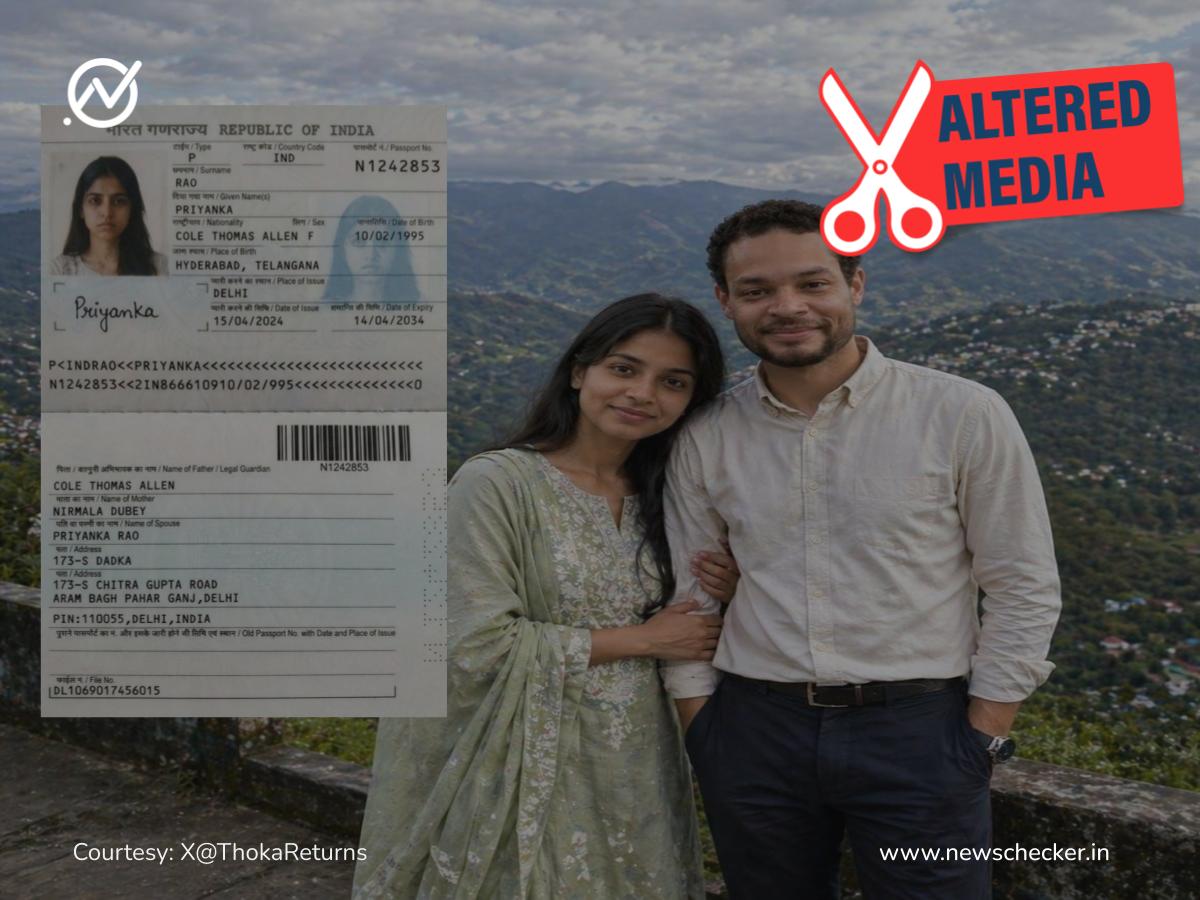
The viral posts feature what purports to be a photograph of the couple together and an image of an Indian passport allegedly belonging to the woman. However, a comprehensive investigation reveals these claims lack credible foundation and appear to be fabricated using artificial intelligence technology.
Extensive keyword searches combining “Cole Tomas Allen” and “Priyanka Rao” yield no reliable news coverage confirming such a relationship. Major international media outlets covering the White House incident have made no reference to Allen having an Indian spouse, which would likely have been a notable biographical detail in their reporting.
The photograph allegedly showing Allen with “Priyanka Rao” demonstrates several telltale signs of AI generation, including unnaturally smooth skin textures and subtle inconsistencies in facial features. Multiple AI-detection tools, including Hive Moderation, Sightengine, and Undetectable AI, flagged the image as likely computer-generated rather than an authentic photograph.
Even more revealing are the glaring inconsistencies in the purported Indian passport image. The document contains numerous errors that would never appear in a legitimate government-issued identification document. These include misspellings in the Hindi text and bizarre content errors, such as listing “Cole Thomas Allen” as the holder’s nationality rather than “Indian” and repeating “Priyanka Rao” as both the passport holder’s name and spouse’s name.
Additionally, the passport image shows structural abnormalities, like a dual address column that doesn’t conform to standard Indian passport formatting. Google Gemini’s analysis detected a SynthID watermark within the image, a technological signature indicating the photo was created or substantially modified using Google’s AI tools.
The circulation of these fabricated images highlights an increasingly common phenomenon in the wake of high-profile incidents: the rapid spread of misinformation through artificially generated “evidence.” In recent years, AI-generated imagery has become increasingly sophisticated and accessible, making it a powerful tool for those seeking to spread false narratives or exploit public interest in breaking news events.
Law enforcement officials have not released any information suggesting Allen has connections to India or is married to a foreign national. The actual investigation is focused on the circumstances surrounding the gunfire incident near the Washington Hilton hotel, where the annual White House Correspondents’ Dinner was taking place with President Biden and numerous journalists and celebrities in attendance.
This case represents a growing challenge for media consumers and journalists alike: distinguishing between authentic information and sophisticated AI-generated content designed to mislead. The speed with which these false claims spread across social platforms underscores the need for critical media literacy and verification practices when consuming information about breaking news events.
As the legal proceedings against Allen move forward, authorities have yet to release comprehensive biographical information about the suspect. Until official details emerge from credible sources, claims about his personal relationships should be treated with significant skepticism, particularly when the only supporting evidence consists of images that demonstrate clear signs of artificial manipulation.
The investigation into the White House Correspondents’ Dinner incident continues, with authorities focused on determining motives and circumstances surrounding the gunfire rather than the suspect’s purported marital status.
Fact Checker
Verify the accuracy of this article using The Disinformation Commission analysis and real-time sources.

9 Comments
This is a timely reminder of the importance of media literacy and fact-checking. Unchecked rumors and fabricated claims can quickly spiral out of control online.
The use of AI-generated images to spread misinformation is a concerning trend. Fact-checking and critical thinking are crucial skills in today’s information landscape.
Agreed. As technology advances, we must be ever more vigilant about verifying the sources and validity of online content. Responsible reporting is essential.
It’s disappointing to see false narratives taking hold so quickly, especially around sensitive events. We must be cautious about what we share online and demand accuracy from our news sources.
While the incident at the White House Correspondents’ Dinner is certainly newsworthy, the focus should be on the facts, not unverified speculation. Disinformation helps no one.
Interesting how quickly misinformation can spread online, especially around high-profile incidents. Fact-checking is crucial to separate truth from fiction in these cases.
Agreed. The use of AI-generated images to spread false claims is particularly concerning. We need to be vigilant about verifying information from credible sources.
This is a prime example of the dangers of unchecked social media rumors. It’s important to wait for official investigations and reporting before jumping to conclusions.
Absolutely. Spreading unsubstantiated claims, even if they seem plausible, can do real harm. Responsible reporting and fact-checking are essential.