


Listen to the article
Metro “Engagement” Video Revealed as Scripted Content, Not Spontaneous Event
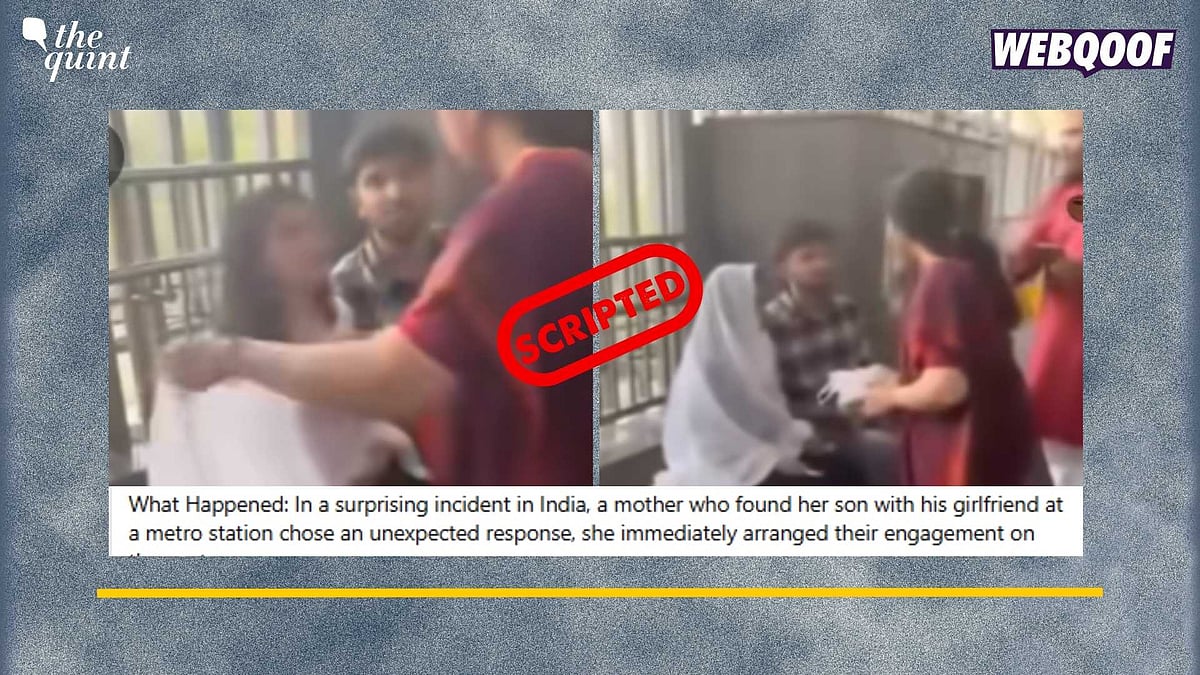
A widely circulated video showing a young couple participating in a Hindu pre-wedding ritual known as “Roka” at a metro station has been confirmed as staged content, despite being shared across social media platforms as an authentic incident.
The video, which gained significant traction online, depicts a woman seemingly performing the traditional engagement ceremony for a young couple at a public transit location. According to the viral narrative accompanying the footage, a mother unexpectedly encountered her son with his partner at the metro station and decided to formalize their relationship on the spot by conducting an impromptu Roka ceremony.
This claim spread rapidly across multiple social media platforms, with numerous accounts presenting the footage as a heartwarming real-life occurrence. The video’s emotional appeal helped fuel its virality, as viewers were drawn to the seemingly spontaneous nature of the event.
However, fact-checking efforts have determined the video is entirely scripted. Digital media investigators traced the content back to its original source: the social media account of an Instagram content creator who specializes in producing dramatized scenarios and skits for entertainment purposes.
The Roka ceremony holds significant cultural importance in Hindu traditions as a pre-engagement ritual where families officially acknowledge a couple’s relationship and their intention to marry. Typically conducted in homes or venues with both families present, the ceremony involves exchanging gifts and sweets, marking the beginning of wedding preparations.
The fabricated metro station scenario represents a growing trend of staged content being presented as authentic across social media platforms. Digital media experts note that such videos often gain traction because they blend cultural traditions with unusual settings, creating shareable content designed to provoke emotional responses.
This phenomenon has become increasingly common on platforms like Instagram, TikTok, and YouTube, where content creators compete for engagement by producing emotionally charged scenarios that blur the line between reality and fiction. The practice raises concerns about misinformation and how easily staged content can be mistaken for genuine moments.
Social media literacy advocates emphasize the importance of critical evaluation when consuming viral content. They recommend looking for hallmarks of staged videos, including overly convenient camera positioning, unusually clean audio in public spaces, and perfectly timed emotional moments that would be difficult to capture authentically.
The metro Roka video joins a growing catalog of viral content later revealed to be scripted, highlighting the challenges platforms and users face in distinguishing between authentic user-generated content and professionally produced entertainment.
Media researchers note that such misleading content, while seemingly harmless in isolation, contributes to a broader ecosystem where distinguishing fact from fiction becomes increasingly difficult for average users. This particular case demonstrates how cultural traditions can be commodified and dramatized for social media engagement.
For social media users encountering similar content, experts recommend checking the original source of videos before sharing them as authentic events, looking for creator watermarks, and maintaining healthy skepticism toward perfectly captured “spontaneous” moments, particularly those that align with popular narrative tropes or seem designed to trigger emotional reactions.
As digital media literacy continues to evolve, the ability to identify staged content remains an essential skill for navigating today’s complex information landscape where entertainment and reality frequently overlap in ways designed to capture attention rather than document genuine human experiences.
Fact Checker
Verify the accuracy of this article using The Disinformation Commission analysis and real-time sources.
