


Listen to the article
In a startling development in the Philippines’ budget insertion scandal, a manipulated video falsely depicting former Ako Bicol representative Zaldy Co “admitting” to fabricating allegations against President Ferdinand Marcos Jr. has gone viral on social media, garnering millions of views despite being AI-generated.
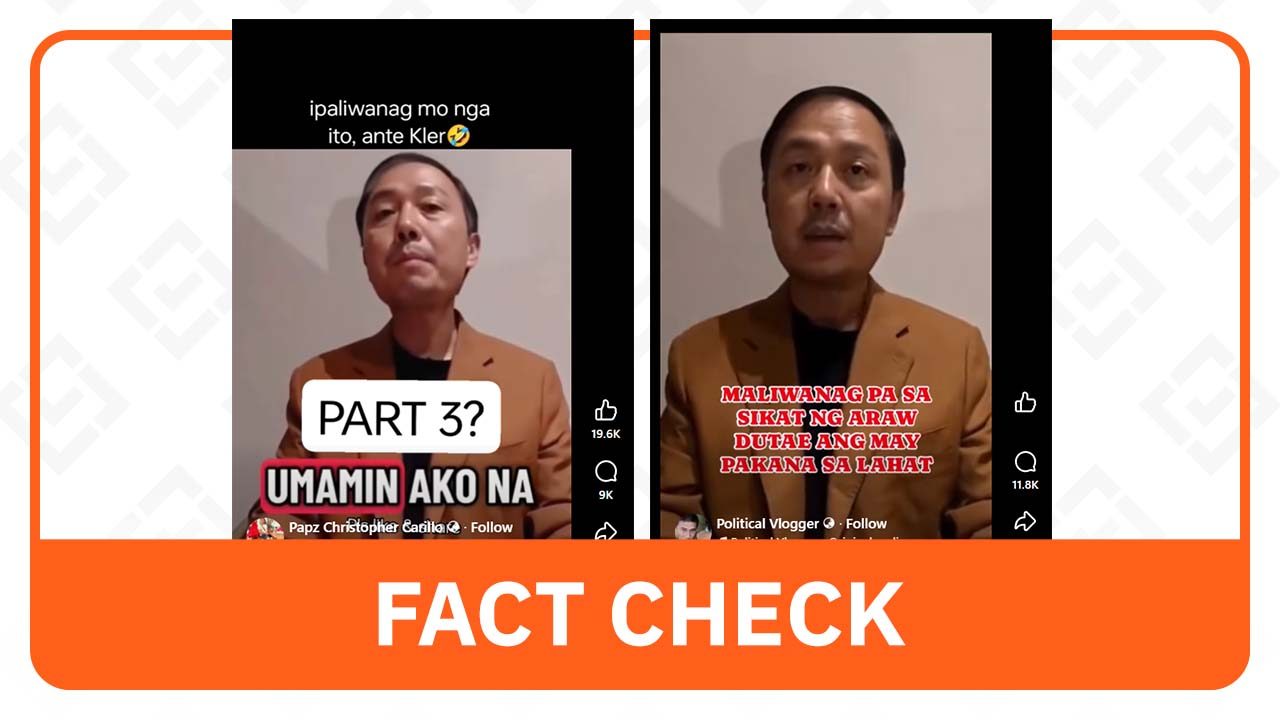
The deceptive video, which began circulating on Facebook on November 15, shows what appears to be Co claiming he was “ordered by the Dutertes to defame our President.” The clip has already amassed 2.2 million views, 11,800 comments, and 11,000 shares. A similar video posted the same day has reached 1.8 million views.
Multiple AI detection tools have confirmed the footage is fraudulent. Hive Moderation flagged the video as 56.9% likely to be AI-generated, while Sight Engine assessed a screenshot as 89% likely to be synthetic. The Seferbekov model in Deepware Scanner, which ranked highest in Meta’s 2020 deepfake detection challenge, detected a 95% probability of artificial manipulation.
Visual discrepancies between the fake and authentic videos are apparent to trained observers. In the genuine footage released by Co, he can be seen reading from a prepared script, whereas the AI-generated version shows him looking directly at the camera—a detail that went unnoticed by many viewers who believed the fabricated confession to be legitimate.
The timing of the fake video is particularly significant, appearing just one day after Co released an authentic video message implicating Marcos in a budget insertion scandal. In his actual three-part series of videos released between November 14-16, Co accused President Marcos and former House Speaker Martin Romualdez of orchestrating the insertion of P100 billion worth of projects into the 2025 national budget, further alleging that Marcos received P25 billion in kickbacks.
Malacañang Palace has categorically denied these accusations and challenged Co, who is currently abroad, to return to the Philippines and make his allegations under oath.
Co, a prominent construction firm businessman from Albay, was previously considered a close ally of Romualdez in Congress before the budget controversy erupted. His name has been linked to both the budget insertion scheme and a separate flood control project controversy, adding layers of complexity to the unfolding political drama.
The spread of this sophisticated deepfake highlights the growing challenge of AI-generated disinformation in Philippine politics. Despite one video caption disclosing its artificial nature, comment sections reveal many users were convinced of its authenticity, demonstrating how even disclosed AI content can mislead when presented in a convincing context.
This incident occurs amid heightened political tensions between the Marcos administration and supporters of former President Rodrigo Duterte, as factional rivalries intensify ahead of future electoral contests.
Media literacy experts warn this case represents a concerning evolution in political disinformation, where AI tools can rapidly produce convincing fake content that requires specialized detection methods to identify, potentially outpacing traditional fact-checking efforts in both speed and reach.
Fact Checker
Verify the accuracy of this article using The Disinformation Commission analysis and real-time sources.

8 Comments
It’s alarming to see how quickly this fake video went viral, racking up millions of views. This highlights the urgent need for robust deepfake detection tools and media literacy education to combat the rise of synthetic media.
This is a stark reminder of the potential for AI-generated content to be weaponized for political purposes. Fact-checking and media literacy are crucial in an era of rapidly evolving synthetic media.
While I’m relieved the authorities were able to identify this as a fake, the sheer volume of views it accumulated is concerning. We need to be vigilant against the proliferation of manipulated media.
This is a troubling development, but I’m glad the authorities were able to quickly identify and address the issue. Ongoing efforts to combat disinformation and strengthen digital literacy are crucial to maintaining a well-informed and engaged citizenry.
Wow, this is quite concerning. Manipulated videos can have such a damaging impact on public discourse. I’m glad the authorities were able to identify this as AI-generated and take action to prevent the spread of misinformation.
The use of AI to create deceptive videos like this is a worrying trend. I hope the relevant agencies take strong measures to hold the perpetrators accountable and prevent such disinformation from spreading further.
This is a prime example of how AI can be misused to sow discord and erode public trust. I hope the perpetrators of this deception are held accountable, and that lessons are learned to prevent similar incidents in the future.
The rapid spread of this manipulated video highlights the need for greater media literacy and critical thinking skills among the general public. We must be vigilant in verifying the authenticity of online content, especially in the face of rapidly evolving synthetic media.