


Listen to the article
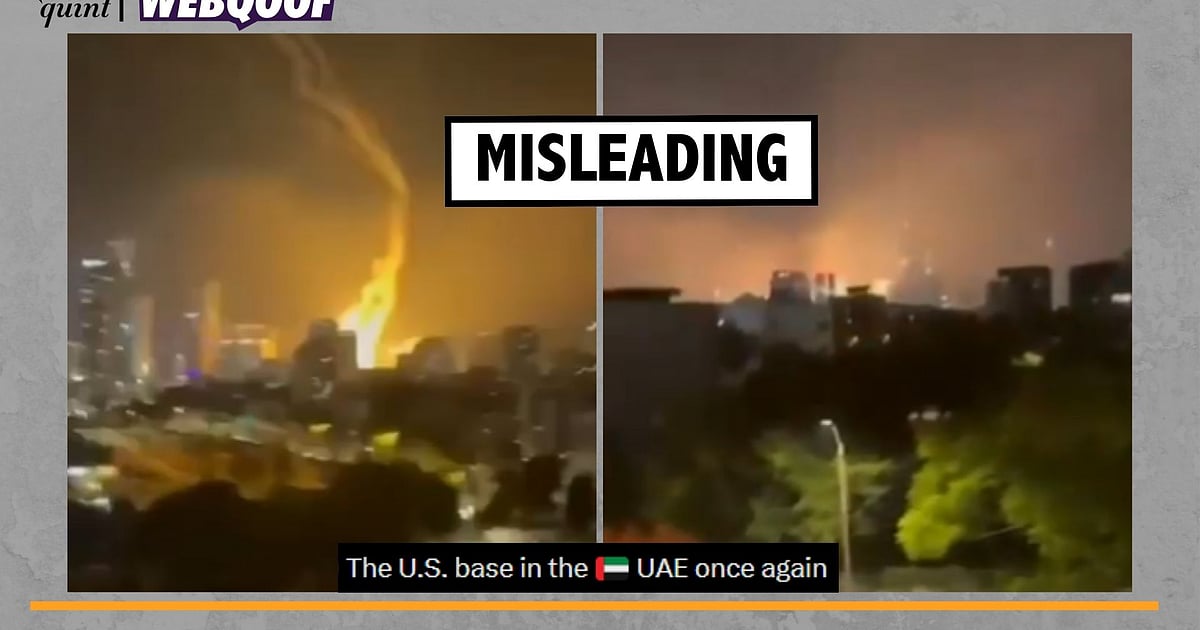
Recent viral videos purporting to show attacks on a U.S. base in the UAE have been debunked as misleading and unrelated to current geopolitical tensions, according to a comprehensive fact-check investigation.
The investigation focused on two widely circulated video clips that had gained significant traction on social media platforms amid heightened concerns about regional stability in the Middle East.
When subjected to reverse image search analysis, the first video was traced back to an X (formerly Twitter) account named “BRICS News,” where it appeared on June 14, 2025, with the caption: “JUST IN: Iranian ballistic missiles continue to strike Tel Aviv, Israel.” This discovery immediately raised red flags about the authenticity of claims connecting it to recent events, as the timestamp indicates content from the future.
Similarly, the second video underwent the same verification process, with investigators isolating key frames for analysis. A Google Lens search revealed these visuals had been previously shared on Facebook by an account called “Aryen TV,” also dated June 14, 2025. The original caption, when translated to English, described the footage as “A scene from a little earlier in Tel Aviv at the moment the Iranian missiles fell.”
While investigators could not independently verify the exact location or original context of either video, the evidence conclusively demonstrates that both clips predated current tensions and have been repurposed to mislead viewers about ongoing developments.
The circulation of such misleading content comes at a particularly sensitive time in Middle Eastern geopolitics. Relations between Iran and Israel have remained strained for decades, while the United Arab Emirates has worked to balance regional security concerns with its diplomatic positioning. The U.S. maintains several military installations throughout the Gulf region, including significant assets in the UAE, making any suggestion of attacks on these facilities a matter of serious international concern.
Misinformation of this nature can have far-reaching consequences, potentially inflaming tensions, affecting financial markets, or creating unnecessary public alarm. The speed at which such unverified content can spread across social media platforms highlights the challenges faced by users, platforms, and fact-checkers in maintaining information integrity during geopolitically sensitive periods.
Security analysts note that the deliberate circulation of misleading military footage has become an increasingly common tactic in information warfare, designed to shape narratives around conflicts and international relations. This particular case demonstrates how outdated or misattributed content can be weaponized to suggest escalations that have not actually occurred.
The fact-check serves as a reminder for media consumers to approach dramatic footage with skepticism, particularly when it appears during periods of international tension. Digital literacy experts recommend basic verification techniques such as checking multiple credible news sources before sharing potentially sensitive content, looking for official confirmations from relevant authorities, and being wary of dramatic footage that lacks specific attribution or context.
As tensions continue to evolve across the Middle East, accurate information remains crucial for understanding genuine developments in the region’s complex security landscape. While social media can provide real-time updates during breaking news events, this case underscores the importance of verification before accepting dramatic footage as authentic evidence of military actions.
Fact Checker
Verify the accuracy of this article using The Disinformation Commission analysis and real-time sources.

11 Comments
Interesting fact-check on the misleading UAE attack videos. It’s important to verify the authenticity of viral social media content, especially during sensitive geopolitical situations. Kudos to the investigators for tracing these clips back to 2025 – that’s some impressive detective work.
Agreed, fact-checking is crucial to combat the spread of disinformation. Reverse image searches and timestamp analysis can be effective tools to uncover the true origins of dubious online content.
This highlights the need for caution when consuming information on social media. It’s all too easy for old or unrelated footage to be repurposed and presented as current events. Kudos to the fact-checkers for their diligent investigation.
Absolutely. The propagation of misleading videos can have serious consequences, especially in sensitive geopolitical contexts. Fact-checking efforts like this help maintain public trust and prevent the spread of harmful misinformation.
This is a great example of the importance of thorough fact-checking, especially when it comes to sensitive geopolitical issues. It’s all too easy for old or unrelated footage to be repurposed and presented as current events. Kudos to the investigators for their diligent work in exposing the true nature of these viral videos.
Kudos to the fact-checkers for their diligent work in exposing the true nature of these viral videos. It’s a good reminder that we should always approach online content, especially related to sensitive current events, with a critical eye and a willingness to verify the claims being made.
It’s concerning to see how quickly misinformation can spread online, even when the content is clearly outdated. This serves as a valuable reminder to always verify the source and timestamp of viral media before sharing or reacting to it.
This is a concerning example of how misinformation can spread rapidly on social media. I’m glad the fact-checkers were able to trace the origins of these videos and determine they were unrelated to recent events. It’s a good lesson on the importance of source verification and fact-checking, especially during times of heightened tensions.
Absolutely. The proliferation of misleading online content is a serious issue that requires vigilance and a commitment to truth. Fact-checking efforts like this one help maintain public trust and prevent the spread of harmful misinformation.
While the initial viral videos may have been attention-grabbing, I’m glad the fact-checkers were able to trace them back to 2025 and debunk the claims. Maintaining a skeptical eye towards unverified online content is crucial, especially during volatile times.
Agreed. Fact-checking is an essential safeguard against the proliferation of misinformation, which can have serious consequences if left unchecked. This investigation serves as a valuable lesson on the importance of critical thinking and source verification when consuming news online.