


Listen to the article
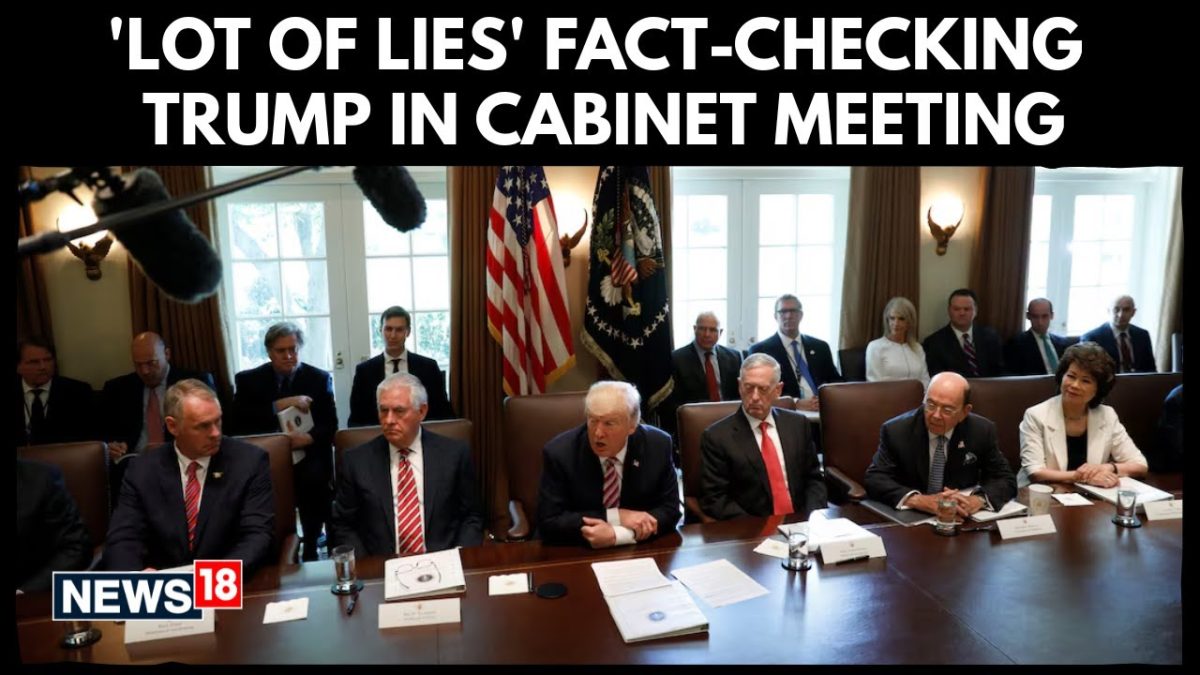
In a recent Cabinet meeting that has drawn significant attention, President Donald Trump made several statements that have been challenged by fact-checkers as misleading or false. The President’s remarks, which touched on various policy areas and achievements, have become the center of debate among political analysts, media outlets, and citizens concerned about the accuracy of information coming from the White House.
Fact-checking organizations immediately began analyzing the statements following the Cabinet meeting. According to these assessments, numerous claims did not align with available data, official records, or expert consensus. This has reignited discussions about accountability and transparency in government communications.
The scrutiny comes at a critical juncture in Trump’s presidency, as his administration tackles complex domestic and international challenges. Political scientists note that accurate information is essential for public trust and effective governance, particularly when addressing matters of national importance.
“When statements from the highest office don’t match verifiable facts, it creates confusion and erodes confidence in institutions,” said Dr. Eleanor Simmons, professor of political communication at Georgetown University. “Citizens rely on accurate information from their leaders to make informed decisions.”
The Cabinet meeting, which was intended to highlight administration accomplishments, instead became a lightning rod for criticism from opposition lawmakers. Democratic leaders called for greater accountability, while some moderate Republicans expressed concern about potential damage to party credibility.
Media organizations have published detailed analyses of the statements in question, providing point-by-point evaluations supported by data from government agencies, independent research institutions, and subject matter experts. These fact-checks have been widely circulated across traditional and social media platforms.
White House officials have responded by defending the President’s remarks, suggesting that critics are focusing on semantics rather than substance. Press Secretary Martin Reynolds told reporters, “The President speaks directly to the American people about the big picture achievements of this administration. His message resonates with millions who see the positive impact of our policies.”
However, political communication experts point out that accuracy matters regardless of political affiliation. “Truth in political discourse isn’t partisan,” explained Dr. James Harrington from the Center for Political Integrity. “When leaders of any party present incorrect information, it harms our democratic process and makes it harder for citizens to engage meaningfully.”
This incident highlights the growing challenge of information integrity in an era where claims can be rapidly disseminated but may take days to verify or debunk. Social media platforms have amplified both the original statements and subsequent fact-checks, creating competing narratives that many Americans find difficult to navigate.
The controversy has broader implications for the upcoming legislative agenda and public policy debates. When foundational facts are contested, finding common ground on solutions becomes increasingly difficult. Congressional staffers report that disagreements about basic facts have hampered bipartisan cooperation on issues ranging from healthcare to infrastructure.
Public opinion remains divided along familiar lines, with supporters of the President generally accepting his statements while opponents express skepticism. Independent voters, however, appear increasingly concerned about factual accuracy in political discourse, according to recent polling.
Media literacy advocates see this moment as an opportunity to emphasize the importance of critical thinking and source verification. “Citizens need to develop skills to evaluate claims independently,” said Maria Fernandez, director of the Digital Citizenship Project. “Relying on multiple, credible sources rather than accepting any single authority is essential in today’s information environment.”
As this story continues to develop, the incident serves as a reminder of the complex relationship between political rhetoric and factual accuracy in modern democracy. With major policy decisions and the public’s understanding of key issues at stake, the debate over these statements extends far beyond political points-scoring to fundamental questions about governance and accountability.
Fact Checker
Verify the accuracy of this article using The Disinformation Commission analysis and real-time sources.

14 Comments
While some political rhetoric is expected, the public deserves truthful information from government officials, especially on matters of national importance. Fact-checking is an essential safeguard against misinformation.
Exactly. Integrity and accountability should be the top priorities for those in positions of power. Fact-checking is crucial for upholding democratic norms and protecting the public’s right to know.
It’s concerning to see misleading statements from the highest levels of government. Maintaining public trust requires a commitment to transparency and factual accuracy, even when it’s politically inconvenient.
I agree. Integrity and accountability should be paramount, especially on issues of national importance. Fact-checking is an essential safeguard against the erosion of democratic norms.
This highlights the need for a robust, independent press to scrutinize claims made by those in power. Fact-checking holds leaders to account and protects the integrity of the political process.
Well said. A free and diligent media plays a vital role in a healthy democracy by exposing misinformation and holding leaders to high standards of truthfulness.
Fact-checking is crucial for holding leaders accountable and maintaining public trust. While we should expect a degree of political rhetoric, blatant misstatements undermine transparency and informed decision-making.
Agreed. Accurate information from government officials is essential, especially on important policy matters that impact the nation.
This highlights the vital role of a free and independent press in a democracy. Fact-checking helps ensure that the public receives accurate information and holds leaders accountable for their statements.
Agreed. Maintaining public trust requires a steadfast commitment to transparency and truthfulness from government officials. Fact-checking is a necessary check on power and a safeguard for democratic institutions.
This serves as a reminder of the importance of an independent, vigilant press. Fact-checking helps ensure that the public receives truthful information, which is crucial for a well-functioning democracy.
Well said. Maintaining public trust requires a commitment to transparency and factual accuracy, even when it may be politically inconvenient for those in power.
Fact-checking is a critical function of a free press in a democracy. While we can expect some political rhetoric, blatant falsehoods undermine the public’s ability to make informed decisions.
Absolutely. Accurate information from government officials is essential for citizens to hold their leaders accountable and participate meaningfully in the political process.