


Listen to the article
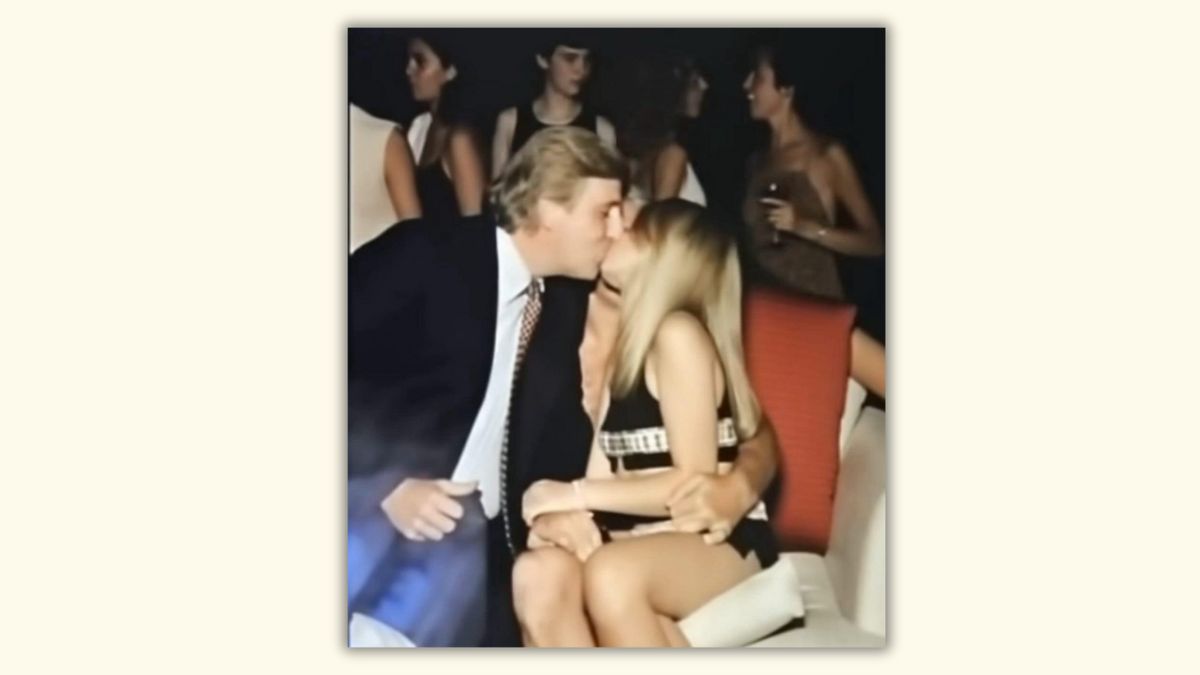
In late November 2025, a controversial image purportedly showing former U.S. President Donald Trump kissing a young girl began circulating widely across social media platforms, coinciding with the House Oversight Committee’s release of thousands of documents related to the late convicted sex offender Jeffrey Epstein.
The image spread rapidly on X (formerly Twitter), Facebook, Threads, and 9GAG, with many users sharing it as authentic evidence of inappropriate behavior. One particularly viral post on X included the caption, “I remember a time that we jailed pedphles, and not elected them,” suggesting criminal conduct by the former president.
Fact-checkers have conclusively determined the image is fabricated, created using artificial intelligence technology. Several telltale signs of AI generation are visible upon closer inspection, making it a clear example of synthetic media being passed off as documentary evidence.
The most obvious indicators of manipulation include anatomical impossibilities that commonly appear in AI-generated content. The image features distorted hands with unnaturally elongated fingers and appendages appearing from physically impossible angles. Additionally, the young girl in the fabricated scene appears to have a third leg, while background elements show visual inconsistencies typical of AI rendering artifacts.
Digital forensics experts note this fabricated image bears striking similarities to another previously debunked AI-generated photo that depicted Trump and Epstein together with a minor. That earlier fake image contained similar anatomical impossibilities, including Trump having only one leg and Epstein appearing to “dissolve” into a couch—classic indicators of AI manipulation.
The timing of the image’s circulation is significant, as it emerged shortly after the House Oversight Committee publicly released a substantial trove of Epstein-related documents. This timing appears calculated to capitalize on renewed public interest in connections between high-profile individuals and Epstein’s criminal activities.
International fact-checking organizations have also investigated the image, with Portugal’s Observador and Peru’s Verificador La República both concluding it is fabricated. Their analyses align with techniques recommended by media literacy experts for identifying AI-generated content, including looking for anatomical distortions and background inconsistencies.
This incident highlights the growing challenge of synthetic media in political discourse. As AI image generation technology becomes increasingly sophisticated and accessible, the ability to create convincing fake images of public figures has expanded dramatically. Media literacy experts recommend that viewers carefully examine images for telltale signs of AI generation, including distorted hands, inconsistent lighting, and anatomical impossibilities.
The circulation of such fabricated content poses significant challenges to public discourse, particularly during politically sensitive periods. Social media platforms continue to struggle with effectively labeling or removing synthetic media that purports to show real events but is entirely fabricated.
Experts emphasize that contextual awareness remains crucial when encountering inflammatory images online. The timing of an image’s appearance, its source, and whether reputable news organizations have verified it should all factor into assessing authenticity, particularly when serious allegations are implied.
As election cycles approach and political tensions rise, media literacy specialists anticipate increased circulation of AI-generated content designed to influence public opinion, underscoring the importance of critical evaluation skills when consuming visual information online.
Fact Checker
Verify the accuracy of this article using The Disinformation Commission analysis and real-time sources.

14 Comments
This seems like a concerning situation, if true. However, fact-checking is critical before jumping to conclusions. Spreading unverified claims, even about public figures, can be irresponsible and damaging.
Agreed, we should wait for a thorough investigation before drawing any firm conclusions. Synthetic media can be very convincing these days.
While the image is troubling, it’s prudent to withhold judgement until the facts are established. Fabricated evidence, especially involving sensitive topics, can sow division and undermine trust.
Absolutely. In an age of deepfakes, we must be cautious about the authenticity of visual content, no matter the source or subject.
This is a sensitive issue that requires a measured response. Jumping to conclusions based on potentially manipulated imagery would be unwise. Fact-checking and due diligence are essential.
Well said. Responsible journalism and objective analysis are vital when dealing with such serious allegations, regardless of one’s political leanings.
The image is certainly concerning, but we should withhold judgement until the facts are established. Fabricated evidence, especially involving sensitive topics, can have serious consequences and should be handled with great care.
Agreed. Responsible journalism and objective analysis are essential when dealing with such serious allegations, regardless of one’s political leanings or personal biases.
This is a complex and sensitive issue that deserves a measured response. Before drawing any conclusions, it’s critical to verify the authenticity of the image and the underlying facts. Rushing to judgment based on potentially manipulated evidence would be unwise.
Well said. In an age of deepfakes and misinformation, we must be extremely cautious about the veracity of visual content, no matter the source or the subject matter.
The image is certainly concerning, but we should refrain from rushing to judgment until the full facts are known. Spreading unverified claims, even about public figures, can have serious consequences.
I agree. In an era of sophisticated digital manipulation, it’s crucial to verify the authenticity of any visual evidence before drawing conclusions.
While the image is disturbing, we must be cautious about accepting it at face value. Fact-checking and objective analysis are essential, especially when dealing with sensitive topics and high-profile individuals.
Absolutely. Spreading unverified claims, even with good intentions, can have far-reaching and damaging effects. Patience and due diligence are the responsible path forward.