


Listen to the article
AI-Generated Trump Video Sparks Controversy as Deepfake Technology Raises Concerns
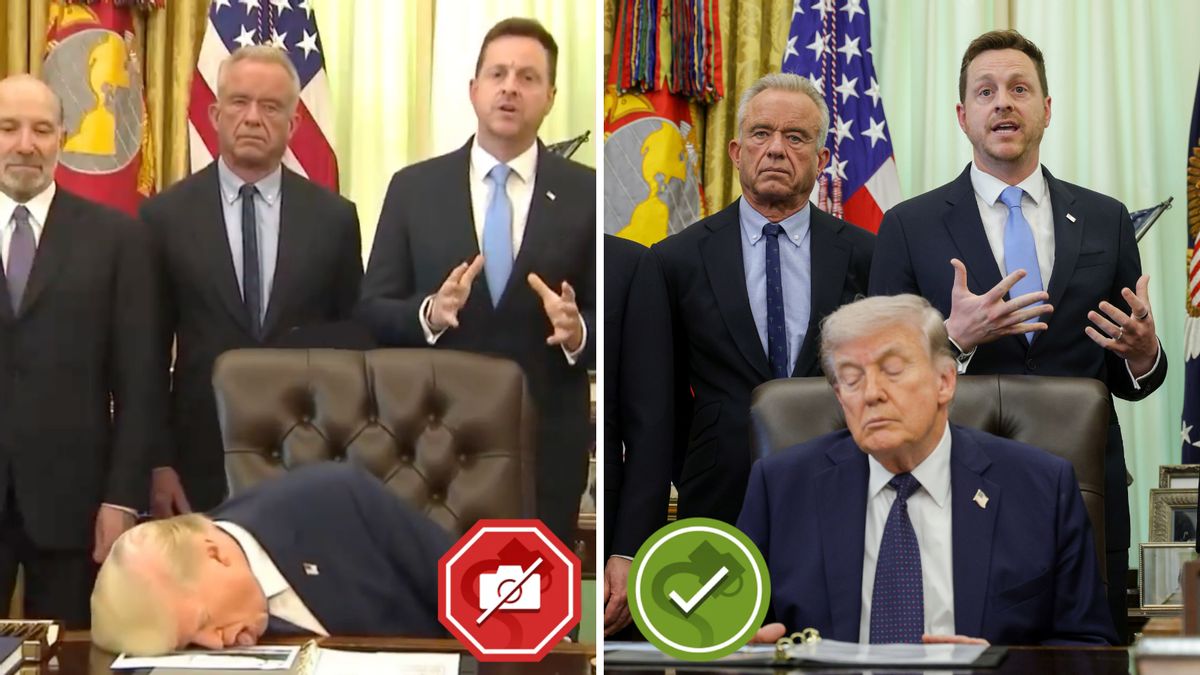
A manipulated video purporting to show U.S. President Donald Trump falling asleep and hitting his head on his desk during an Oval Office meeting circulated widely across social media platforms in late April 2026, prompting confusion among viewers and raising fresh concerns about the proliferation of AI-generated content in political discourse.
The video, which appeared to show the president nodding off before dramatically slumping forward onto his desk with his tongue hanging out, was shared extensively on Facebook and other platforms. Many users appeared to believe the footage was authentic, leading to a flurry of commentary about the president’s health and mental fitness.
Fact-checkers quickly identified the video as a deepfake—an AI-generated manipulation based on actual footage from an April 23 White House meeting where the president and his advisers were discussing healthcare policy. While the viral clip was fabricated, authentic footage from the same meeting did show moments where Trump appeared to close his eyes for extended periods.
The original source of the manipulated content was traced to a Facebook account self-described as belonging to a “digital memeist” who regularly posts satirical, digitally altered political content. The account’s fundraising page explicitly mentioned efforts toward “becoming an AI master” to create more videos and memes, further confirming the artificial nature of the content.
This incident highlights the growing challenge of distinguishing between authentic and manipulated media in the digital age. Deepfake technology has advanced rapidly in recent years, allowing creators to produce increasingly convincing fabrications that can be difficult for average viewers to identify as false.
Media analysts note that the incident comes amid heightened scrutiny of Trump’s public appearances. The 79-year-old president has faced previous speculation about his alertness during official functions, including claims—some debunked—about him nodding off at the 2024 Republican National Convention, during Pope Francis’s funeral, and at a Cabinet meeting in December 2025.
The authentic C-SPAN footage from the April 23 meeting does show several instances where Trump appears drowsy, including one 12-second stretch where his eyes remain closed, followed by a brief opening and then another 10 seconds with his eyes shut. These genuine moments likely provided the foundation for the AI-generated exaggeration that went viral.
White House officials have not formally addressed the manipulated video, though they have previously dismissed questions about the president’s alertness as politically motivated attacks.
Digital media experts warn that such incidents are likely to increase as AI tools become more sophisticated and widely available. “The ability to create convincing fake videos of public figures performing embarrassing or controversial actions presents serious challenges for maintaining public trust in media,” said Dr. Elena Martinez, a specialist in digital ethics at Georgetown University. “This is especially concerning as we approach another presidential election cycle.”
Social media platforms continue to grapple with how to handle such content, especially when it originates as satire but is later shared as authentic news. Most platforms have policies against manipulated media that could mislead users, but enforcement remains inconsistent.
For voters and news consumers, the incident serves as a reminder of the importance of verifying information through multiple reliable sources before accepting or sharing potentially misleading content, particularly when it depicts dramatic or unusual behavior from public figures.
Fact Checker
Verify the accuracy of this article using The Disinformation Commission analysis and real-time sources.

13 Comments
The development of deepfake technology is a double-edged sword. It can be a useful tool, but also poses major risks for manipulating public perception, especially in the political sphere. Strict regulations and oversight will be crucial going forward.
While the viral video was debunked as a deepfake, the original footage does raise some questions about the president’s attentiveness during the meeting. However, we should avoid rushing to judgement without a fuller understanding of the context.
Absolutely, it’s important to approach this issue with nuance and objectivity. Jumping to conclusions based on partial information could undermine public trust in our institutions.
While the viral video was fabricated, the original footage does seem to show the president appearing distracted or drowsy at times. This raises questions about his energy levels and focus during important policy discussions.
True, but we should be careful not to draw conclusions without more context. The president’s health and performance is a sensitive topic that requires nuanced analysis.
This is a concerning example of how easily misinformation can spread in the digital age. Fact-checking and media literacy education will be crucial to help the public navigate an increasingly complex information landscape.
I’m curious to learn more about the specific details of this incident. What were the president and his advisers discussing, and how did the actual footage compare to the doctored version? Responsible reporting is essential to separate fact from fiction.
Agreed, more context is needed. It’s important to analyze the original footage objectively before drawing any conclusions about the president’s behavior or performance.
The proliferation of AI-generated content is a significant challenge that will require multi-faceted solutions. Strict regulations, improved detection methods, and public education will all be crucial to combat the spread of misinformation.
Interesting how quickly deepfake technology can spread misinformation. It’s crucial to verify the source and authenticity of political videos, even if they seem plausible. Fact-checking is key to maintain trust in our leaders and institutions.
Agreed. The proliferation of AI-generated content is a serious concern that requires vigilance and responsible reporting from media outlets.
This incident highlights the need for greater transparency and accountability when it comes to the use of new technologies in the political sphere. Robust fact-checking and clear communication from trusted sources will be essential moving forward.
Well said. Maintaining public trust in our democratic institutions should be a top priority as these technologies continue to evolve.