


Listen to the article
AI-Generated Train Disaster Video Debunked by Fact-Checkers
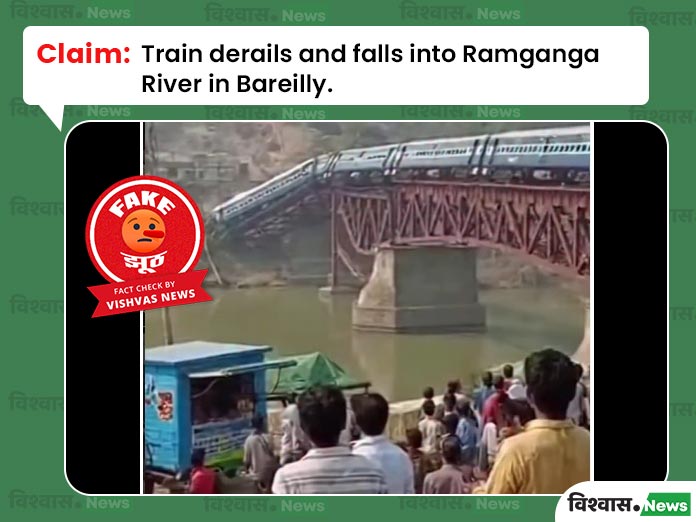
A dramatic video supposedly showing train coaches plunging into the Ramganga River in Bareilly, Uttar Pradesh, has been identified as completely fabricated using artificial intelligence. The footage, which has been circulating widely on social media since mid-November, shows what appears to be a catastrophic derailment where three train coaches fall from a bridge into the water below.
Vishvas News, a fact-checking organization, conducted a thorough investigation after the video began gaining traction online. The clip was initially shared on Instagram by a user named “firstpostnow_official” with the caption: “Heartbreaking accident in a rally. The moving train lost its balance and, within seconds, left the tracks, plunging into the Ramganga River. It’s a sight to behold.”
Despite the dramatic nature of the supposed incident, investigators found no news reports about any such train accident in Bareilly or elsewhere matching the description. This absence of media coverage for what would have been a major disaster was the first red flag.
The investigation team extracted keyframes from the video and used reverse image search technology to trace its origins. Their search led them to an Instagram account belonging to “anmolbohraa,” who had posted the identical video a day earlier with an explicit disclaimer that it was “AI-generated.” A review of the account showed a pattern of sharing similar computer-generated content.
To verify their findings, Vishvas News utilized multiple AI detection tools to analyze the footage. The results were conclusive – Hive Moderation detected a 99.4% likelihood of AI generation, while another tool, decopy.ai, returned a 100% probability. A third verification using SightEngine indicated a 79% chance the video was artificially created.
AI expert Azhar Machwe, consulted during the investigation, confirmed the assessment. He pointed out several telltale signs of artificial creation, including the unnatural behavior of bystanders in the video who showed no reaction to what would have been a horrifying accident unfolding before them. Additionally, he noted visual inconsistencies in the rendering of the train and water that are common in AI-generated content.
The circulation of the fake video highlights growing concerns about the increasingly sophisticated nature of AI-generated misinformation. As generative AI technology becomes more accessible and realistic, the potential for creating and spreading convincing false content increases. This incident serves as a reminder of the importance of media literacy and fact-checking in the current information ecosystem.
Railway accidents represent serious safety concerns in India, where the railway network is one of the largest in the world, carrying millions of passengers daily. False reports of disasters can create unnecessary panic and undermine public trust in essential infrastructure. The Indian Railways has consistently worked to improve safety measures, with actual derailment incidents declining in recent years.
This case exemplifies how social media can accelerate the spread of misinformation, with the original falsely-captioned post garnering significant engagement from an account with approximately 5,000 followers before being debunked.
Media experts continue to recommend that viewers approach dramatic disaster footage with skepticism, especially when it appears exclusively on social media without corroboration from established news sources or official government statements.
Fact Checker
Verify the accuracy of this article using The Disinformation Commission analysis and real-time sources.

16 Comments
Interesting how quickly AI-generated content can spread online these days. Glad the fact-checkers were able to identify this train crash video as completely fabricated.
Yeah, it’s concerning how convincing these kinds of AI-created fakes can be. We need to stay vigilant about verifying the source and authenticity of content we see online.
This is a good example of why we should always be skeptical of dramatic or sensational videos or news that appears online, especially without credible sources to back it up. Fact-checking is so important.
Agreed. It’s worrying how easily fabricated content can go viral these days. We have to be careful consumers of information and double-check things before sharing.
It’s concerning to see how convincing AI-generated content can be these days. This train crash video is a prime example of the potential for misinformation to spread rapidly online. We need strong fact-checking efforts to combat it.
I agree, the proliferation of deepfakes and AI-created fakes is a real challenge. Kudos to the fact-checkers for their diligence in debunking this particular video – their work is crucial to maintaining trust in the information we consume online.
Good to see a thorough investigation was done to expose this as an AI-generated fake. Fabricated videos like this can be really misleading, so it’s important for fact-checkers to stay on top of them.
Absolutely. Fact-checking is crucial these days to counter the spread of misinformation and deepfakes. Kudos to the team that debunked this train crash video.
This AI-generated train crash video is a stark reminder of the need for critical thinking and media literacy. It’s all too easy for fabricated content to go viral these days, so we have to be careful consumers of information.
Absolutely. As AI and video editing technology advances, we’ll continue to see more sophisticated fakes like this. Fact-checking efforts are essential, but we also need to educate the public on spotting potential misinformation.
I’m curious to learn more about the techniques used to create this fake train crash video. Was it a sophisticated deep learning model, or more basic video editing? Understanding the technology behind these kinds of fakes is important.
That’s a great point. Investigating the technical details behind AI-generated fakes can help us develop better detection methods and safeguards against their misuse. Fact-checkers play a vital role in this effort.
I’m curious what kind of AI technology was used to create this fake train crash video. The level of detail and realism is quite impressive, even if it’s ultimately misleading.
That’s a good question. The rapid advancement of AI in generating realistic-looking video and audio is a real concern for the spread of disinformation. We’ll need to stay vigilant.
Kudos to the fact-checkers for their diligence in exposing this AI-generated train crash video as a complete fake. It’s critical that we have teams dedicated to identifying and debunking this kind of misinformation.
Absolutely. The proliferation of deepfakes and AI-generated content is a real challenge, and we need strong fact-checking efforts to counter the spread of false information online.