


Listen to the article
Investigative Journalists Reveal Cross-Border Tactics at EBU Fact-Check Review
Forensic digital investigation and international collaboration took center stage during the 14th edition of the European Broadcasting Union’s Spotlight Fact-Check & OSINT Review. The virtual session, hosted by Maria Flannery, brought together media professionals from across Europe to examine sophisticated methods for combating digital manipulation in an era of increasingly complex disinformation.
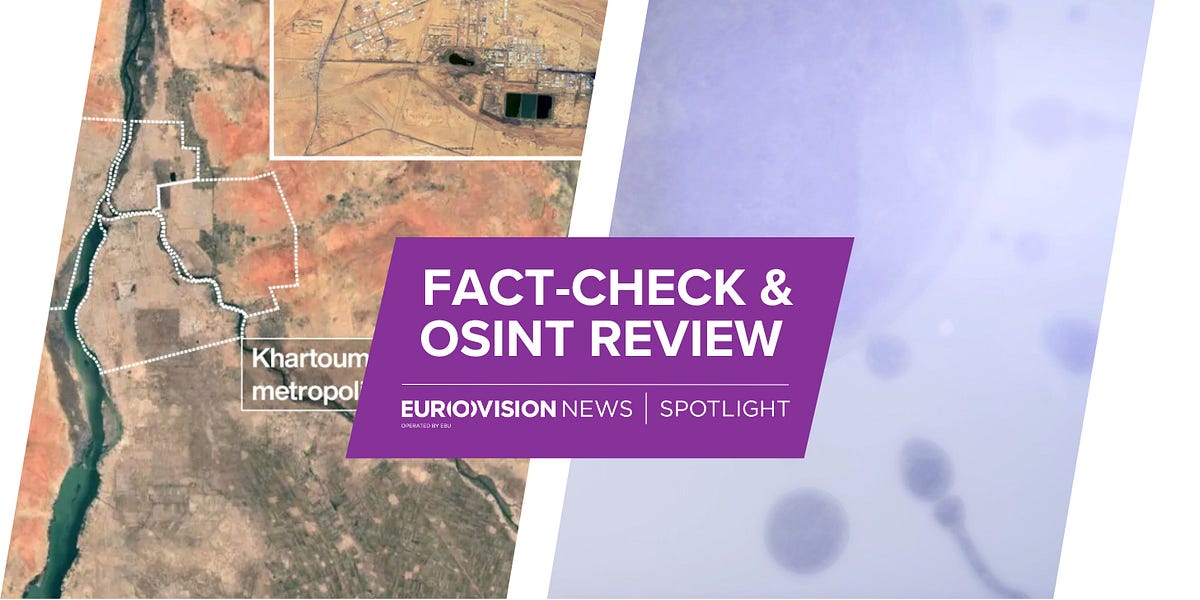
In a detailed presentation highlighting the power of open-source intelligence (OSINT), Quentin Peschard and Derek Thomson of France 24 Observers walked attendees through their meticulous investigation into alleged chemical weapons usage in Sudan. Their forensic work centered on analyzing video footage of an aerial attack near Sudan’s largest oil refinery.
“What made this investigation particularly significant was our ability to identify a serial number visible for just a fraction of a second in the footage,” explained Thomson. By freezing and enhancing this momentary detail, the team traced the weapons’ origins and foreign suppliers—evidence that has since been cited by the U.S. State Department in discussions at the Organization for the Prohibition of Chemical Weapons (OPCW).
The Sudan investigation demonstrates how modern journalistic techniques can provide crucial verification in conflict zones where traditional reporting access is severely limited or impossible. Such methodologies have become increasingly vital as misinformation about global conflicts proliferates across social media platforms.
The review also showcased the growing importance of collaborative cross-border journalism through the EBU Investigative Journalism Network. Belén López Garrido presented the framework behind “Donor 7069,” a groundbreaking investigation that coordinated 30 journalists across 14 European countries.
This ambitious project revealed how a single sperm donor carrying a high-risk genetic mutation had fathered 197 children across multiple nations, raising serious questions about regulation and oversight in fertility services. The investigation highlighted critical gaps in cross-border information sharing within Europe’s reproductive health sector.
“This type of story simply couldn’t be told by journalists working in isolation,” López Garrido noted. “The regulatory frameworks, clinical practices, and even cultural approaches to assisted reproduction vary significantly across European countries. Only through coordinated investigation could we track the full scope of what happened.”
The “Donor 7069” case builds on the EBU Network’s growing portfolio of collaborative investigations, including “Playing with Fire,” which examined environmental hazards, and “The Missing Children of Ukraine,” which tracked displacement patterns following the Russian invasion.
López Garrido detailed the logistical challenges of coordinating such extensive teams, from language barriers to varying legal frameworks for accessing public records. The network has developed specialized protocols for secure data sharing, joint verification processes, and synchronized publication strategies.
For newsrooms struggling with shrinking resources, these collaborative models offer a potential solution—allowing individual media organizations to contribute to investigations far larger than they could manage alone while maintaining editorial independence.
The session provided practical insights for journalists facing increasingly sophisticated disinformation. Participants received training in verification techniques, from geolocation and chronolocation to techniques for authenticating user-generated content.
“What we’re seeing is an arms race between those creating manipulated content and those working to verify information,” one participant observed. “The tools and methodologies demonstrated today are essential for maintaining journalistic integrity in this environment.”
The EBU initiative comes at a critical time for European media, as newsrooms face the dual challenges of financial pressure and eroding public trust. By strengthening verification capabilities and fostering cross-border cooperation, the program aims to reinforce journalism’s role as a reliable information source amid digital manipulation.
The EBU has announced plans to continue the Spotlight Fact-Check & OSINT Review series, with journalists interested in presenting their work invited to contact the organization directly. Future sessions will likely explore emerging verification challenges including synthetic media and AI-generated content.
Fact Checker
Verify the accuracy of this article using The Disinformation Commission analysis and real-time sources.

16 Comments
This investigation highlights the importance of international collaboration and open-source intelligence in combating disinformation. Tracing the origins of weapons used is a vital part of the fact-checking process.
Absolutely. The ability to trace the supply chain and identify foreign donors is a powerful tool for shining a light on these complex geopolitical issues.
Fascinating to see the level of forensic detail and international cooperation involved in this investigation. Tracing the origins of the weapons used is a crucial step in exposing the truth.
Absolutely, this kind of meticulous OSINT work is essential for holding all parties accountable and ensuring transparency, especially in murky situations like this.
This investigation underscores the need for robust fact-checking and open-source intelligence, particularly in regions with complex geopolitical dynamics. Kudos to the team for their meticulous work.
Yes, the ability to trace the supply chain and identify foreign involvement is a vital part of exposing the truth and holding all parties accountable.
The France 24 Observers team’s work in uncovering the weapons and foreign donor investigation in Sudan is really impressive. Their forensic analysis and attention to detail is commendable.
Yes, this level of OSINT and international collaboration is vital for combating disinformation and shedding light on complex geopolitical issues.
This investigation highlights the importance of fact-checking and open-source intelligence, especially in regions with murky geopolitical dynamics. Kudos to the team for their tenacious work.
Agreed, the ability to trace the supply chain and identify foreign involvement is crucial for exposing the truth and holding all parties accountable.
Fascinating investigation into the complex web of weapons and foreign involvement in Sudan. Digging into the video footage and identifying key details like serial numbers is impressive OSINT work.
Agreed, this level of forensic analysis is crucial for uncovering the truth behind such murky situations. Holding all parties accountable is important.
Fantastic work by the France 24 Observers team in unraveling the complex web of weapons and foreign donors in Sudan. This is a great example of the power of OSINT and international collaboration.
Absolutely, their forensic analysis and attention to detail is really impressive. Identifying that serial number and tracing it back to the source is a major breakthrough.
The detailed forensic work done by the France 24 Observers team is really impressive. Enhancing that brief glimpse of a serial number to uncover the weapons’ origins is some next-level OSINT.
Agreed, that level of visual analysis and data mining is crucial for getting to the truth, especially when dealing with opaque situations like this.