


Listen to the article
American Research Group Finds No Evidence of Ukrainian Drone Attack on Putin’s Residence
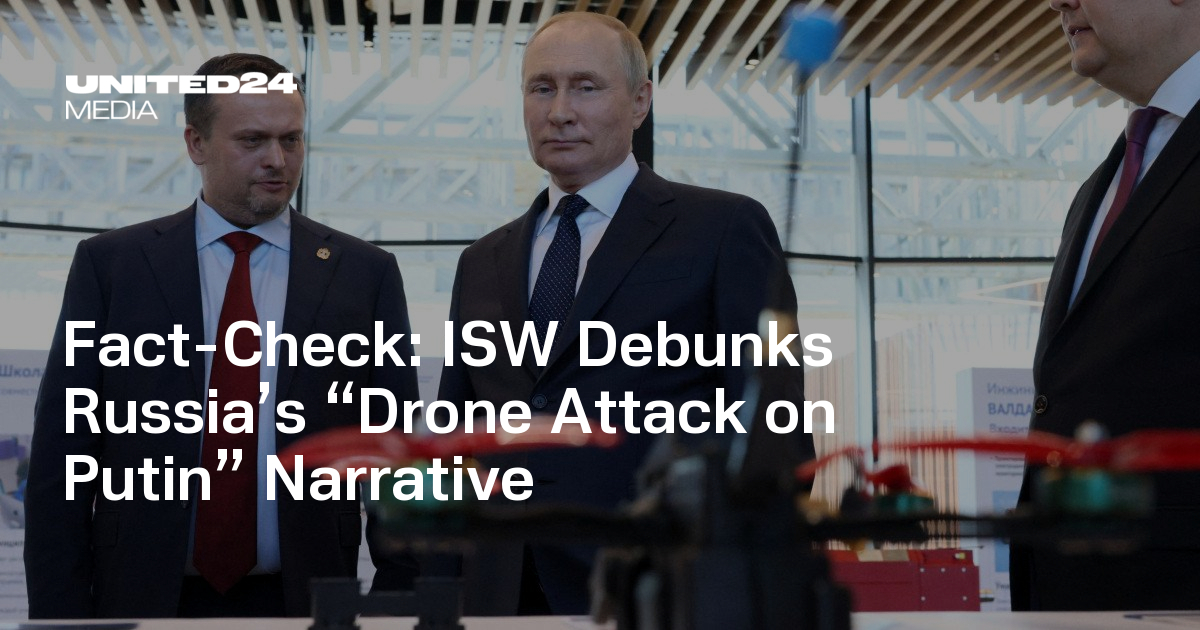
Analysts at the Institute for the Study of War (ISW), a prominent American nonprofit research organization, have concluded there is no evidence supporting Russian Foreign Minister Sergey Lavrov’s claims that Ukrainian forces targeted a residence used by Russian President Vladimir Putin near Valdai in Russia’s Novgorod region.
In an assessment published on December 29, ISW researchers systematically evaluated Lavrov’s allegation of a “large-scale drone attack” against Putin’s residence. The think tank noted that verified Ukrainian strikes inside Russian territory typically leave a clear trail of evidence—none of which was present in this case.
“Confirmed Ukrainian strikes on Russian territory consistently produce identifiable markers,” an ISW analyst explained. “These include geolocated videos, visible air defense activity, explosions, fires, or smoke plumes near specific targets—all of which were absent in this situation.”
The assessment highlighted significant inconsistencies in Russian official statements. Lavrov claimed Russian air defenses intercepted 89 Ukrainian drones over the Novgorod region, a figure that directly contradicts Russia’s own Ministry of Defense, which reported only 47 drones intercepted in the region during the night of December 28–29. This discrepancy raises further questions about the credibility of the allegation.
Regional confirmation, another standard indicator of actual drone activity, was also missing. ISW researchers noted that confirmed attacks typically generate statements from local or regional Russian officials, who often acknowledge but downplay successful strikes by describing drones as “debris.” Additionally, reports from local residents or media outlets describing damage or fires usually emerge quickly after genuine attacks. The complete absence of such corroborating sources significantly undermines Lavrov’s claim.
Ukrainian President Volodymyr Zelenskyy has directly refuted the Russian accusation, stating that the claim is fabricated and designed to disrupt peace negotiations. “These false allegations are a transparent attempt to derail diplomatic progress,” Zelenskyy said in a statement to reporters.
The ISW’s assessment comes amid heightened tensions between Russia and Ukraine, with cross-border drone strikes becoming increasingly common throughout the conflict. Both sides have demonstrated capabilities to conduct long-range drone operations, making verification of specific incidents crucial for accurate reporting and analysis.
Military experts note that drone operations of the scale described by Lavrov would require significant resources and would almost certainly generate observable evidence. The absence of such evidence raises questions about the motivation behind the claim.
The Valdai residence holds strategic importance as one of Putin’s favored retreats, located approximately 400 kilometers northwest of Moscow. The facility is believed to be heavily protected by advanced air defense systems, making a successful Ukrainian drone penetration particularly challenging.
This incident follows a pattern of information warfare that has characterized the Russia-Ukraine conflict, with both sides seeking to control the narrative around military operations and capabilities. Independent verification has become increasingly crucial in a conflict marked by conflicting claims and counter-claims.
The ISW, founded in 2007, has established itself as a respected source of analysis on military conflicts worldwide. Throughout the Russia-Ukraine war, the organization has provided detailed assessments of battlefield developments, military capabilities, and strategic shifts based on open-source intelligence gathering and verification methods.
As the conflict continues, the reliability of claims made by both Russian and Ukrainian officials remains under intense scrutiny from international observers, researchers, and media organizations seeking to provide accurate information about developments on the ground.
Fact Checker
Verify the accuracy of this article using The Disinformation Commission analysis and real-time sources.

4 Comments
This report highlights the need to be cautious about unverified claims, particularly in the context of an ongoing conflict. I appreciate the ISW’s rigorous approach to assessing the available evidence.
The inconsistencies in the Russian statements are quite telling. Reliable, impartial analysis is crucial for understanding the truth behind such allegations. I’m glad the ISW is taking a close look at this.
The lack of clear evidence as described by the ISW is concerning. Transparency and accountability should be paramount when it comes to sensitive military incidents. I hope further investigation can shed more light on this situation.
Interesting analysis from the ISW. It’s important to carefully evaluate claims about attacks, especially when they come from parties with vested interests. Thorough investigation is key to understanding the facts.