


Listen to the article
Viral Restaurant Receipt Sparks Heated Debate Over Tipping Culture
A restaurant receipt image that went viral on Facebook has ignited an intense debate over tipping practices and service charges, garnering over 14,000 comments from users weighing in on the controversy. The only problem? The receipt never existed.
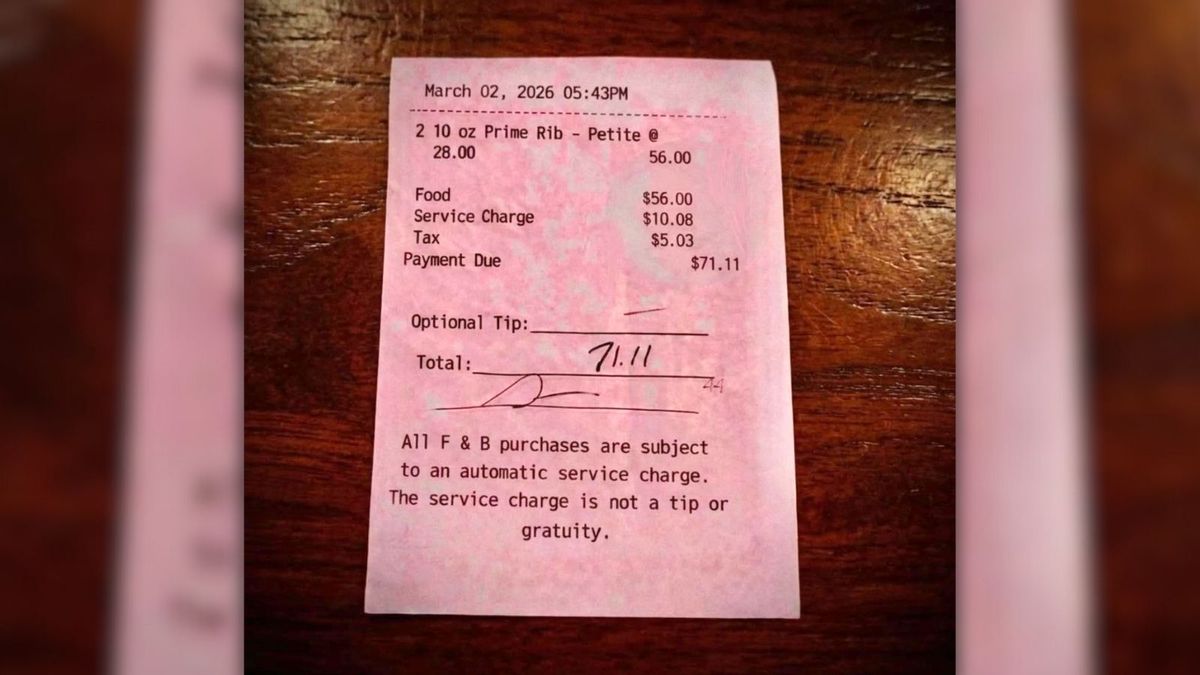
The image, which began circulating widely in March, showed a bill for two petite prime rib dinners priced at $28 each. The receipt displayed a total of $71.11, including a $10.08 service charge and $5.03 in tax. Most notably, the customer had drawn a line through the “optional tip” section, declining to leave any additional gratuity.
Facebook creator MxrkJunior shared the image on March 17, claiming to be an eight-year veteran server who had been stiffed on a tip despite providing excellent service. The post included a lengthy complaint about how the automatic service charge goes to “the house” rather than directly to servers.
“Am I wrong for being furious? For knowing that $10.08 doesn’t pay my rent? For understanding that ‘optional tip’ really means ‘optional if you don’t care whether your server eats this week’?” read part of the emotional appeal.
What caught users’ attention was the explicit note at the bottom of the receipt stating, “All F & B purchases are subject to an automatic service charge. The service charge is not a tip or gratuity.” This disclaimer, along with the unusual explicit labeling of “optional tip” on the gratuity line, sparked heated exchanges about restaurant payment practices, fair compensation for service workers, and consumer responsibilities.
However, a closer examination of the image revealed it was entirely fabricated using artificial intelligence. When analyzed with Google’s SynthID Detector tool, the image was confirmed to contain a digital watermark embedded by Google AI, indicating it was generated or edited using artificial intelligence.
The receipt also lacked standard elements found on legitimate restaurant bills, including the restaurant name, server identification, table number, beverage items, and credit card details—all basic components of genuine receipts.
This isn’t the first such deceptive content from the same creator. Further investigation of MxrkJunior’s Facebook page uncovered multiple posts containing AI-generated images, including fabricated DoorDash delivery photos and other fake receipts, all bearing the same digital SynthID watermark.
The fake receipt represents a sophisticated form of “engagement bait” and “rage bait” content designed to provoke emotional responses and drive social media engagement. By touching on the familiar experience of dining out and tipping, such posts exploit users’ strong feelings about tipping culture to generate comments, shares, and potential monetization opportunities.
The News Literacy Project defines engagement bait as content “designed to get you to interact with seemingly innocuous content through likes, follows, shares and comments.” Similarly, Merriam-Webster describes rage bait as “content that tries to provoke anger or outrage, as a means of gaining attention or making money.”
This incident highlights the growing challenge of distinguishing between authentic user experiences and artificially generated content on social media platforms. As AI tools become more sophisticated and widely available, consumers face increasing difficulty in separating fact from fiction in their daily social media consumption.
For content creators who monetize their pages, these fabricated controversies can translate directly into revenue, all while fostering divisive debates over scenarios that never actually occurred.
The viral spread of this particular fake receipt demonstrates how readily users engage with content that touches on contentious economic issues like tipping practices, service industry wages, and consumer etiquette—even when that content has been entirely manufactured.
Fact Checker
Verify the accuracy of this article using The Disinformation Commission analysis and real-time sources.

6 Comments
The tipping culture in the US is certainly complex. I can understand the server’s frustration if the service charge doesn’t directly benefit them, but also appreciate the restaurant’s perspective in trying to provide a more stable compensation model. Curious to hear more views on potential policy solutions.
While the viral receipt may have been fabricated, the underlying issues around tipping norms and server compensation are very real. It’s an emotive topic that touches on questions of fairness, customer expectations, and business economics. I’m interested to see how this debate evolves.
Interesting debate around tipping culture and service charges. It’s a complex issue with valid concerns on both sides. I’m curious to learn more about the economic realities servers face and potential policy solutions that could improve the system for all.
The tipping culture in the US is certainly complex, with valid concerns on all sides. While the viral receipt may have been fabricated, the debate it sparked highlights the need for a more transparent and equitable system that supports service workers. I’m curious to see how this issue evolves.
This debate highlights the need for a more equitable system that ensures servers are properly compensated for their work. While the viral receipt may have been fabricated, the underlying issues are very real and deserve thoughtful consideration from all stakeholders.
This seems like a challenging situation with no easy answers. I appreciate the server’s perspective on how service charges don’t directly benefit them, but can also see the restaurant’s rationale for including an automatic charge. I wonder if there are ways to structure things more transparently.