


Listen to the article
In 1986, Reagan-Era Law Established Emergency Care Rights for All Patients Regardless of Immigration Status
Former President Ronald Reagan signed legislation in 1986 that requires hospital emergency rooms to provide care to anyone needing urgent medical attention, regardless of their ability to pay or immigration status, setting a precedent that remains relevant in today’s healthcare debates.
The Emergency Medical Treatment and Active Labor Act (EMTALA) was enacted as part of the Consolidated Omnibus Budget Reconciliation Act of 1985, which Reagan signed into law on April 7, 1986. The legislation applies to “participating hospitals” – those that accept Medicare payments, which encompasses nearly all hospitals in the United States.
The law was primarily created to combat “patient dumping,” a practice where hospitals transferred uninsured patients from private to public facilities purely for financial reasons, often without considering their medical condition or stability. According to researcher and emergency medicine physician Joseph Zibulewsky, while the act was “barely noticed at the time,” it has since become “one of the most comprehensive laws guaranteeing nondiscriminatory access to emergency medical care.”
Under EMTALA’s provisions, hospitals with emergency departments must provide medical screenings to anyone requesting examination or treatment. If the hospital determines the person requires emergency care, staff must either treat the patient or transfer them to another medical facility that can provide appropriate care.
The law specifically states that these requirements apply to “any individual (whether or not eligible for benefits under this subchapter),” meaning citizenship or immigration status is irrelevant when someone needs emergency medical attention.
The legislation has gained renewed attention amid recent political debates. Following the U.S. government shutdown in October 2025, some Republican lawmakers falsely claimed that Democrats had forced the shutdown over healthcare for undocumented immigrants. In response, social media posts began highlighting that it was actually Reagan, a Republican president, who had signed the law guaranteeing emergency care regardless of immigration status.
While some social media posts have accurately described EMTALA’s provisions, others have overstated its scope by claiming Reagan’s law “guaranteed health services to undocumented immigrants” without specifying limitations. The act requires only emergency medical care – not comprehensive healthcare services – be provided to all individuals regardless of their immigration status.
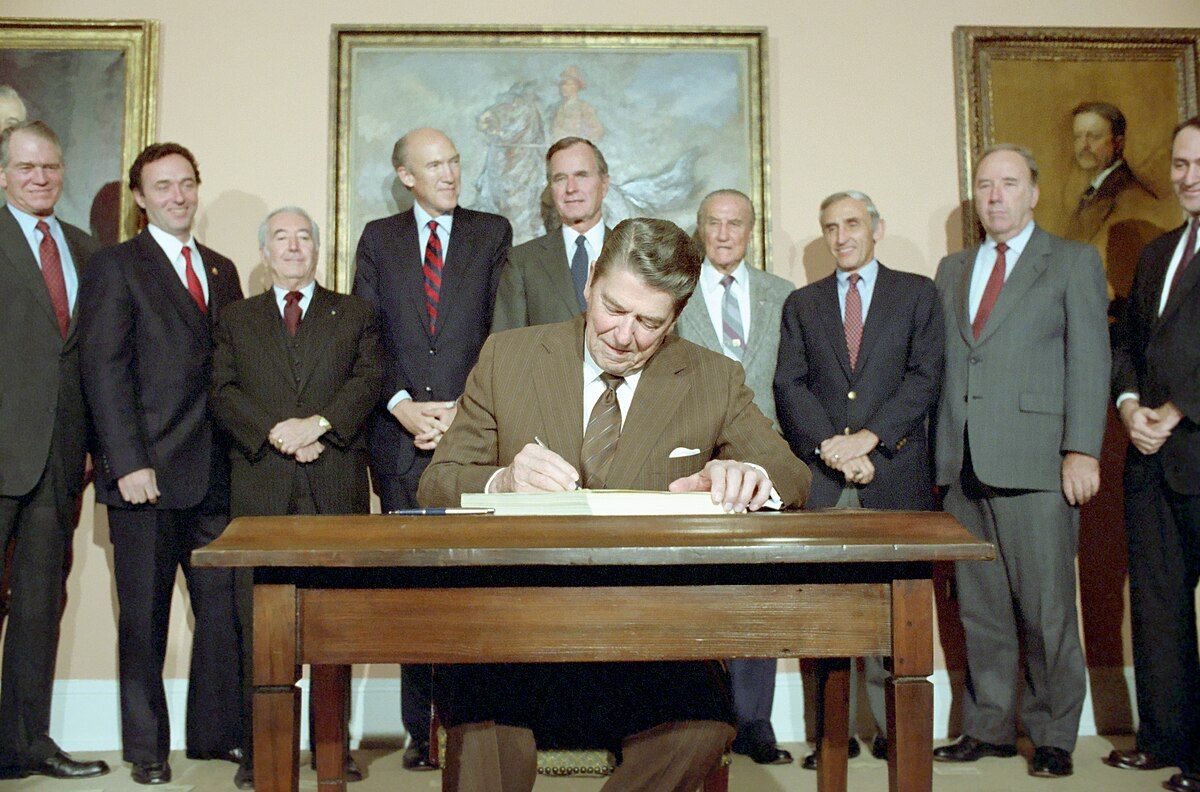
It’s also worth noting that some viral images purporting to show Reagan signing EMTALA actually depict him signing a different piece of legislation – the Immigration Reform and Control Act of 1986. That law legalized most immigrants who arrived in the United States before 1982 and prohibited employers from knowingly hiring unauthorized immigrants.
Healthcare policy experts note that EMTALA’s impact has been far-reaching. The Congressional Research Service reports that the act was passed “amid reports of hospital emergency rooms refusing to treat poor or uninsured patients.” While the law’s primary intent was to prevent discrimination based on financial status, its inclusive language ensured that immigration status could not be used as grounds for denying emergency care either.
The legislation’s implementation has had significant financial implications for hospitals. Because EMTALA requires treatment regardless of ability to pay, hospitals often provide uncompensated care, particularly in areas with large uninsured or undocumented populations. This financial burden has become part of ongoing healthcare policy debates.
While it remains unclear whether Reagan or lawmakers at the time fully contemplated the law’s broader impacts regarding immigration, the statutory language is unambiguous: hospitals accepting Medicare payments must provide emergency care to all individuals, regardless of immigration status or ability to pay.
Nearly four decades later, EMTALA continues to serve as a healthcare safety net, ensuring that emergency departments remain accessible to everyone during medical crises, while also featuring prominently in contemporary political discourse about immigration and healthcare policy.
Fact Checker
Verify the accuracy of this article using The Disinformation Commission analysis and real-time sources.
