


Listen to the article
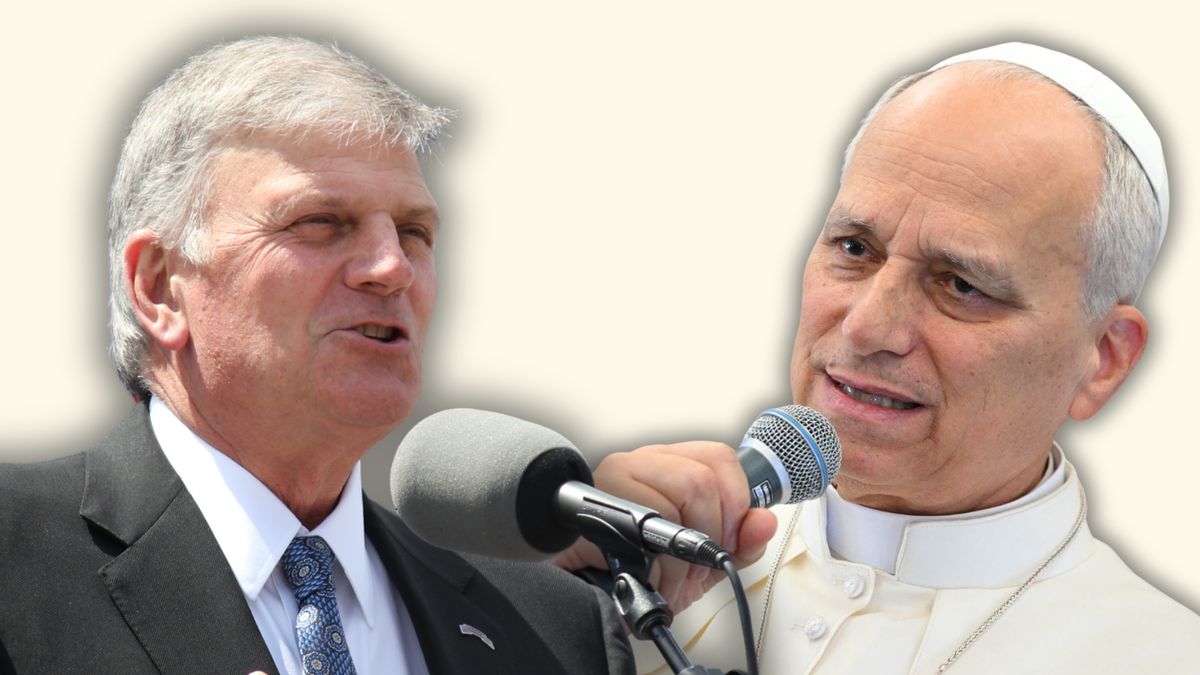
In a bizarre case of misinformation that looks toward the future rather than the past, social media users have been spreading a fictional account of a heated exchange between a non-existent “Pope Leo XIV” and evangelist Franklin Graham that supposedly took place in May 2026.
The fabricated story claims that during a live television debate, the fictional Pope Leo XIV called Graham “Donald Trump’s puppet” and left him “speechless” with a series of stern rebukes. According to the false narrative, the Pope told Graham, “You speak for a position shaped by power — closely tied to the influence of Donald Trump.”
Multiple Facebook posts have circulated this claim, each linking to different blog posts that purport to contain the “full story” of this supposed viral moment. The posts typically begin with attention-grabbing phrases in all caps such as “SIT DOWN — T.R.U.M.P.’S PUPPET” and describe a dramatic scene where the Pope allegedly silenced Graham on live television.
Fact-checkers at Snopes have rated this claim as false, noting that there is no credible evidence that this exchange ever occurred. More fundamentally, there is currently no Pope Leo XIV – Pope Francis, born Jorge Mario Bergoglio, remains the head of the Catholic Church. The story is not only fabricated but also set in the future (2026).
Analysis of the blog posts linked in these Facebook shares reveals telltale signs of artificially generated content. In one instance, the letter “n” was systematically replaced with the Cyrillic letter “п” throughout the text – a known “anti-crawling” technique used to prevent search engines from properly indexing the content. Another blog post featured publishing dates written in Vietnamese, consistent with a pattern of AI-generated misinformation originating from Southeast Asia.
The writing style itself follows recognizable patterns seen in other AI-generated stories. These narratives typically feature one public figure portrayed as “calm and composed” delivering a shocking statement that renders an audience silent – a moment often described using short, dramatic sentences like, “The studio fell completely silent. No sound. No interruptions.”
This fabricated Pope Leo story is part of a larger trend of AI-generated misinformation designed primarily to generate clicks and ad revenue. The business model is straightforward: create shocking or inspiring fictional scenarios involving public figures, post them on social media with links to ad-filled blogs, and profit from the traffic of users seeking more details.
Snopes has previously debunked numerous false claims about a “Pope Leo XIV,” including several fabricated quotes. The fact-checking site notes that these stories follow consistent patterns and are part of a broader ecosystem of AI-generated content designed to mislead social media users.
The spread of such future-dated fabrications represents a concerning evolution in online misinformation tactics. By creating entirely fictional scenarios set in the future, these content farms can bypass some traditional fact-checking approaches while still generating the engagement and ad revenue they seek.
Social media users are advised to approach sensational stories about dramatic confrontations between public figures with skepticism, particularly when they link to unfamiliar blog sites rather than established news sources.
Fact Checker
Verify the accuracy of this article using The Disinformation Commission analysis and real-time sources.

9 Comments
Fabricated stories like this one about a fictional Pope and Franklin Graham are concerning. I’m glad the fact-checkers stepped in to debunk the claim and prevent the further spread of misinformation. We all need to be more discerning consumers of online content.
This story about a fictional Pope and Franklin Graham seems like a clear case of misinformation. I’m glad the fact-checkers investigated and debunked it. We should be wary of viral social media claims that lack credible evidence.
This story about a fictional Pope and Franklin Graham is clearly just misinformation. I’m glad the fact-checkers were able to identify it as such and set the record straight. We need to be very careful about verifying claims, especially those that seem too dramatic to be true.
This fictional account of a clash between the Pope and Franklin Graham is clearly just a hoax. I’m glad Snopes was able to identify it as misinformation and debunk the claims. We need to be vigilant about verifying news stories, especially those that seem too dramatic to be true.
While the Pope and Franklin Graham may have different views, this alleged confrontation seems to be completely made up. I appreciate that Snopes took the time to investigate and debunk this viral claim. We should all be more skeptical of sensational stories that lack credible evidence.
While the Pope and Franklin Graham may have strong disagreements, this fabricated story goes too far. I’m glad the fact-checkers stepped in to set the record straight. We should be extra cautious about viral claims, especially those involving public figures.
It’s concerning how easily misinformation can spread online these days. I appreciate that reputable sources like Snopes are working to verify claims and combat the spread of false narratives. We all need to be more discerning consumers of news and social media.
This story about a fictional Pope Leo XIV and Franklin Graham sounds like a complete fabrication. I’m glad the fact-checkers were able to identify it as such and set the record straight. We need to be very cautious about believing unsubstantiated claims, especially those involving public figures.
I appreciate that the fact-checkers took the time to investigate this viral social media claim about the Pope and Franklin Graham. Spreading misinformation, even if it’s meant to be satirical, can be harmful. We should all strive to be more discerning consumers of online content.