


Listen to the article
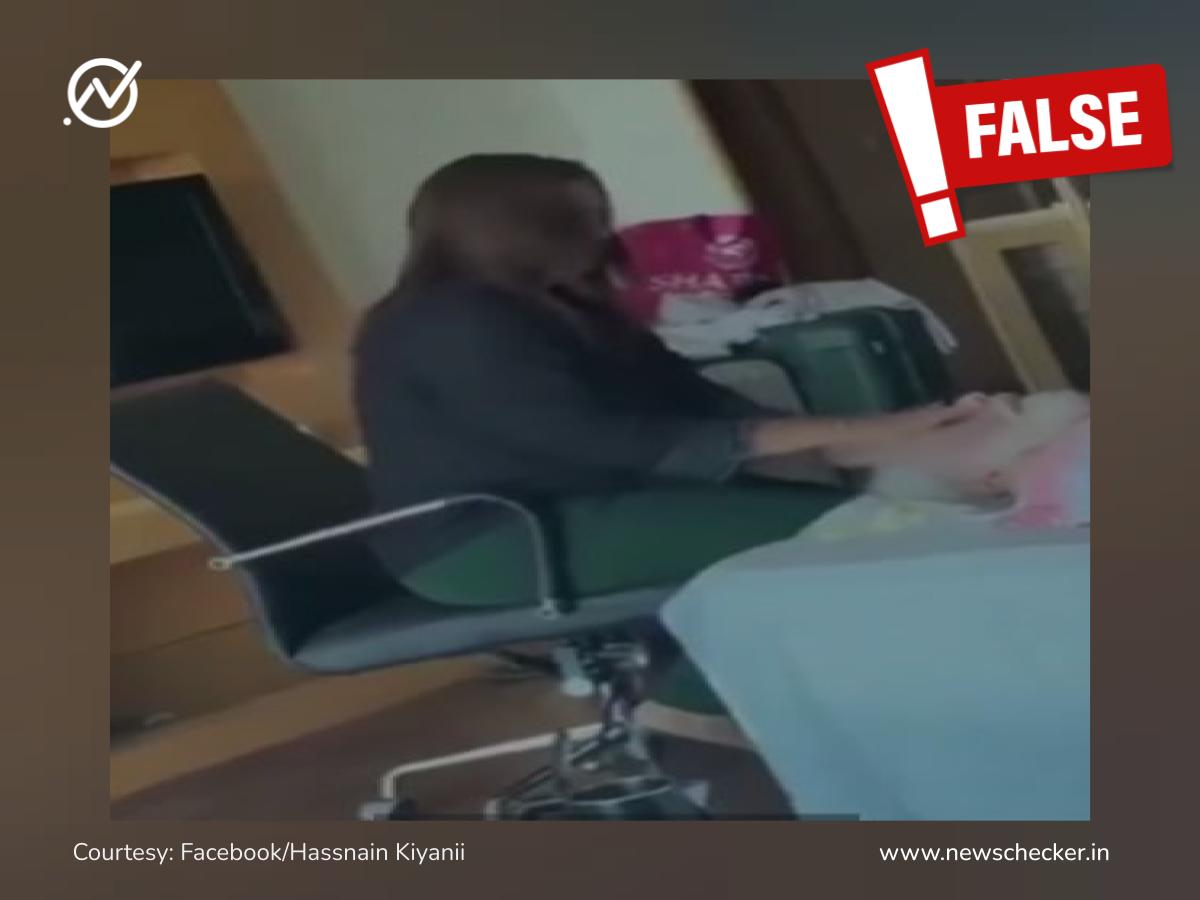
A video purportedly showing Prime Minister Narendra Modi receiving a facial massage has been widely circulated on social media in recent days, triggering significant online debate and prompting fact-checkers to investigate the authenticity of the content.
The clip, which shows a bearded man lying back and receiving a facial massage treatment, quickly gained traction across platforms like X (formerly Twitter) and Facebook, with numerous accounts claiming the individual in the footage was India’s Prime Minister.
Digital verification experts conducted a reverse image search using keyframes extracted from the viral video, which led to the original source of the content. The investigation revealed that the video was first posted on Instagram on April 12, 2026, by content creator Pradeep Kaur Dhillon, who captioned it simply as “Massage time.”
When examining the higher-resolution version available on Dhillon’s Instagram account, it becomes evident that the man in the video bears only a passing resemblance to PM Modi. Facial features, when clearly visible, confirm that the individual is not the Prime Minister.
Further scrutiny of Dhillon’s social media presence uncovered multiple posts featuring the same man in various settings. In several posts, Dhillon explicitly identifies the man as her husband, dispelling any connection to the Indian Prime Minister. One such video dated March 28, 2026, shows the same individual receiving a similar facial treatment.
According to her public Facebook profile information, Pradeep Kaur Dhillon identifies as a digital content creator who originally hails from Amritsar, India, but is currently based in New Jersey, USA. Her content frequently features lifestyle and wellness themes, including the facial treatment videos that sparked the misidentification.
The rapid spread of the misrepresented content highlights ongoing concerns about misinformation on social media platforms, particularly involving high-profile political figures. In India, where political discourse is often highly charged, visual content featuring political leaders frequently becomes subject to manipulation or misrepresentation.
Media literacy experts point out that this incident represents a common form of misinformation where genuine content is recontextualized with false claims. Unlike deepfakes that involve sophisticated manipulation of video or images, this case involves a simpler form of misattribution that nonetheless can spread rapidly through social networks.
The incident occurs against a backdrop of increasing concerns about misinformation in India, particularly as the country navigates complex political and social issues. According to recent studies, India has seen a significant rise in the circulation of misleading content across digital platforms, with political figures often being the subject of such misinformation.
Digital verification organizations emphasize the importance of source verification before sharing content online. Simple verification techniques, such as reverse image searches or checking original sources, can help users avoid inadvertently spreading misinformation.
Attempts to reach Pradeep Kaur Dhillon for comment on the misuse of her content were made, though responses were not available at the time of publication. This article will be updated with any statements received from Dhillon regarding the incident.
In conclusion, the viral video claiming to show Prime Minister Narendra Modi receiving a facial massage is misleading. Verification confirms the individual is the husband of content creator Pradeep Kaur Dhillon, not the Indian Prime Minister. The original content was posted on Instagram in April 2026 and has been repurposed with false claims across social media platforms.
Fact Checker
Verify the accuracy of this article using The Disinformation Commission analysis and real-time sources.

8 Comments
Interesting that this video went viral as a supposed Modi massage. Fact-checking is so important to verify the authenticity of online content these days. Glad the investigation could clear up the confusion around this particular clip.
Absolutely, it’s crucial to separate truth from fiction, especially when it comes to political figures. Good to see a thorough investigation was done to set the record straight.
While it’s understandable that people might have initially thought this was Modi, I’m glad the facts were able to set the record straight. Fact-checking is essential to combat the spread of false narratives, especially around political leaders.
I’m curious to learn more about the original content creator and how this video ended up being mistakenly attributed to the Prime Minister. Social media can be a breeding ground for misinformation if we’re not careful.
Yes, understanding the source and context is key. Fact-checking helps maintain public trust and prevent the spread of false narratives, even about high-profile individuals.
It’s a good reminder that we shouldn’t automatically believe everything we see online, especially when it comes to influential public figures. Kudos to the fact-checkers for their diligence in verifying the origins of this video.
This highlights the importance of critical thinking and media literacy. Just because a video goes viral doesn’t mean it’s true. I’m glad the investigation was able to conclusively debunk the claim that this was PM Modi.
Absolutely. Maintaining a healthy skepticism and verifying information sources is crucial in today’s digital landscape, where misinformation can spread rapidly.