


Listen to the article
Iran Parliament Video Shows 2020 Anti-US Protest, Not Current Anti-Government Movement
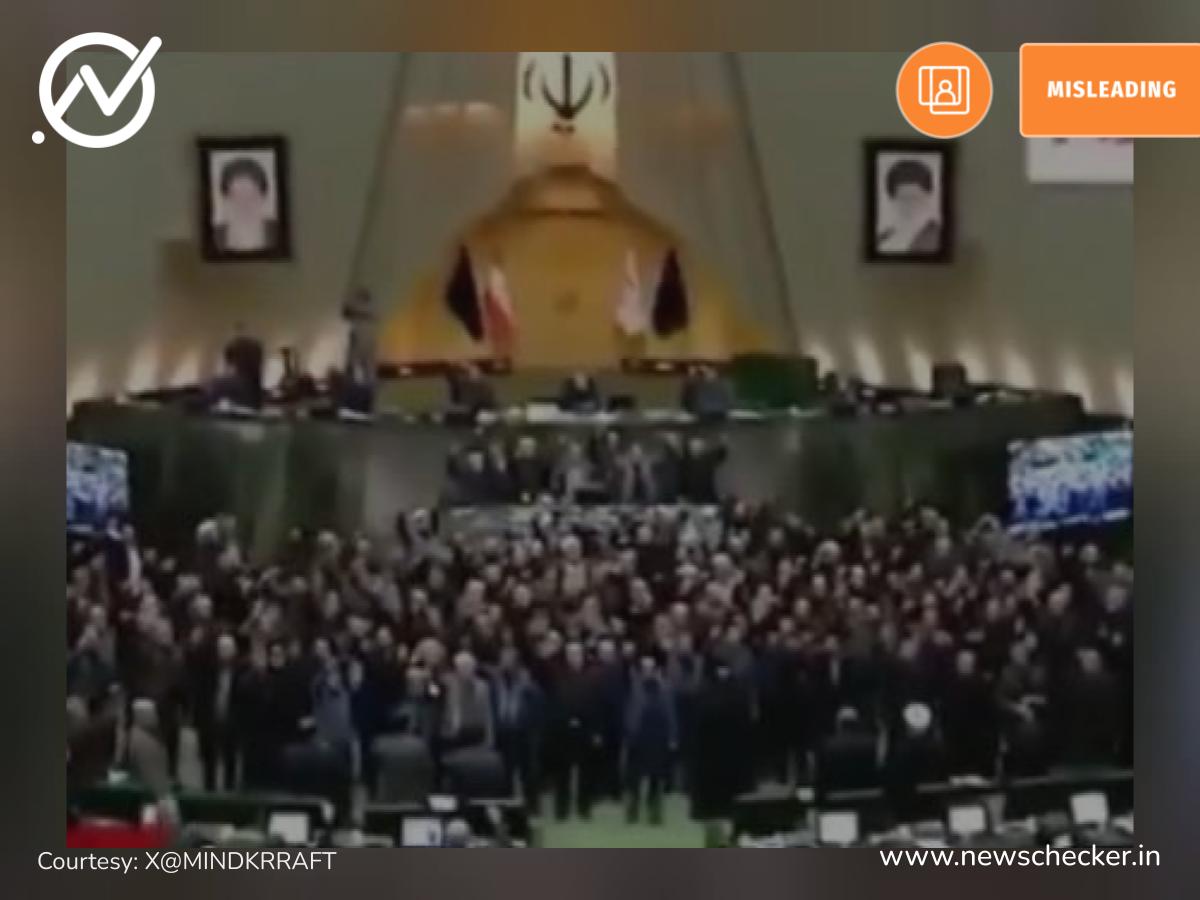
A widely circulated video purporting to show Iranian parliament members singing the Oasis hit “Don’t Look Back in Anger” during recent anti-government protests has been proven false through digital verification methods.
The misleading footage, which has gained significant traction on social media platforms, actually depicts Iranian lawmakers chanting “Death to America” in January 2020 following the U.S. assassination of General Qassem Soleimani, a high-ranking military figure in Iran’s Revolutionary Guard Corps.
A reverse image search of key frames from the viral clip led to a January 5, 2020 report by The Telegraph, which contained the identical visuals. The original footage shows members of Iran’s 290-seat parliament standing in the chamber expressing collective outrage over Soleimani’s killing in a U.S. drone strike ordered by then-President Donald Trump.
The manipulated version currently spreading online has replaced the original audio with what appears to be footage of England football fans singing the popular Oasis song. The audio closely matches a YouTube video from June 14, 2017, titled “England Fans Singing Don’t Look Back in Anger Ahead of Kick-Off Tonight.”
Multiple news organizations, including Sky News—whose logo is visible in the viral clip—reported on the 2020 parliamentary session. The original footage was extensively covered by international media outlets at the time, highlighting the unanimous condemnation from Iranian lawmakers following Soleimani’s death.
The altered video emerges amid genuine tensions in Iran, where anti-government protests have periodically erupted in recent years. The most significant wave occurred in late 2022 following the death of Mahsa Amini, a young woman who died in custody after being detained by Iran’s morality police for allegedly not properly wearing her hijab.
Iran’s parliament, known as the Islamic Consultative Assembly or Majles, has been a key political institution in the country since the 1979 Islamic Revolution. While factional disputes do occur within the legislative body, the dramatic scene portrayed in the manipulated video does not reflect current parliamentary proceedings.
Digital manipulation of sensitive political content has become increasingly common in coverage of Middle Eastern affairs, requiring heightened scrutiny from news consumers. This particular case demonstrates how archival footage can be repurposed with altered audio to create misleading narratives about current events.
The incident also highlights the ongoing geopolitical tensions between Iran and Western nations, particularly the United States. Soleimani’s 2020 killing represented a significant escalation in the long-standing conflict between the two countries and continues to influence Iran’s domestic politics and international relations.
While Iran has experienced genuine political upheaval in recent years, with protests challenging the clerical establishment’s authority, this particular video does not document current parliamentary dissent or the playing of Western music in Iran’s legislative chambers as some social media posts have claimed.
Fact Checker
Verify the accuracy of this article using The Disinformation Commission analysis and real-time sources.

13 Comments
Manipulating video content to misrepresent a situation is a concerning tactic. I appreciate the disinformation commission’s efforts to identify the source of this misleading clip and set the record straight. Maintaining accuracy and transparency in reporting, especially around political unrest, is so important.
Interesting how old footage can be manipulated to mislead. It’s important to verify the authenticity of online content, especially during sensitive political events. This serves as a good reminder to be critical consumers of information.
This is a good example of how easily misinformation can spread online. Fact-checking and debunking false narratives is essential to uphold the truth, especially during volatile political events like these protests in Iran. I appreciate the commission’s efforts to provide accurate reporting.
Well said. Verifying the source and context of videos and other media is so important to prevent the spread of harmful disinformation. The commission’s work here is valuable in maintaining public trust.
The circulation of this manipulated video serves as a reminder of the need for critical analysis of online content, particularly during times of unrest. I’m glad the fact-checkers were able to trace the origins and expose the inaccuracy. Upholding transparency and truth-telling is crucial for informed public discourse.
It’s concerning to see how easily video footage can be altered and shared out of context on social media. Fact-checking is essential to combat the spread of misinformation, which can inflame tensions and distort the public’s understanding of events.
I agree, verifying the origin and context of online content is so important these days. Kudos to the team for catching this misleading video and setting the record straight.
This highlights the importance of verifying the authenticity of online content, especially during times of political upheaval. I’m glad the fact-checking team was able to trace this video back to its original 2020 context. Combating the spread of misinformation is crucial for informed public discourse.
It’s concerning to see how easily old footage can be repurposed and shared as current events on social media. I commend the disinformation commission’s work in identifying the source of this misleading video and setting the record straight. Maintaining media integrity is essential, especially around sensitive political issues like the protests in Iran.
Manipulating video footage to misrepresent a situation is a concerning tactic. I’m glad the disinformation commission was able to trace the origins of this viral clip and expose its inaccuracy. Maintaining media integrity is crucial, especially around sensitive political issues.
It’s troubling to see how old footage can be repurposed and circulated as current events. I’m glad the fact-checkers were able to trace the origins of this misleading video. Upholding media integrity is crucial, especially around sensitive political issues like the protests in Iran.
It’s worrying to see how easily old footage can be misrepresented as current events on social media. I appreciate the disinformation commission’s efforts to identify the source of this misleading video and provide accurate reporting. Maintaining media integrity is essential, especially around sensitive political issues.
Spreading disinformation, even inadvertently, can have serious consequences. I’m glad the fact-checking team was able to identify the source of this misleading video. Transparency and accuracy are crucial, especially around protests and government unrest.