


Listen to the article
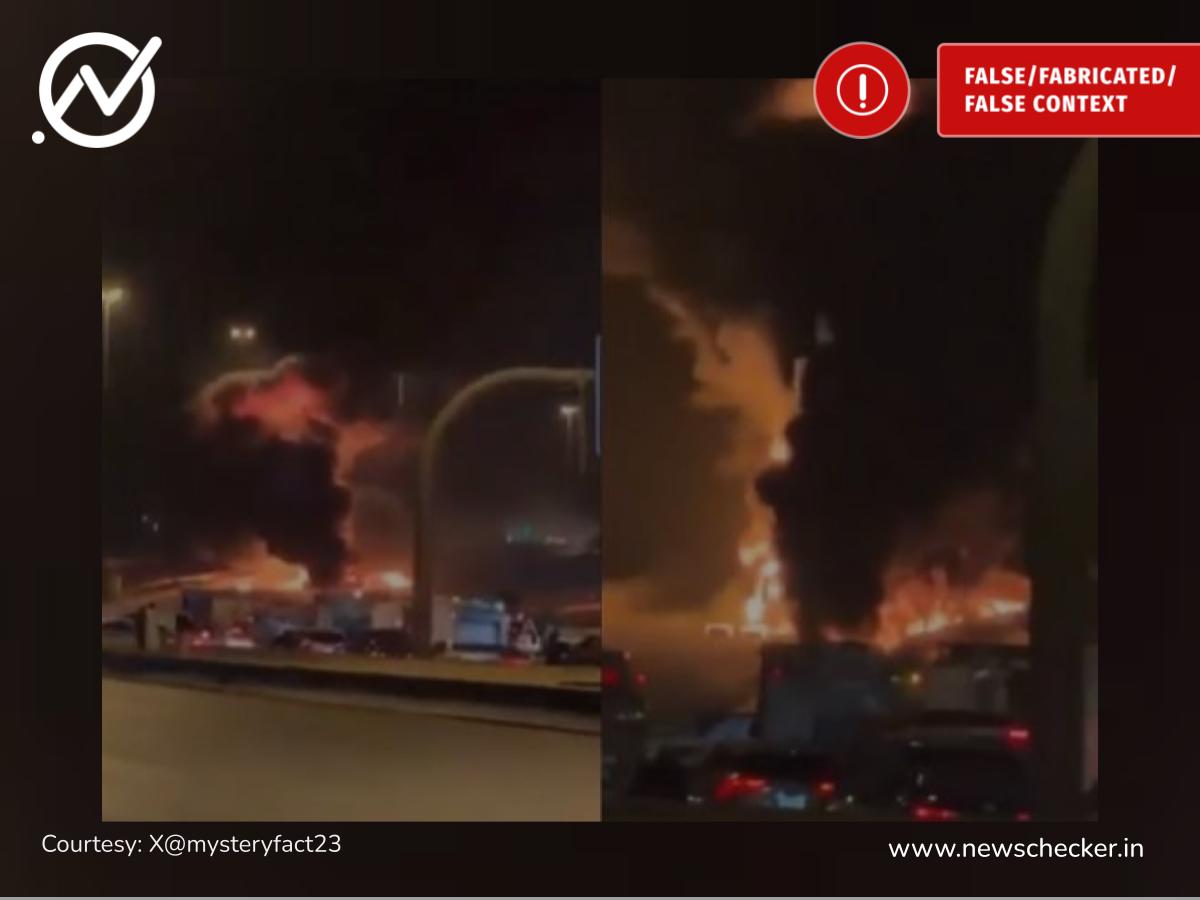
Iran’s drone attack on the US Embassy in Riyadh resulted in limited damage, but a viral video circulating online showing massive flames and thick black smoke is unrelated to the incident, an investigation has found.
The video has been widely shared across social media platforms, with users claiming it shows the aftermath of two Iranian drones striking the US Embassy in Saudi Arabia’s capital amid escalating tensions in the Middle East.
Saudi Arabia’s defense ministry confirmed that the US Embassy in Riyadh was indeed targeted by two drones, resulting in a small fire and some material damage. However, the dramatic footage being shared does not depict this attack.
Digital verification of the viral clip revealed that the same video had been circulating online months before the drone strike occurred. Through reverse image search technology, investigators traced the footage to an Instagram post dated February 8, 2026, shared by the account @imamuddin.ansari.12177.
Further examination uncovered the same video on YouTube, uploaded by the account @riazmomh9182 on February 7, 2026. The timing of these posts definitively proves that the footage predates the recent drone attack on the US Embassy and is therefore unrelated to the incident.
The misattribution of the video comes amid heightened tensions in the region, as Iran and its allied militias have increased drone and missile attacks against Western and Israeli targets following Israel’s military operations in Gaza and Lebanon, and more recently, its direct strikes inside Iran.
This incident highlights the ongoing information war accompanying the physical conflict, with outdated, manipulated, or decontextualized media frequently being repurposed to support narratives around current events.
The actual drone attack on the US Embassy represents a significant escalation, marking one of the first direct strikes by Iran against American diplomatic facilities in the region. While damage was limited, the symbolic importance of targeting a US Embassy has raised concerns about potential American responses and further regional destabilization.
Diplomatic missions across the Middle East have heightened security measures in recent months as the risk of being caught in the crossfire between regional powers increases. Many Western nations have also issued updated travel advisories for citizens in the region.
The spread of this misleading footage underscores the challenges of information verification during fast-developing international crises. Social media platforms have struggled to contain the rapid dissemination of false or misleading content related to the Middle East conflict.
While the origins and context of the actual video footage remain unclear, fact-checkers emphasize that its circulation began well before the embassy attack, making any connection to current events impossible.
This is not an isolated incident of misinformation regarding the current Middle East crisis. Similar false claims have circulated about other events in the region, including doctored videos purportedly showing Indian Defense Minister Rajnath Singh supporting Israel’s attacks on Iran, and AI-generated footage claiming to show Iranian airstrikes near Dubai’s Burj Khalifa.
Experts recommend that users verify information through multiple credible sources before sharing content related to ongoing conflicts, particularly when dramatic imagery is involved.
Fact Checker
Verify the accuracy of this article using The Disinformation Commission analysis and real-time sources.

18 Comments
This is a valuable lesson in the importance of verifying sources and checking the timeline of viral content. It’s a good reminder to be cautious about sharing unverified information, even if it seems plausible.
Absolutely. We must all be more diligent in our fact-checking efforts to prevent the spread of misinformation, especially on sensitive topics.
The details provided in this investigation are very helpful for understanding the context and debunking the false narrative. It’s a good example of thorough, evidence-based fact-checking.
Agreed. Providing the specific timeline and verification process is key to effectively dispelling the misinformation and restoring public trust.
The use of reverse image search and other digital verification techniques is really impressive. It’s an effective way to uncover the true origins of viral content.
Agreed. These advanced tools are essential for combating misinformation and maintaining the integrity of news reporting.
It’s concerning to see old footage being repurposed and spread as current events. This underscores the need for greater media literacy and critical thinking when consuming online content.
Definitely. We all have a responsibility to be more discerning consumers of information and to fact-check before sharing, in order to prevent the further spread of disinformation.
This is a timely and important fact-check, given the heightened tensions in the Middle East. Ensuring accurate information is crucial, especially on sensitive geopolitical issues.
Absolutely. Fact-checking in this context helps prevent the escalation of tensions through the spread of false information.
The digital verification process used here is impressive. Tracing the video’s origin and timeline to conclusively debunk the false attribution is a great example of fact-checking in action.
Agreed. This highlights the importance of advanced verification techniques to combat the proliferation of misinformation, especially around sensitive geopolitical issues.
This fact-check highlights the importance of being a critical consumer of online information, particularly regarding major world events. We must all be vigilant against the spread of disinformation.
Exactly. Developing media literacy skills and verifying claims before sharing is crucial in today’s digital landscape.
This is a good reminder to always fact-check viral videos and claims, especially regarding geopolitical events. It’s important to rely on authoritative sources and verified information, rather than spreading unverified content.
Absolutely. Disinformation can spread rapidly online, so it’s crucial to be cautious and do our due diligence before sharing.
The swift response and thorough investigation by the Disinformation Commission is commendable. Fact-checking is vital to upholding journalistic standards and public trust.
I agree. Proactive fact-checking and debunking of false narratives is essential for maintaining accurate and reliable news reporting.