


Listen to the article
The Trump administration’s anti-drug naval operations in the Caribbean Sea and Pacific Ocean have come under scrutiny following repeated claims by President Donald Trump that each vessel targeted saves thousands of American lives.
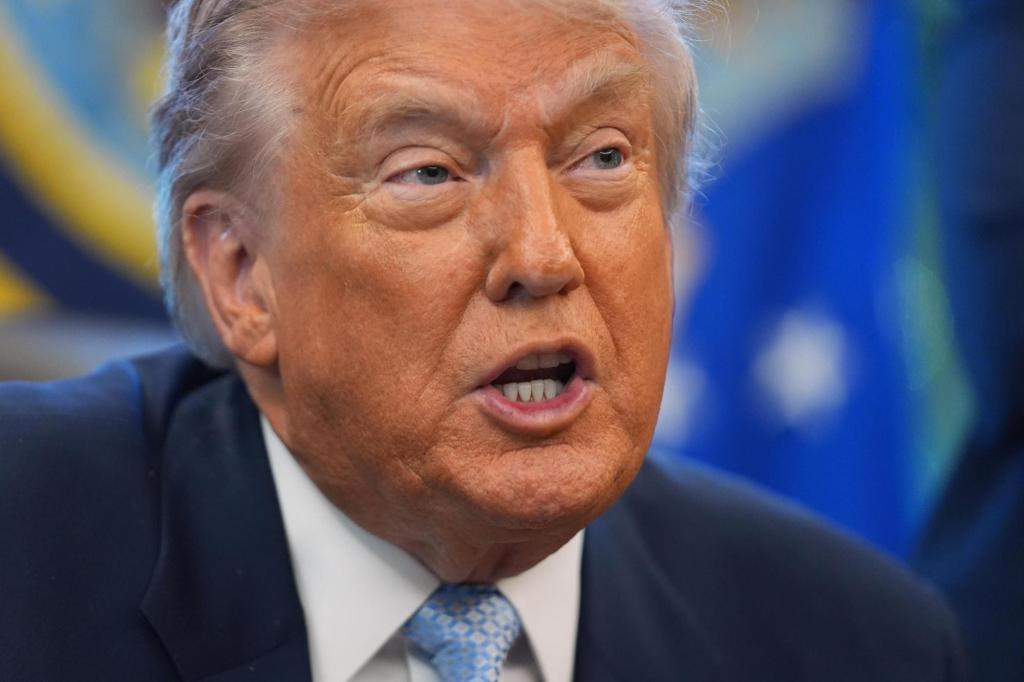
Speaking to reporters on Monday after announcing an expedited visa interview process for foreign World Cup visitors, Trump reiterated his assertion that “every boat we knock out, we save 25,000 American lives” — a claim public health experts describe as fundamentally flawed.
“The statement that each of the administration’s strikes on alleged drug-smuggling boats saves 25,000 lives is absurd,” said Carl Latkin, a professor of public health at Johns Hopkins University who studies substance use. “The evidence is similar to that of the moon being made of blue cheese. If you look carefully, you will see a resemblance. However, a close analysis of this claim suggests that it lacks all credibility.”
Since the military campaign began on September 2, U.S. forces have attacked 21 vessels in the Caribbean Sea and eastern Pacific Ocean, with the most recent strike occurring on November 15. Using Trump’s calculation would suggest these operations prevented 525,000 fatal drug overdoses — a figure that far exceeds the total number of overdose deaths recorded in comparable periods.
According to preliminary data from the Centers for Disease Control and Prevention (CDC), approximately 97,000 drug overdose deaths occurred in the U.S. during the 12-month period ending June 30, marking a 14% decrease from the estimated 113,000 deaths in the previous 12-month period. Final CDC data shows 53,336 overdose deaths in 2024 and 75,118 in 2023.
Lori Ann Post, director of the Institute for Public Health and Medicine at Northwestern University, challenged the administration’s methodology. “There’s no empirically sound way to say a single strike ‘saves 25,000 lives,'” she explained, highlighting the absence of verifiable cargo data or published models linking naval interdictions to changes in drug use patterns. Post, who studies overdose deaths and economic drivers of the opioid crisis, emphasized that “the math and the data are not there.”
The administration has justified these maritime operations by claiming the U.S. is in “armed conflict” with drug cartels and asserting the targeted vessels are operated by foreign terrorist organizations. However, neither Trump nor administration officials have publicly disclosed the quantity of drugs allegedly destroyed in these strikes.
When asked for evidence supporting the president’s claims, White House spokesperson Anna Kelly defended the figures, stating: “President Trump is right — any boat bringing deadly poison to our shores has the potential to kill 25,000 Americans or more. The President is prepared to use every element of American power to stop drugs from flooding in to our country and to bring those responsible for justice.”
Public health experts point to a fundamental misunderstanding of drug market dynamics in the administration’s approach. Latkin compared the strategy to believing that closing a few fast-food restaurants would significantly improve Americans’ overall health, noting that other sources would quickly fill the gap.
“It’s incredibly naive to think that reducing the supply in one place will eradicate the problem because it’s such a massive business,” Latkin said.
The geography of drug trafficking presents another challenge to the administration’s claims. While the naval operations target vessels in the Caribbean, CDC data shows that 73.4% of drug overdose deaths in 2024 involved opioids, with 65.1% specifically attributed to illegally manufactured fentanyl. This synthetic opioid typically enters the United States via land routes from Mexico, where it is produced using chemical precursors imported from China and India.
The United States has experienced a multi-decade increase in overdose deaths, beginning with prescription opioid painkillers in the 1990s and continuing with waves driven by heroin and, more recently, illicit fentanyl. Recent CDC figures indicate a decline in overdose deaths starting in 2023 has continued into this year.
Experts attribute this positive trend to several potential factors, including the end of the COVID-19 pandemic, expanded availability of the overdose-reversing drug naloxone, improved access to addiction treatments, and possible changes in the composition of street drugs themselves.
Fact Checker
Verify the accuracy of this article using The Disinformation Commission analysis and real-time sources.

16 Comments
The skepticism from public health experts is well-founded. Quantifying the indirect ‘lives saved’ from disrupting drug smuggling seems highly speculative and open to political manipulation. Rigorous fact-checking is essential in these cases.
Agreed. Extraordinary claims require extraordinary evidence, especially when they have significant policy implications. The public deserves honest, data-driven assessments, not unsubstantiated boasts from officials.
This is a troubling example of how easily inflated statistics can be used to justify military actions and operations. The public needs reliable, evidence-based information to properly evaluate the efficacy and impacts of such programs.
Absolutely. Unverified claims, no matter how dramatic, should not form the basis for important policy decisions. Thorough investigation and transparent reporting are crucial to hold authorities accountable.
This report highlights the need for independent, critical analysis of high-level claims, even from government sources. Fact-checking and scrutiny are crucial to ensure transparency and accountability, particularly on issues of public welfare and national security.
Well said. Responsible journalism that challenges unsubstantiated assertions, no matter the source, is essential for a healthy democracy. The public must be able to trust that their leaders are providing accurate, evidence-based information.
This highlights the need for transparency and accountability when it comes to military operations and their public impact claims. Exaggerated statistics can distort the reality and undermine trust in government actions.
Well said. Public officials should be held to high standards of accuracy and integrity, particularly on issues of national security and public welfare. Unsubstantiated boasts erode credibility.
This report highlights the importance of critical thinking and fact-checking, even when it comes to statements from high-ranking officials. Extraordinary claims demand extraordinary evidence, as the saying goes.
Absolutely. Healthy skepticism and evidence-based analysis should be the default, not blind acceptance of sensational statistics, no matter the source. Responsible journalism is crucial in holding leaders accountable.
It’s concerning to see such sweeping claims being made without clear supporting data. The public deserves transparency and honesty from their government, not unsubstantiated boasts. This report rightly questions the Navy’s assertions.
Well said. Unfounded statistics can be misleading and undermine public trust. Rigorous verification and fact-checking are essential, especially for claims with significant policy implications.
Interesting report on the Navy’s claims about drug boat strikes. It’s important to scrutinize such bold assertions and look for credible evidence to support them. Public health experts raise valid concerns about the lack of data backing up these ‘lives saved’ figures.
I agree, the Navy’s claims seem highly questionable and in need of more rigorous verification. Extraordinary assertions require solid proof, especially when it comes to matters of public health and safety.
The skepticism from public health experts is understandable. Quantifying the indirect ‘lives saved’ from disrupting drug smuggling seems highly speculative and open to political spin. Fact-checking these kinds of claims is crucial.
I agree, the methodology behind these ‘lives saved’ figures needs to be scrutinized very closely. Broad claims require rigorous data and analysis to be credible, especially when they have significant policy implications.