


Listen to the article
Fact Check: Viral Claim About NYC Mayor’s Brother and Bernie Sanders Property Scheme Debunked
Claims circulating on social media about a purported property scheme involving New York City Mayor Zohran Mamdani’s brother and U.S. Senator Bernie Sanders have been thoroughly debunked by fact-checkers. The false allegations, which went viral in early 2026, represent another example of satirical content being repurposed as legitimate news.
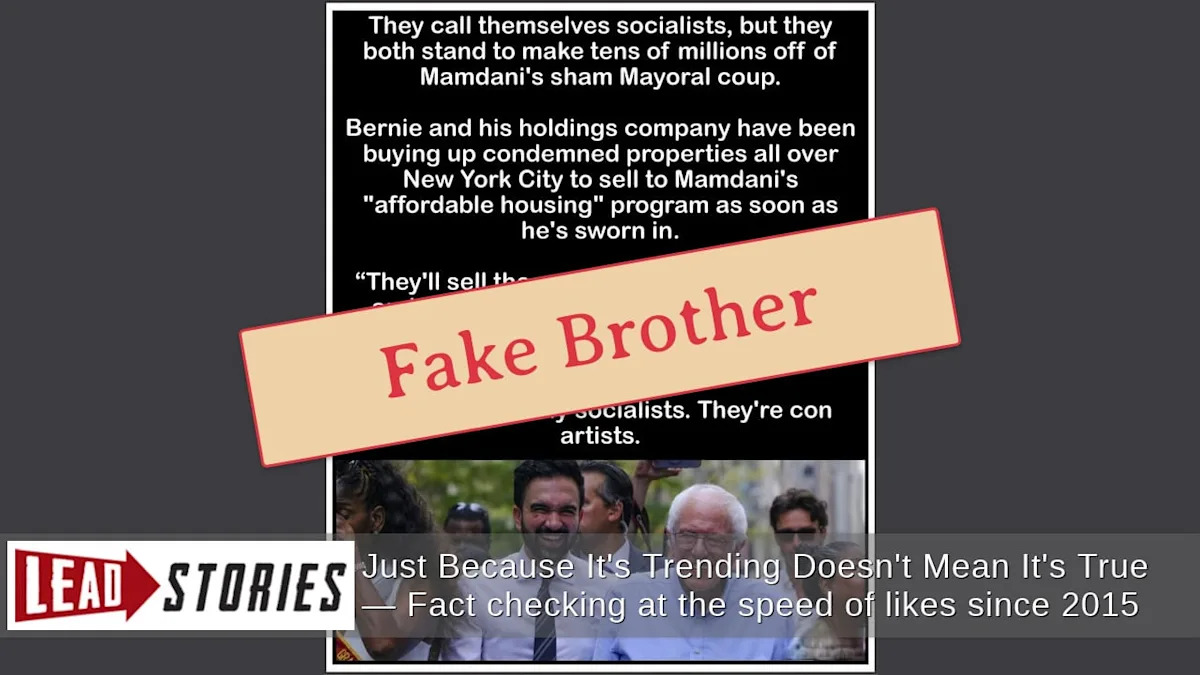
The viral post, which appeared on X (formerly Twitter) on January 7, 2026, made explosive accusations about a “massive NYC property scam” allegedly involving Senator Sanders and someone identified as “Lucas Mamdani,” described as Mayor Mamdani’s brother. According to the claim, the pair were “pocketing tens of millions from sham ‘affordable housing’ fraud.”
An investigation by Lead Stories found no evidence supporting the existence of any sibling named Lucas Mamdani or any brother of Mayor Zohran Mamdani. The sensationalist post alleged that Sanders operated a “shady holdings company” that was purchasing condemned properties throughout New York City with plans to “flip them for insane profits” in coordination with the mayor’s administration.
The post further claimed that “Brother Lucas swoops in with no-bid sweetheart deals” to renovate these properties, characterizing the arrangement as a “pure corruption cash grab.” It concluded with inflammatory language suggesting both Sanders and Mamdani were “master con artists ripping off the poor” rather than the democratic socialists they present themselves as publicly.
Fact-checkers discovered that the original source of the claim included a clear satire disclaimer that was deliberately cropped out when the content was reshared across social media platforms. The original disclaimer explicitly stated: “Everything on this website is fiction. It is not a lie and it is not fake news because it is not real.”
This pattern of satirical content being repurposed as factual information has become increasingly common in today’s digital media landscape. Content creators often produce satirical articles that are then stripped of their contextual disclaimers by third parties seeking to drive engagement through sensationalist claims.
Media literacy experts point to this case as a typical example of how misinformation spreads. “When satire is removed from its original context, it can quickly transform into misinformation,” explains Dr. Maria Hernandez, professor of digital media studies at Columbia University. “The emotional nature of political content makes it particularly susceptible to this kind of manipulation.”
This incident follows a well-documented pattern observed by fact-checkers. According to Lead Stories, articles from satirical websites frequently get copied by actual fake news operations that deliberately omit satire disclaimers and other indicators that the stories are fictional. These operations then distribute the content through social media channels where it can reach millions of unsuspecting readers.
One of the most persistent networks engaged in this practice is reportedly operated by Kashif Shahzad Khokhar, also known as “DashiKashi,” who has allegedly distributed hundreds of such stolen stories to conservative and right-wing Facebook pages, profiting from the resulting ad revenue.
Social media platforms continue to struggle with effectively moderating this type of content, particularly when satirical material is repurposed with malicious intent. Critics argue that platforms must develop better systems to identify content that has been stripped of its original context.
As this case demonstrates, readers are advised to verify sensational claims through multiple credible sources before sharing content, particularly when it involves high-profile public figures and inflammatory allegations. The persistence of such misinformation highlights the ongoing challenges of navigating today’s complex information environment.
Fact Checker
Verify the accuracy of this article using The Disinformation Commission analysis and real-time sources.

9 Comments
I appreciate the diligence of the fact-checkers in getting to the bottom of this story. Debunking misinformation is vital, especially when it involves public officials. Kudos to the investigators for their thorough work.
Hmm, I wonder what the real story is behind this viral post. Even if it’s just satirical content being misrepresented, it’s still concerning to see these kinds of sensationalized claims gaining traction. Transparency and accountability are key.
This story is a good reminder of the need to be skeptical of claims, especially when they seem too outlandish to be true. I’m glad the investigators were able to thoroughly debunk the allegations. Maintaining trust in our institutions requires diligent fact-checking.
Hmm, this story raises some red flags. While I’m glad the allegations were debunked, I can’t help but wonder what the real motivation was behind spreading these kinds of sensational claims. Staying vigilant against disinformation is so important these days.
You make a good point. The origins of these kinds of viral hoaxes are often murky, with ulterior motives at play. Fact-checking alone isn’t enough – we need to understand the broader context and agendas behind the spread of misinformation.
Fact-checking is so important these days, given how much misinformation gets spread online. Good on the investigators for thoroughly debunking these allegations – they sound completely unfounded.
This is quite an interesting story, though the claims about the mayor’s brother and a property scheme with Bernie Sanders seem pretty dubious. I’d want to see some solid evidence before believing something like that.
It’s a shame to see these kinds of outlandish conspiracy theories gaining any traction. I’m glad the fact-checkers were able to definitively refute the claims about the mayor’s supposed brother and the alleged property scheme. Important to stay vigilant against misinformation.
Agreed, these kinds of baseless allegations can be really damaging, especially when they go viral. Fact-checking is crucial to counter the spread of misinformation.