


Listen to the article
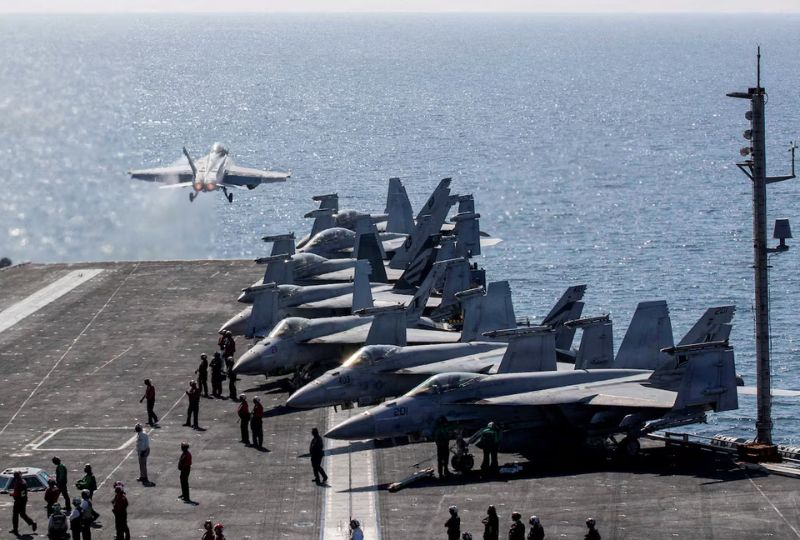
U.S. Central Command has firmly denied Iranian claims that missiles from the Islamic Revolutionary Guard Corps (IRGC) struck an American naval vessel, marking the latest exchange in escalating tensions between the two nations.
“No US Navy ships have been struck,” CENTCOM officials stated in a brief but definitive response. The command also confirmed that “US forces are supporting Project Freedom and enforcing the naval blockade on Iranian ports.”
The Iranian claim comes amid heightened military activities in the Persian Gulf region, where U.S. naval forces have maintained a significant presence for decades to ensure freedom of navigation and protect vital shipping lanes through which approximately 20% of the world’s oil supply passes.
Military analysts note that false claims of successful strikes against U.S. assets have been a recurring propaganda tactic employed by the Iranian regime, particularly during periods of internal political pressure or international isolation. The IRGC, a powerful branch of Iran’s armed forces designated as a terrorist organization by the United States in 2019, frequently issues statements aimed at projecting military strength to domestic and regional audiences.
The naval blockade referenced in the CENTCOM statement represents a significant escalation in America’s approach to containing Iran. Such blockades are considered serious military actions under international law, typically implemented to prevent the movement of goods and materials in and out of a country’s ports.
Project Freedom, mentioned in the statement, appears to be the operational name for the current U.S. naval mission in the region, though specific details about its scope and objectives remain classified. The operation likely encompasses multiple strategic goals, including countering Iranian influence, protecting commercial shipping, and supporting regional allies.
The Pentagon has previously expressed concerns about Iran’s growing naval capabilities, particularly its development of anti-ship ballistic missiles and its fleet of fast attack craft that could potentially threaten larger vessels through swarm tactics.
Maritime security experts point out that the Persian Gulf’s confined waters create a challenging operational environment where even minor miscalculations or provocations could rapidly escalate into broader conflict. The narrow Strait of Hormuz, which connects the Persian Gulf to the open ocean, represents a strategic chokepoint that Iran has repeatedly threatened to close during previous tensions.
Regional observers note that this incident occurs against the backdrop of stalled nuclear negotiations and Iran’s deepening military cooperation with Russia and China, factors that have complicated Washington’s strategic calculations.
The false missile strike claim may also be an attempt by Tehran to test international response mechanisms or to gauge how quickly and definitively the U.S. would publicly respond to such assertions.
Former naval officers familiar with Gulf operations suggest that while no strike occurred, the U.S. Navy maintains sophisticated defensive systems capable of detecting and intercepting incoming threats, including the Aegis Combat System deployed on many American warships in the region.
Neither country has indicated any immediate plans to deescalate the situation, raising concerns among diplomatic circles about the potential for miscommunication or miscalculation that could inadvertently trigger more serious confrontations.
The U.S. State Department has yet to issue additional statements regarding the incident, though officials typically coordinate closely with CENTCOM on matters involving potential military confrontations with Iran.
As tensions persist, international shipping companies and energy markets remain watchful of developments that could affect maritime security and global oil prices, particularly if hostilities were to threaten the free flow of petroleum through this strategically critical waterway.
Fact Checker
Verify the accuracy of this article using The Disinformation Commission analysis and real-time sources.

10 Comments
As an investor in the energy and commodities sectors, I’m closely following developments in the Persian Gulf. Geopolitical instability can have significant impacts on global supply chains and market dynamics.
Good point. Disruptions to energy and mineral resources in the region could create volatility and uncertainty, which is something investors will want to monitor closely.
Interesting developments in the Persian Gulf. Always good to have a clear and objective understanding of events, rather than relying on unverified claims. It will be important to follow this story closely as it unfolds.
Agreed. Maintaining open communication channels and avoiding escalation is crucial in these tense geopolitical situations.
It’s troubling to see the continued posturing and rhetoric from both sides. I hope cooler heads can prevail and they find a diplomatic solution to ease tensions in the region.
Absolutely. Escalating military actions and unverified claims only heighten the risk of miscalculation and unintended consequences. Maintaining open dialogue is crucial.
The ongoing tensions in the region are concerning. I hope both sides can work to de-escalate the situation and find a diplomatic resolution. Transparency and factual reporting are essential to navigate these complex issues.
Absolutely. Misinformation and unverified claims only serve to inflame tensions further. Level-headed analysis from reliable sources is needed.
The situation in the Persian Gulf is certainly complex and fluid. As an observer, I’m curious to see how this plays out and whether the parties can find a path forward that reduces the risk of conflict.
Agreed. It will be important for all sides to exercise restraint and focus on verifiable facts rather than inflammatory rhetoric. Objective analysis from trusted sources will be key.