


Listen to the article
Debunked: Viral Image of Minneapolis ICE Shooting Incident Revealed as AI-Generated
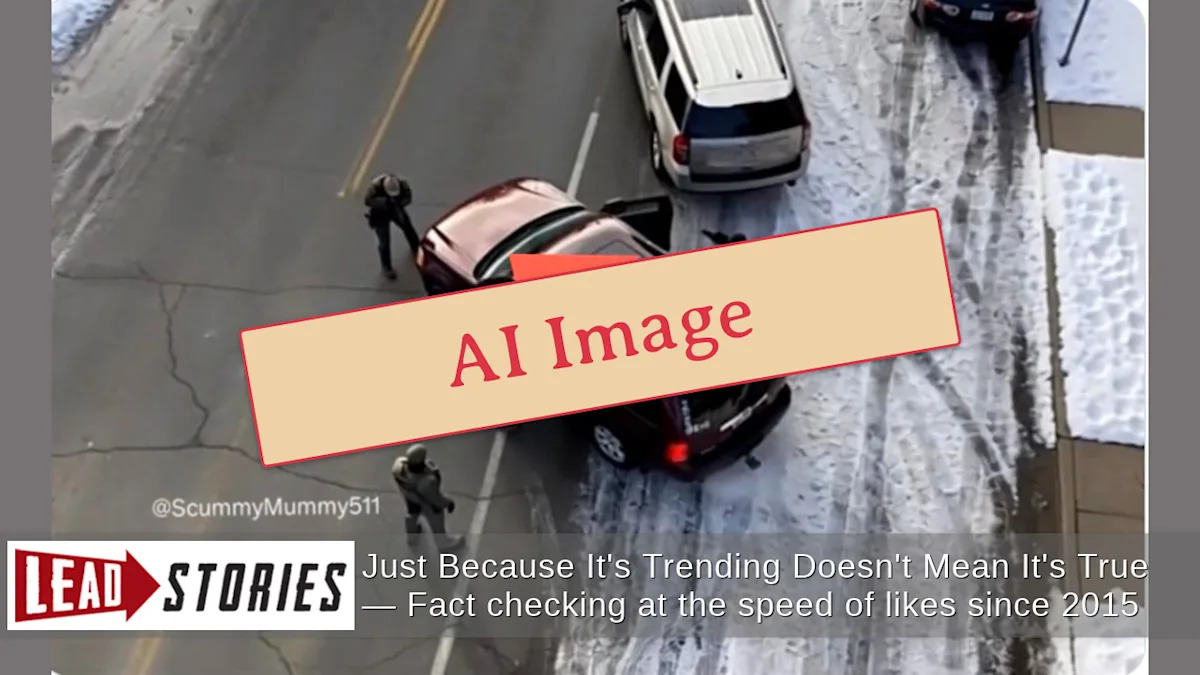
A viral image purporting to show the fatal shooting of Minneapolis resident Renee Good by an Immigration and Customs Enforcement (ICE) agent has been confirmed as fake. The image, which circulated widely across social media platforms, was actually created using artificial intelligence, according to fact-checkers who compared it with authentic eyewitness videos.
The fabricated image first appeared on January 8, 2026, in a post on X (formerly Twitter) claiming, “she made contact with him and started moving forward before he fired his weapon.” The post included what appeared to be a dramatic still image of the confrontation between Good and the ICE agent. Several variations of the image subsequently spread across social media, with many versions cropping out a visible watermark.
Detailed analysis of the image revealed multiple discrepancies when compared to verified footage of the actual incident, which occurred on January 7, 2026, when 37-year-old Renee Good was shot to death in Minneapolis, Minnesota.
Genuine eyewitness videos of the shooting, which have been verified by multiple media outlets, clearly show that Good had short, light-colored hair at the time of the incident. In contrast, the fabricated image depicts a person with a sleek, blondish ponytail – a significant physical difference that immediately calls the image’s authenticity into question.
The fabricated image also contains yellow road markings that are absent in both the genuine footage of the incident and Google Maps street view imagery of the location from 2022. This geographical inconsistency provides further evidence that the image was artificially created rather than captured at the scene.
Investigators traced the original source of the image to a social media account that is explicitly labeled as a “parody account” in its profile. In a comment posted the same day the image was shared, the account owner admitted that the picture was generated using AI technology.
The spread of this fabricated image highlights growing concerns about the potential for AI-generated content to mislead the public during breaking news events. In emotionally charged situations like police shootings, such fabricated imagery can significantly impact public perception and potentially inflame tensions before all facts are established.
The actual shooting of Renee Good has sparked significant community response and calls for a thorough investigation into the circumstances surrounding the ICE agent’s use of deadly force. Local officials have pledged transparency as the investigation unfolds.
Media literacy experts point to this incident as an example of why critical evaluation of sources and visual content is increasingly important in the digital age. They recommend looking for inconsistencies in imagery, checking multiple reliable news sources, and being particularly skeptical of dramatic images that emerge immediately after high-profile incidents.
As the investigation into Good’s death continues, authorities have cautioned the public to rely on official information channels and verified media reports rather than unconfirmed social media content.
This incident serves as a reminder of how rapidly misinformation can spread following traumatic events and demonstrates the growing sophistication of AI-generated imagery that can appear convincingly realistic to casual observers.
Fact Checker
Verify the accuracy of this article using The Disinformation Commission analysis and real-time sources.

16 Comments
The debunking of this fake image is a good reminder to be cautious of visuals that emerge during breaking news situations. We should rely on verified media reports and eyewitness accounts, not doctored photos or videos.
Absolutely. It’s concerning how quickly misinformation can spread online, even when the original source is fabricated. Fact-checking is essential to maintain public trust.
This case is a sobering reminder of the need for caution and critical thinking when consuming online content, especially during breaking news events. Relying on reputable sources and verified information is essential to avoid being misled by manipulated visuals.
Agreed. The ability to generate hyper-realistic fake images using AI is a concerning development that requires vigilance from both media outlets and the public. Maintaining a healthy skepticism is key.
This is a concerning case. While the viral image was fabricated, it’s still important to get the full facts around the tragic shooting of Renee Good. Fact-checking is crucial to avoid the spread of misinformation during sensitive incidents like this.
Agreed. It’s worrying to see AI-generated images being used to mislead people about real events. Rigorous verification of sources is needed to separate truth from fiction, especially on social media.
The debunking of this fabricated image is a positive step, but it’s clear that the proliferation of AI-generated content poses significant challenges for the public’s ability to distinguish truth from fiction. Vigilant fact-checking will be crucial going forward.
Definitely. As AI technology advances, the spread of misinformation will likely only increase. Building media literacy and strengthening verification processes should be top priorities to combat this trend.
This incident highlights the need for greater digital literacy and media scrutiny. With the rise of AI-generated content, it’s crucial that people learn to identify authentic sources and resist the pull of sensational but false visuals.
Well said. Improving our collective ability to discern truth from fiction online should be a priority, especially when it comes to sensitive topics like this shooting.
While the viral image was confirmed as fake, the underlying incident involving the shooting of Renee Good remains a troubling event that requires thorough investigation and transparency from the authorities. Fact-based reporting and public scrutiny are crucial in such sensitive cases.
You make a good point. The debunking of the fabricated image shouldn’t overshadow the need to fully understand the circumstances surrounding Renee Good’s death. Rigorous, impartial inquiry is essential to ensure justice and accountability.
While the viral image was confirmed as fake, the actual details around Renee Good’s tragic death still require thorough investigation and transparency. Fact-based reporting is essential to honor her memory and ensure accountability.
I agree. The spread of misinformation, even if unintentional, can distract from the real issues and make it harder to seek justice. Maintaining focus on the verified facts is crucial.
The revelation that this viral image was AI-generated highlights the growing challenge of misinformation in the digital age. As technology advances, the public must become increasingly savvy in discerning authentic content from manipulated visuals. Fact-checking and media literacy are more important than ever.
Absolutely. The proliferation of AI-powered disinformation is a serious threat to informed discourse and democratic processes. Strengthening our collective ability to identify and resist these deceptive tactics should be a priority for both media and the public.