


Listen to the article
In a significant development within the ongoing International Criminal Court (ICC) case against former Philippine President Rodrigo Duterte, misinformation has spread across social media platforms regarding the prosecutor handling the proceedings.
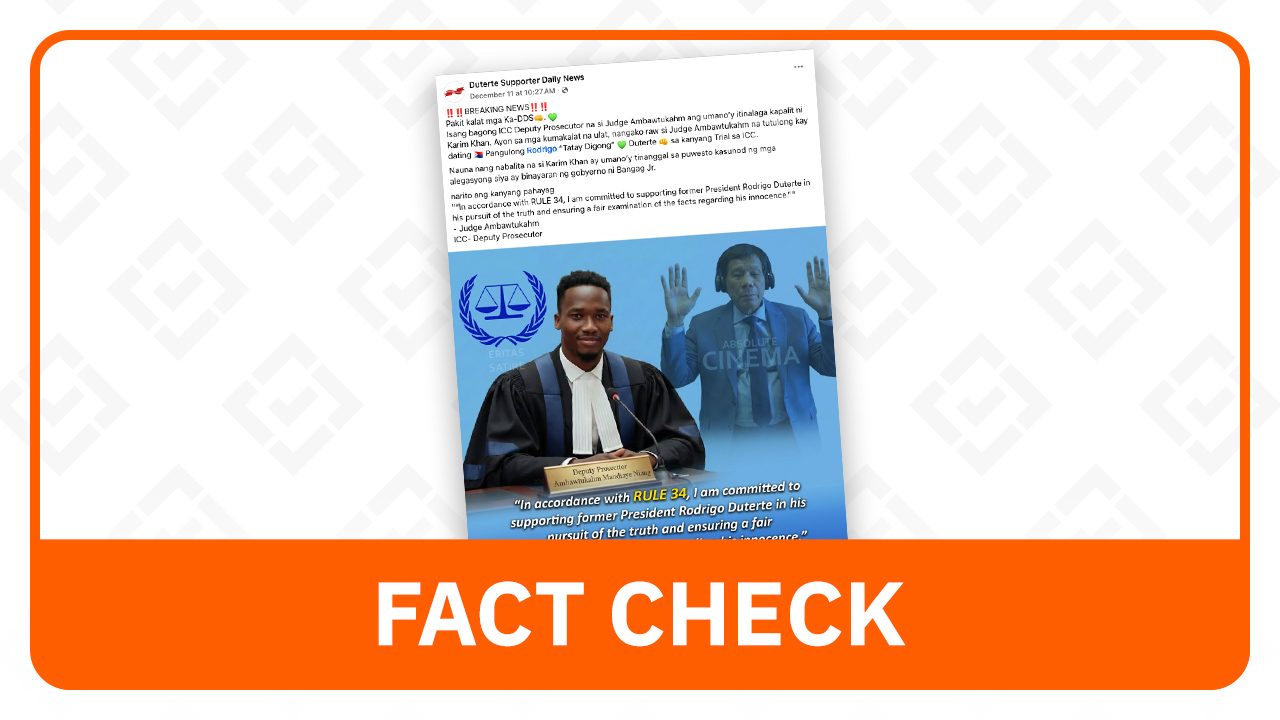
A viral Facebook post falsely claimed that an “ICC Deputy Prosecutor Judge Ambawtukahm Mandiaye Niang” would take over as the new chief prosecutor in Duterte’s war crimes case and was committed to “supporting” the former president in “his pursuit of the truth” to prove his innocence.
The fabricated post, which garnered over 7,600 reactions, 1,700 comments, and 1,100 shares, contains multiple inaccuracies and appears designed to mislead Duterte supporters. The actual deputy prosecutor handling the case is Mame Mandiaye Niang, not “Ambawtukahm” – a name derived from an internet meme.
Further investigation reveals the photograph used in the social media graphic does not match Niang’s official image on the ICC website. The entire quote attributed to Niang appears to be fabricated, containing references to internet memes rather than legitimate legal statements.
The fake content successfully confused many social media users, despite the posting page labeling itself as satirical. Comments revealed supporters expressing hope that the prosecutor would help bring the 80-year-old former president home.
In reality, Niang is indeed handling Duterte’s case, but only after ICC Prosecutor Karim Khan was disqualified in October due to a potential conflict of interest. Duterte’s defense had attempted to disqualify Khan in August, citing his involvement with messages sent to the court from victims of Duterte’s controversial drug war campaign.
Niang, a legitimate ICC deputy prosecutor now serving as acting chief prosecutor in Khan’s absence, brings significant experience to the role. His background includes various positions at the International Criminal Tribunal for Rwanda and service as a regional representative for the United Nations Office on Drugs and Crime in Southern Africa.
The actual case against Duterte involves serious allegations – three counts of widespread murder connected to crimes against humanity allegedly committed during his tenures as mayor of Davao City and as president of the Philippines. These counts encompass 49 incident killings with 78 victims, representing what prosecutors describe as a systematic attack constituting crimes against humanity.
Duterte remains in ICC detention after his appeal for interim release was denied by the appeals chamber on November 28. His defense team has argued he is medically and cognitively unfit to stand trial – a claim the ICC is investigating through a contracted panel of neuropsychiatry experts.
The court entered its judicial recess on December 12 and will resume proceedings on January 5, at which point further developments in this high-profile case are expected.
This incident highlights the ongoing challenge of combating disinformation surrounding high-profile international legal proceedings, particularly those involving political figures with dedicated supporter bases. The spread of such misleading content underscores the importance of consulting official sources for information on significant legal matters.
Fact Checker
Verify the accuracy of this article using The Disinformation Commission analysis and real-time sources.

14 Comments
This fabricated post is clearly an attempt to mislead the public and distract from the serious ICC case against Duterte. Spreading misinformation about the prosecutor’s involvement is unacceptable and undermines the integrity of the legal process.
This is a disappointing example of how misinformation can spread so quickly on social media. I hope the relevant authorities are able to address the source of this fabricated content and restore public confidence in the ICC’s work.
It’s concerning to see such blatant disinformation being spread, especially around high-profile legal proceedings. The public deserves accurate information, not internet meme-fueled falsehoods, when it comes to important issues like war crimes.
I appreciate the diligence of the authorities in swiftly addressing and debunking this fabricated claim. Maintaining the integrity of legal processes and public discourse is critical, especially in high-profile cases.
While I’m curious to learn more about the ICC case against Duterte, this fabricated quote card is clearly not a reliable source. I hope the actual facts and legal proceedings will be made transparently available to the public.
Fabricated content like this, especially around sensitive legal cases, can have serious consequences. It’s important for the public to remain vigilant and rely on credible, verified sources of information to form their understanding of complex issues.
While it’s concerning to see fabricated information circulating, I’m glad the authorities were able to quickly identify and debunk this false claim. Rigorous fact-checking and transparency are vital to ensure the public has access to accurate, trustworthy information.
It’s disappointing to see such blatantly false information circulating, especially around a sensitive ICC case. The public deserves accurate, reliable information from credible sources, not fabricated content designed to mislead.
Absolutely. Vigilance is needed to counter the proliferation of misinformation online. Fact-based reporting and due diligence are essential to uphold the principles of justice and the rule of law.
This is a concerning case of misinformation spreading on social media. It’s important to verify claims, especially related to high-profile legal cases, before sharing them. Fabricated quotes and fake identities can easily mislead the public.
Agreed. Fact-checking is crucial to prevent the spread of disinformation, which can undermine public trust and the integrity of legal proceedings.
The details in this excerpt highlight the need for vigilance against online manipulation. Verifying the source and authenticity of information, especially related to official judicial matters, is crucial to maintaining public trust.
This is a clear example of how social media can be manipulated to spread disinformation. It’s important for users to be critical consumers of online content and verify claims before engaging or sharing. Maintaining the integrity of legal processes is crucial.
This case highlights the ongoing challenge of combating the spread of misinformation online. Fact-checking and media literacy are essential tools to help the public navigate the information landscape and identify manipulative content.