


Listen to the article
India Debunks Pakistani Propaganda About Tejas Fighter Jets
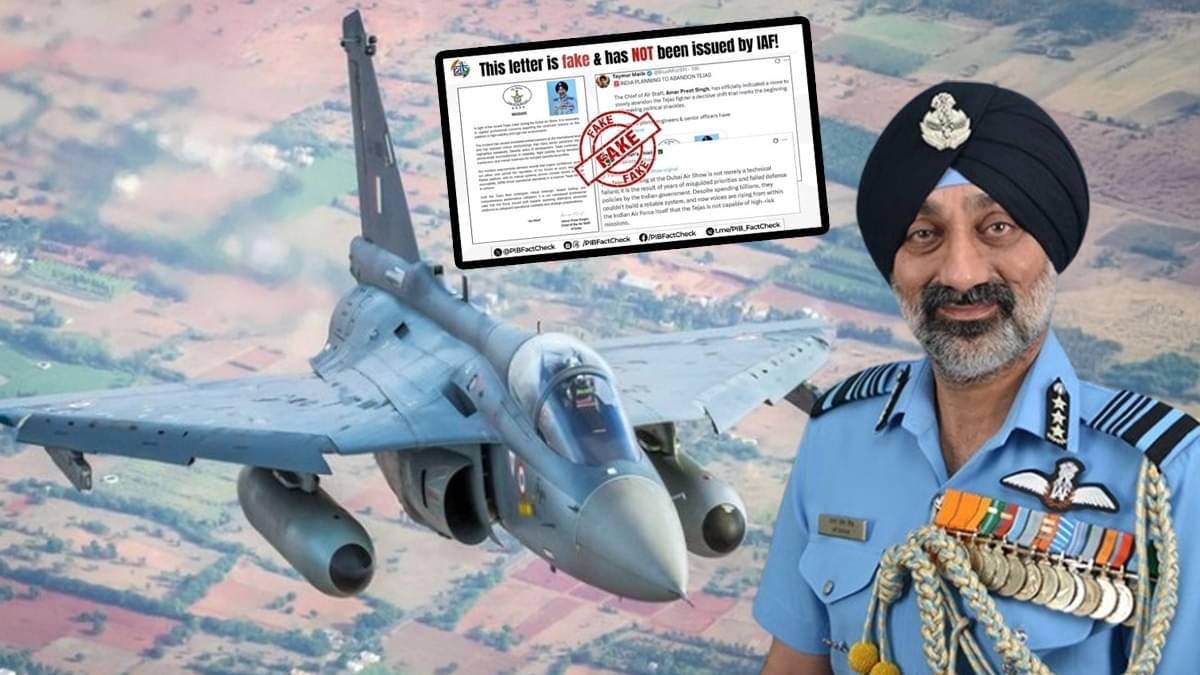
Indian authorities have firmly refuted false claims circulating on social media that the Indian Air Force (IAF) plans to abandon its indigenous Tejas fighter jets. The Press Information Bureau’s Fact Check unit (PIB Fact Check) exposed the misinformation campaign on its official X account, highlighting what it described as Pakistani propaganda.
The fabricated information included a counterfeit letter purportedly signed by Chief of Air Staff Amar Preet Singh, claiming that India was planning to discontinue use of the Tejas aircraft. PIB Fact Check promptly issued a “PAKISTAN PROPAGANDA ALERT!” on social media platforms to counter the misleading narrative.
“Several Pakistani propaganda accounts are circulating a letter allegedly signed by the Chief of Air Staff, Amar Preet Singh, which claims that the Indian Air Force is planning to abandon the Tejas fighter jets,” PIB stated in its post. “This letter is fake. The IAF has issued NO such statement!”
The Tejas fighter jet represents a cornerstone of India’s push toward military self-reliance and indigenous defense manufacturing. Developed by Hindustan Aeronautics Limited (HAL), the light combat aircraft has been in development since the 1980s and entered service with the IAF in 2016. The Tejas Mark 1A variant secured a significant ₹48,000 crore order for 83 aircraft in 2021, underscoring India’s commitment to the platform.
In addition to the fabricated letter, PIB Fact Check also exposed another false claim allegedly attributed to Air Chief Marshal AP Singh. The fake statement suggested that India had “lost enough jets in recent times” and proposed sending Indian pilots to Pakistan for training, absurdly claiming that the “Pakistan Air Force is way ahead of us.”
“Air Chief Marshal AP Singh has NOT made any such statement,” clarified PIB Fact Check. “This is an attempt to spread misinformation and undermine trust in the Indian Armed Forces.”
Defense analysts note that such disinformation campaigns often intensify during periods of bilateral tension or following significant developments in India’s defense sector. The timing coincides with India’s growing emphasis on defense exports and increased international interest in the Tejas platform, with countries like Malaysia and Egypt reportedly evaluating the fighter jet.
The IAF currently operates two squadrons of Tejas fighters—the 45 Squadron “Flying Daggers” based at Sulur Air Force Station in Tamil Nadu and the 18 Squadron “Flying Bullets” commissioned in May 2020. Both squadrons play crucial roles in India’s air defense strategy, particularly along its southern borders.
PIB Fact Check urged social media users to exercise caution and rely solely on official Indian government sources for accurate information. “Do not fall for such dubious claims being circulated on social media! Remain vigilant and refrain from disseminating such content,” the agency advised.
This incident highlights the ongoing information warfare between India and Pakistan, with social media increasingly becoming a battleground for narrative control. Indian intelligence and information agencies have stepped up efforts to counter cross-border propaganda that attempts to undermine India’s military capabilities and technological advancements.
Cybersecurity experts point out that such disinformation campaigns represent a low-cost, high-impact strategy to sow doubt about a rival nation’s defense programs and create public mistrust in military leadership. However, India’s rapid response through official channels demonstrates an evolving counter-strategy to combat false narratives in real-time.
As India continues to expand its domestic defense manufacturing under the “Make in India” initiative, with the Tejas fighter program serving as a flagship project, analysts expect similar disinformation attempts to persist but with diminishing effectiveness as awareness increases among the public.
Fact Checker
Verify the accuracy of this article using The Disinformation Commission analysis and real-time sources.

11 Comments
It’s good to see the Indian government taking an active stance against the spread of misinformation, especially when it comes to national security matters like the Tejas fighter program. Maintaining public trust is crucial in these sensitive areas.
Agreed. Fact-checking and debunking false claims is an important part of combating disinformation campaigns, which can have serious geopolitical implications if left unchecked.
The Tejas fighter jet is a source of national pride for India, so it’s understandable the government would want to swiftly refute any claims about its potential abandonment. Building a strong, self-reliant defense industry is a key strategic priority.
The Tejas program is a significant milestone for India’s defense capabilities, so it’s understandable the IAF would remain committed to it. Countering false narratives is critical to preserving the integrity of such important national initiatives.
India’s rebuttal of the propaganda around the Tejas fighter jets highlights the importance of fact-checking and debunking misinformation, especially on sensitive military and national security topics. Transparency and accurate information are crucial.
Yes, the IAF’s commitment to the Tejas program is a positive sign for India’s defense capabilities and indigenous R&D efforts. Countering false narratives is an ongoing challenge that requires vigilance.
Interesting to see India debunk the misinformation campaign about the Tejas fighter jets. The Tejas program is a key part of India’s push for self-reliance in defense manufacturing, so it’s not surprising the IAF remains committed to it.
Agreed, the Tejas represents an important milestone for India’s aerospace industry. It’s good to see the government taking swift action to counter the false claims circulating online.
India’s rebuttal of the misinformation around the Tejas fighter jets demonstrates the government’s vigilance in protecting its strategic interests and defense priorities. Maintaining transparency and facts is key, especially on sensitive military matters.
Absolutely. Fact-checking and debunking false claims is crucial to prevent the spread of damaging narratives, especially when they involve national security and defense capabilities.
The IAF’s continued commitment to the Tejas fighter program is an encouraging sign for India’s push towards self-reliance in defense manufacturing. Countering misinformation campaigns is essential to safeguarding these critical national initiatives.