


Listen to the article
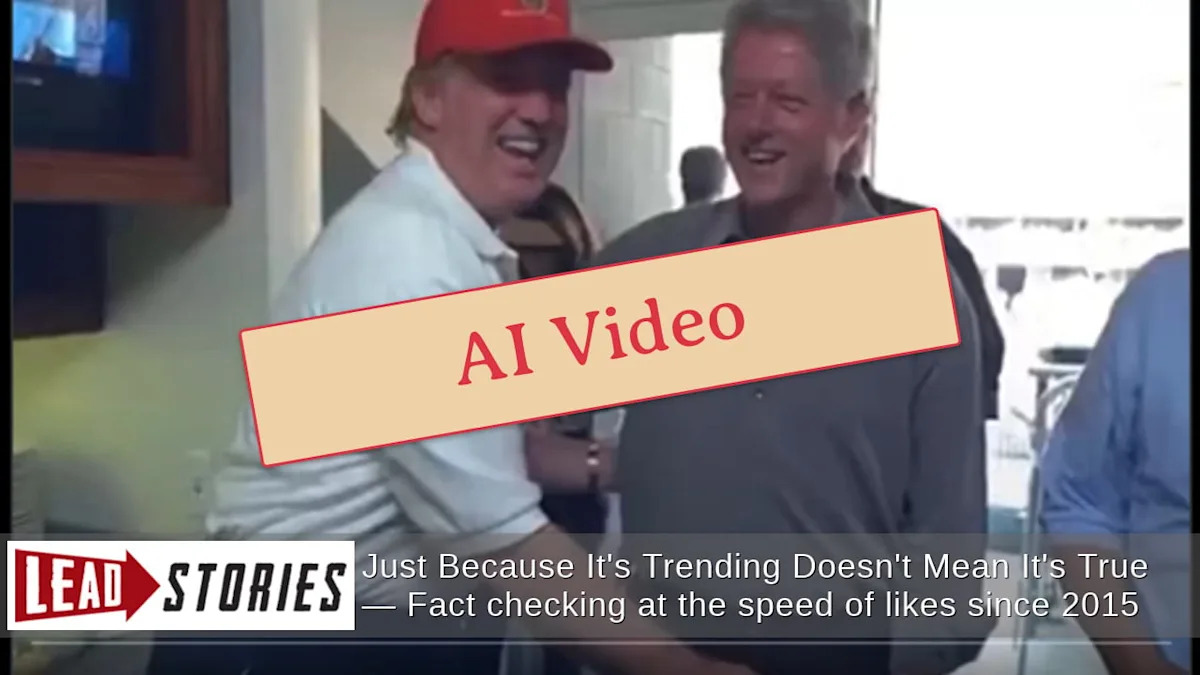
In a striking case of digital manipulation, a video purportedly showing Donald Trump inappropriately touching Bill Clinton has been confirmed as an AI-generated fake. The deceptive clip, which has circulated on social media, begins with a single authentic frame before transitioning into fabricated footage.
Forensic analysis reveals that only the opening image is genuine. This authentic photograph, released by the Clinton Presidential Library in September 2016, captures Trump and Clinton during their attendance at the U.S. Open Golf Tournament in Flushing Meadows, New York, in September 2000. The image was part of a larger collection of photographs documenting the interaction between the two men at the sporting event.
The remainder of the six-second video, however, displays clear evidence of artificial manipulation. Digital forensics experts have identified several telltale signs of AI generation, most notably inconsistencies in background elements that change throughout the brief clip.
One particularly revealing inconsistency involves a woman visible in the background between Trump and Clinton in the authentic opening frame. As the video progresses beyond the three-second mark, this individual inexplicably vanishes from the scene. Such continuity errors are classic indicators of AI-generated content, where background elements often fail to maintain consistency throughout a manipulated sequence.
Additional anomalies include changes to furniture details, such as a chair back that appears differently at the four-second mark compared to its appearance in verified photographs from the same event. These discrepancies further confirm the video’s fraudulent nature.
The manipulated video was shared on X (formerly Twitter) on November 14, 2025, by an account named @NORCAL_icmag. It represents an increasingly common form of political disinformation that leverages artificial intelligence to create convincing but entirely fabricated scenarios involving public figures.
This incident highlights the growing sophistication of AI-generated deepfakes and their potential to spread misinformation, particularly in politically charged contexts. As AI technology becomes more accessible, the ability to create realistic-looking fake videos has expanded dramatically, presenting significant challenges for media literacy and factual verification.
Media authentication experts warn that such manipulated content is likely to proliferate as election cycles intensify. They recommend that viewers exercise heightened skepticism toward provocative videos involving political figures, especially those showing behavior that would likely have been widely reported if genuine.
Digital forensics specialists note that close examination of background details, lighting consistency, and natural movement patterns can often reveal synthetic media. In this case, the abrupt disappearance of background elements served as a clear indicator of manipulation.
The circulation of this fabricated video comes amid broader concerns about the role of AI-generated content in political discourse. Technology companies and fact-checking organizations have intensified efforts to develop more sophisticated detection methods, though they acknowledge that distinguishing between authentic and synthetic media continues to grow more challenging as AI capabilities advance.
For consumers of online content, experts recommend consulting multiple trusted sources before accepting the authenticity of politically charged videos, particularly those depicting inflammatory or unusual behavior by public figures.
Fact Checker
Verify the accuracy of this article using The Disinformation Commission analysis and real-time sources.

9 Comments
While the authentic photograph is interesting, the fabricated video is quite concerning. I’m glad the experts were able to conclusively determine its artificial origins. Vigilance against manipulated media is so important these days.
I agree completely. It’s essential that we all develop the skills to spot deepfakes and other AI-generated content to prevent the spread of misinformation.
Wow, this is a concerning case of digital manipulation. It’s important to be vigilant about misinformation online, especially when it involves prominent figures. I’m glad the experts were able to verify the authenticity of the original image.
Forensic analysis is a crucial tool for identifying digital forgeries. The inconsistencies highlighted in this case demonstrate the importance of thorough investigation before drawing conclusions about visual media. Fact-checking is paramount.
This is a sobering example of how advanced AI technology can be misused to create deceptive content. It’s a good reminder to be cautious and critically evaluate media, rather than simply accepting what we see online at face value.
This is a valuable lesson in the potential dangers of AI-generated content. While the technology can be used for many positive applications, it’s clear that it can also be exploited to create deceptive and misleading materials. We must remain vigilant.
Fabricated videos like this can be very misleading. It’s crucial that we scrutinize media and use credible sources to fact-check claims, rather than spreading unverified content. Maintaining trust in information is vital for a healthy democracy.
Absolutely, well said. Fact-checking and verifying the source are essential skills in this digital age.
I appreciate the thorough analysis provided in this report. Identifying the inconsistencies and signs of AI generation is important work to combat the spread of disinformation. Maintaining the integrity of visual media is crucial.