


Listen to the article
Assisted Dying Bill Collapses in House of Lords After Months of Deliberation
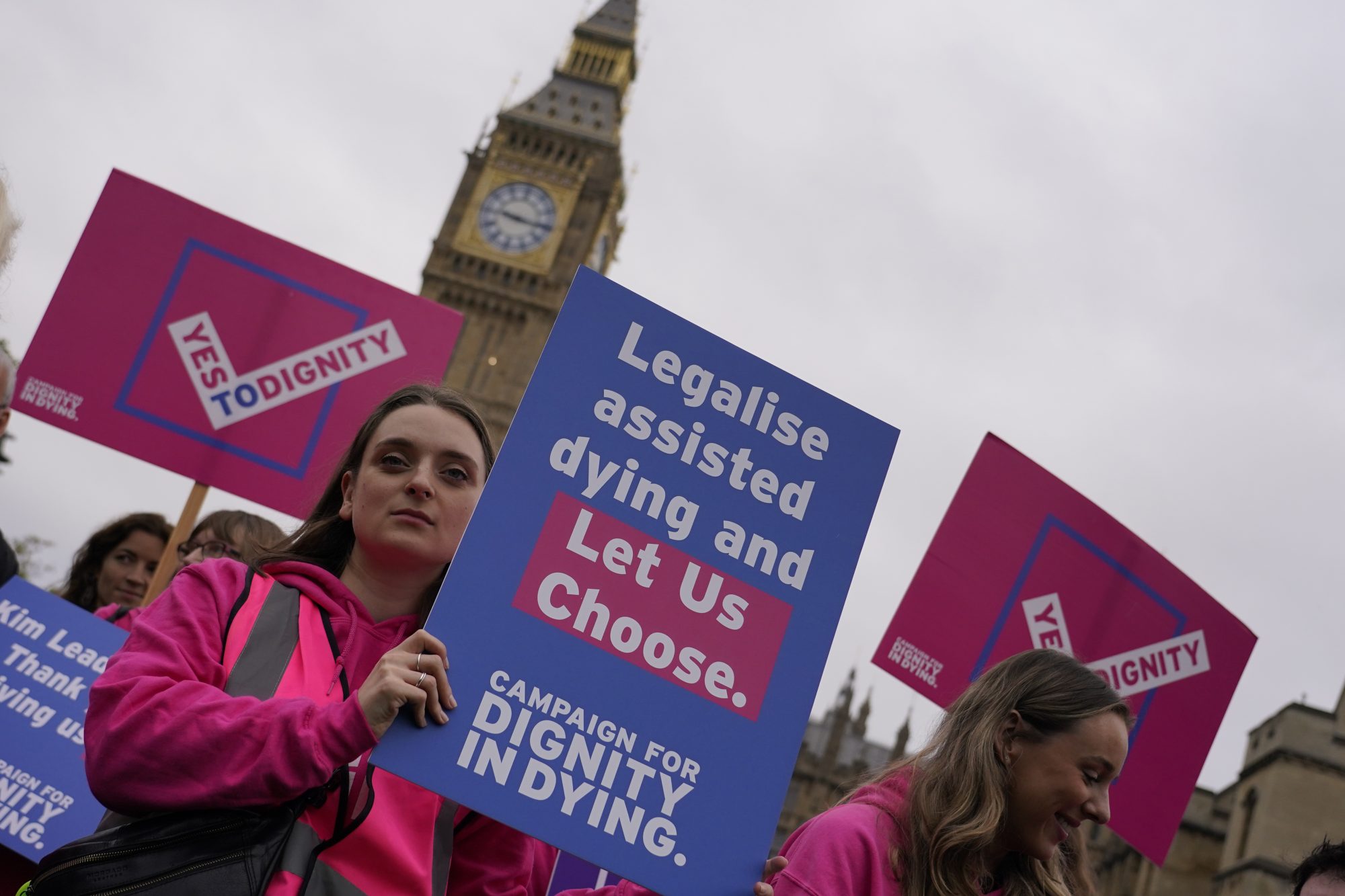
The controversial Assisted Dying Bill has failed to progress through Parliament after months of deliberation in the House of Lords, sparking debate about constitutional propriety and democratic principles in the UK legislative process.
Officially called the Terminally Ill Adults (End of Life) Bill, the legislation sought to allow adults diagnosed with less than six months to live to request and receive assistance to end their lives, with various safeguards in place. Despite passing through the House of Commons with majority support, the bill stalled in the Lords as peers proposed hundreds of amendments.
The bill’s demise comes as Parliament reaches the end of its annual session, which typically concludes in late spring or early summer. Any incomplete legislation is automatically dropped at session’s end unless specifically rescued by government action. As a private member’s bill—introduced by backbench MP Kim Leadbeater rather than the government—it was not eligible for such protection.
Supporters of the bill have expressed frustration, suggesting the volume of Lords amendments was a deliberate strategy to run down the clock. Critics counter that substantial modifications were necessary to protect vulnerable individuals from potential abuse of the proposed system.
Constitutional experts are divided on whether the Lords overstepped their role. Professor Jo Murkens of the London School of Economics told reporters the bill’s failure was “constitutionally orthodox, even if politically contentious.” He explained that the usual conventions limiting Lords’ powers don’t apply in this case, as assisted dying was not part of Labour’s manifesto and the bill wasn’t government-sponsored legislation.
“In those circumstances, the House of Lords is entitled to subject the proposal to sustained scrutiny, even where that has the practical effect of preventing passage,” Murkens stated.
Professor Robert Hazell of University College London’s Constitution Unit agreed the failure wasn’t unconstitutional but characterized it as “undemocratic,” noting that the bill “was passed by the House of Commons after serious discussion of the underlying principles and necessary safeguards […] only to be effectively blocked in the Lords by a group of seven peers who moved most of the 1,200 amendments.”
Sir Vernon Bogdanor, constitutional expert from King’s College London and the University of Oxford, offered a more nuanced perspective. “The Lords would say that they have not rejected the bill, but [were] performing their function as a revising chamber,” he explained, pointing to medical experts within the Lords who believed the legislation required substantial amendment.
Bogdanor noted that some would give greater weight to the Commons’ approval because MPs had a free vote, voting according to personal conscience rather than party directives. However, he acknowledged the counterargument that parliamentary conventions requiring Lords to defer to Commons typically apply only to government bills based on manifesto commitments.
The debate touches on fundamental questions about British democracy. Professor Murkens cautioned against viewing the situation through a “narrowly majoritarian” lens that assumes whatever the Commons decides should automatically become law. “The unelected House of Lords is expected to act as a revising and deliberative chamber, and as a constitutional watchdog, particularly on morally complex questions that Parliament itself treats as matters of conscience rather than popular mandate,” he said.
For the assisted dying legislation to have any chance of becoming law now, it would need to be reintroduced in the next parliamentary session and begin the entire process anew. While the government could theoretically adopt the policy in its own legislation, this seems unlikely given the deeply contentious nature of the issue.
Alternatively, it could be reintroduced as another private member’s bill, though this pathway presents significant challenges. Private members’ bills must win a competitive “ballot” to secure precious parliamentary time, making success far from guaranteed.
Assisted dying campaigners have indicated they are exploring options to revive the legislation, including potential use of the Parliament Act in future attempts. However, the path forward remains uncertain for this divisive moral and ethical issue that continues to challenge British lawmakers.
Fact Checker
Verify the accuracy of this article using The Disinformation Commission analysis and real-time sources.

8 Comments
The collapse of this bill is certainly disappointing for those seeking greater end-of-life options. However, the legislative process requires thorough scrutiny, and the Lords’ role in amending bills is an important check on power. I hope this leads to continued, thoughtful dialogue on the issue.
The failure of this Assisted Dying Bill raises important questions about the balance of power between the Commons and the Lords, and the role of democracy in the legislative process. It will be important to closely examine the constitutional and ethical considerations at play.
I agree, the constitutional issues here are quite complex. The Lords’ ability to stall private member’s bills through amendments is something that may need to be re-examined to ensure proper democratic representation.
The collapse of this bill is disappointing for those seeking more options for terminally ill patients. However, the legislative process requires thorough scrutiny, and the Lords’ role in amending the bill is an important check on power. I hope this sparks a continued, thoughtful dialogue on the issue.
This debate over end-of-life legislation highlights the sensitive and divisive nature of the topic. While I respect the intent behind the bill, I can understand the concerns raised about potential unintended consequences and the need for robust safeguards. It’s a delicate balance.
I’m curious to learn more about the constitutional questions raised by the failure of this bill. The interplay between the elected Commons and the unelected Lords is a complex matter worthy of deeper examination. Perhaps this could lead to reforms that improve the legislative process.
This is a sensitive and emotive topic, and I can understand the range of perspectives involved. While I’m sympathetic to the intent behind the Assisted Dying Bill, the legislative process must carefully consider all the ethical and practical implications. It’s a difficult balance to strike.
Interesting that this controversial bill failed to pass despite majority support in the House of Commons. The volume of Lords amendments seems like a strategic move to stall the legislation. Curious to see the constitutional implications and ongoing debates around end-of-life policies in the UK.