


Listen to the article
WHO Amendments Spark Sovereignty Debate Despite Limited Authority
Conservative voices in the United States have raised alarms over proposed amendments to the International Health Regulations (IHR) and a potential pandemic treaty, claiming they would surrender U.S. sovereignty to the World Health Organization. Health experts and officials, however, insist these claims fundamentally misrepresent the WHO’s limited authority.
The International Health Regulations constitute a legally binding agreement signed by 196 countries that outlines nations’ rights and obligations during international health emergencies. First adopted in 1969 and revised in 2005, the IHR requires member countries to develop health systems capable of detecting and responding to public health emergencies, and to notify the WHO of potential international concerns.
Despite being legally binding, the regulations have no enforcement mechanism, and according to the CDC, only about one-third of countries worldwide have the capability to properly assess, detect, and respond to public health emergencies.
“WHO has no authority to dictate US health policy whatsoever,” explained Lawrence O. Gostin, a global health law professor at Georgetown University who directs the WHO Collaborating Center on National and Global Health Law. “The Regulations have no control whatsoever over national health care policy or programs. That is entirely a matter for the sovereign nation to decide.”
The controversy centers on 13 amendments to the IHR submitted by the Biden administration for discussion at the Seventy-fifth World Health Assembly held in Geneva from May 22-28, 2022. The amendments aim to address weaknesses revealed during the COVID-19 pandemic response.
Conservative figures including former Minnesota Rep. Michele Bachmann, The Blaze senior editor Daniel Horowitz, and Fox News host Tucker Carlson have claimed these amendments would allow the WHO to override national sovereignty and dictate health policies. Bachmann stated the Biden administration is proposing that “all nations of the Earth cede their sovereignty over national health care decisions to the WHO,” while Carlson warned of “civil liberties abuses” that would be “permanent, and administered from a foreign country.”
Health and Human Services Secretary Xavier Becerra rejected these characterizations, stating, “Strengthening the IHRs in no way diminishes U.S. sovereignty or the ability of Americans to make their own health care decisions.”
The proposed amendments primarily focus on establishing specific deadlines for countries to assess and report potential emergencies (within 48 hours) and for the WHO to offer collaboration (within 24 hours). Countries would then have 48 hours to accept or reject WHO’s assistance. The current regulations contain no such deadlines.
Conservatives have particularly focused on language changes regarding the WHO’s ability to share information about potential health emergencies. The amendment would allow the WHO to immediately share information with other countries if a nation declines assistance within 48 hours, rather than waiting and “taking into account the views of the State Party concerned.”
An HHS spokesperson clarified that the amendments would “provide recommendations, not mandates, on how to safely and effectively respond” to potential emergencies.
Alongside the IHR amendments, conservatives have raised concerns about a separate “pandemic treaty” being developed through an intergovernmental negotiating body. The draft agreement, which won’t be finalized until 2024, aims to strengthen global pandemic prevention and response.
Florida Sen. Marco Rubio and Texas Rep. Ronny Jackson have urged followers to oppose the treaty, while a petition claiming it represents “unelected globalists seeking the power to declare pandemics, and then control your country’s response” has gathered tens of thousands of signatures.
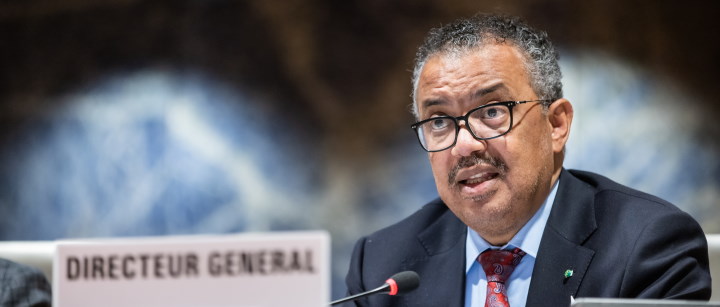
WHO Director-General Tedros Adhanom Ghebreyesus addressed these claims, stating, “WHO’s agenda is public, open and transparent. WHO stands strongly for individual rights.”
Health officials emphasize that any international agreement would be determined by governments themselves, with actions considered in context of national laws. If the agreement were formalized as a treaty, U.S. participation would require Senate approval.
As global leaders work to strengthen pandemic response frameworks, the debate highlights tension between international cooperation and national sovereignty concerns, though health experts maintain that fearmongering about WHO authority is fundamentally disconnected from the organization’s actual powers and capabilities.
Fact Checker
Verify the accuracy of this article using The Disinformation Commission analysis and real-time sources.

14 Comments
This is an important debate, but I’m not sure the WHO’s limited authority is really a threat to US sovereignty. The focus should be on how to enhance global cooperation and information-sharing to better respond to public health emergencies.
I agree. The key is finding the right balance between national decision-making and international coordination on shared health challenges.
The debate over the WHO’s authority highlights the challenges of managing public health on a global scale. While the WHO can’t force policies, there may be opportunities for more collaborative approaches to shared health challenges.
That’s a fair perspective. International cooperation is crucial, but needs to respect national decision-making processes.
This is a complex issue without easy answers. The WHO’s role in global health is important, but its authority should have clear limits, especially when it comes to national sovereignty over domestic policies.
Agreed. Any reforms to the WHO’s powers would need to carefully balance international cooperation with national autonomy.
The debate over the WHO’s authority seems to be more political than practical. While the WHO can provide guidance, it’s up to individual countries to determine their own health policies based on their unique circumstances.
That’s a fair assessment. National sovereignty is a legitimate concern, but pragmatic cooperation is also crucial for addressing global health challenges.
It’s important to maintain a balance between national sovereignty and global health coordination. The WHO can play a valuable advisory role, but shouldn’t supersede domestic health policies and laws.
I agree. The WHO’s strength is in providing expertise and facilitating information sharing, not dictating policy.
Interesting debate around the WHO’s authority over US health policy. While the WHO may not be able to dictate policies, I wonder if there are opportunities for greater international coordination on public health emergencies.
That’s a fair point. The WHO’s role seems to be more about setting norms and guidelines, not direct enforcement. Balancing national sovereignty with global cooperation is certainly a complex issue.
While the WHO’s role is advisory, not dictatorial, the debate over its authority highlights the complexities of managing public health globally. Fostering genuine international cooperation, while respecting national sovereignty, is crucial.
Well said. Balancing those priorities is an ongoing challenge, but one that’s essential for effectively addressing global health issues.