


Listen to the article
In rural England, a modern-day manhunt unfolds not with bloodhounds but with digital pings. On a crisp Wednesday morning in the West Country, private investigator Rob follows real-time signals from a security device embedded in a stolen luxury vehicle. The trail leads to a nondescript rural industrial unit where he discovers what remains of a 26-plate BMW, worth approximately £60,000 when new, taken from a London home just four days earlier.
The car has been methodically dismantled – its engine resting on a pallet, doors propped against wheels, surrounded by parts of various other vehicles. After police are called to the scene, a 31-year-old man is later charged with offenses including conspiracy to receive stolen goods.
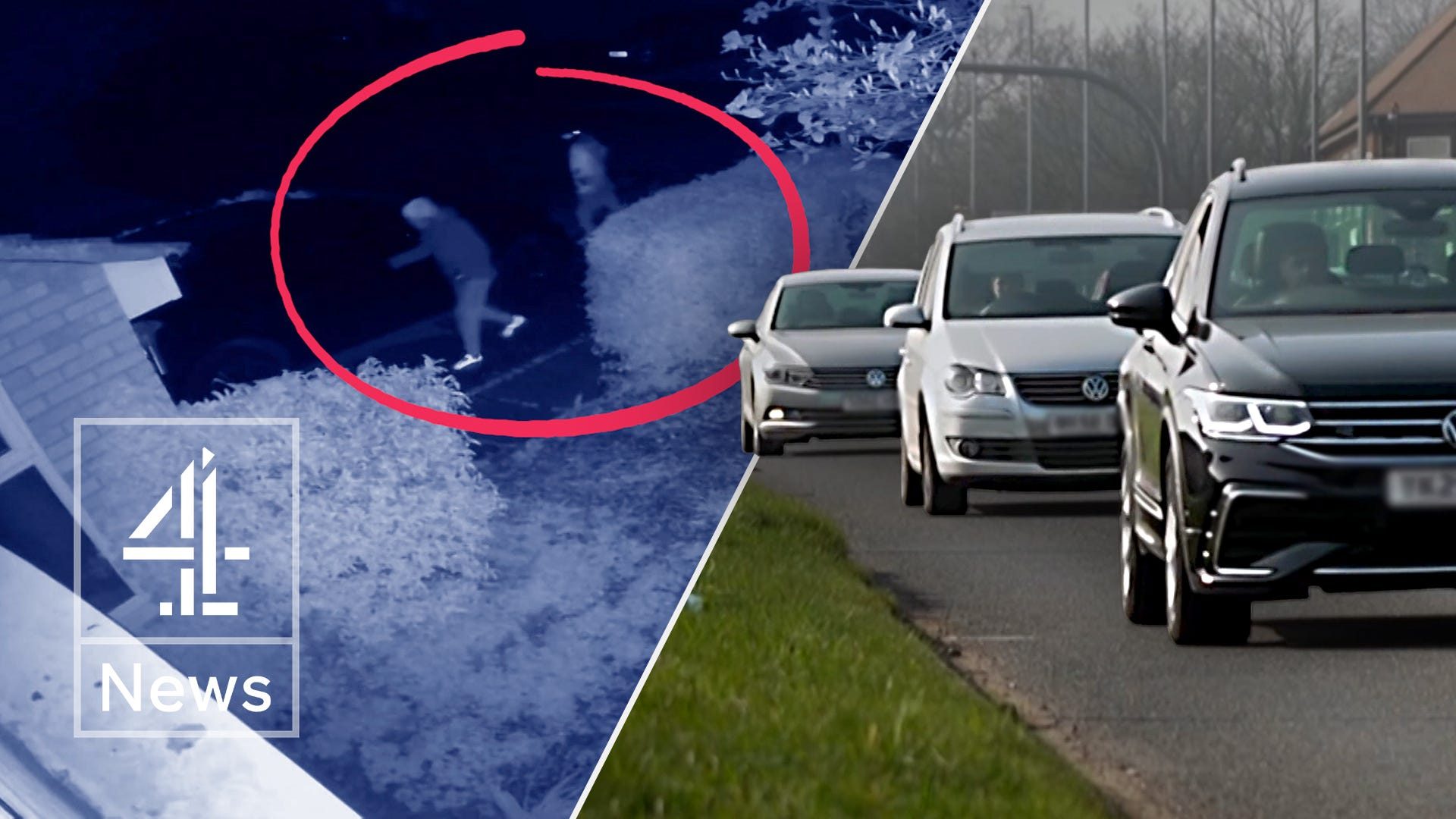
This case represents just one drop in a rising tide of vehicle theft across England and Wales, where a vehicle is reported stolen every four minutes, according to exclusive data obtained by Channel 4 News. Most concerning is that the vast majority of these crimes go unsolved.
“Car crime has moved on from being something where a car’s stolen, it’s driven around in circles for a bit of joyriding and then left,” explains Ahron Tolley, Director of W4G Track Recovery, a private company specializing in recovering stolen vehicles. “There’s a huge criminal enterprise behind it now that’s worth millions of pounds globally.”
The statistics paint a troubling picture. Police recorded 119,000 offenses of vehicle theft or aggravated vehicle-taking across England and Wales in 2025, representing a 47% increase over the past decade. More alarmingly, the rate at which these cases result in criminal charges has plummeted.
Data obtained from the Home Office reveals that in the year ending March 2016, 9% of police-recorded vehicle thefts saw a suspect charged within the same year. By March 2025, that figure had fallen dramatically to just 2.9%, suggesting that as thieves become more sophisticated, law enforcement struggles to keep pace.
The scope of stolen vehicles extends far beyond personal cars. Records from the Driver and Vehicle Licensing Agency (DVLA) show that nearly half a million vehicles were stolen across the UK in the five years leading to December 2025. The list includes 112 mobility vehicles, 70 ambulances, 16 street cleaners, nine double-decker buses, four hearses, and even one fire engine.
Private recovery companies like W4G Track Recovery have stepped into the breach, using advanced tracking technology and investigative techniques to locate stolen vehicles for their clients. Tolley emphasizes that his team aims to complement rather than replace police efforts.
“The vehicle crime stats are exploding and unfortunately the resources that the police have are finite,” Tolley notes, adding that tracing a stolen vehicle often requires “an incredible amount of work.”
The rise in vehicle theft reflects broader changes in criminal enterprises. Modern car thieves are increasingly part of sophisticated networks that can quickly dismantle vehicles for parts or ship them overseas. These organized criminal operations have transformed what was once often an opportunistic crime into a highly profitable global business.
Law enforcement acknowledges these challenges. Assistant Chief Constable Sarah Grahame, who leads on vehicle crime for the National Police Chiefs’ Council, told Channel 4 News: “Criminals are increasingly sophisticated and this presents challenges, but we are fully committed to tackling the issue from all angles.”
Grahame emphasized that police are working with partner organizations to “focus resources on the offenders causing the most harm, sharing intelligence and doing all we can to disrupt the often highly organized criminals involved.”
As vehicle technology advances, so do the methods of those determined to steal them. The declining solve rates suggest that despite commitments from police, the resources dedicated to combating vehicle theft may be insufficient to address the scale and sophistication of the problem.
For vehicle owners, the message is clear: traditional security measures may no longer be adequate. The growing market for tracking devices and private recovery services reflects a reality where victims increasingly turn to private enterprises when their vehicles disappear, hoping technology might succeed where traditional policing has fallen short.
Fact Checker
Verify the accuracy of this article using The Disinformation Commission analysis and real-time sources.

9 Comments
It’s alarming to see the scale of vehicle theft in the UK, with a car reported stolen every 4 minutes. Organized crime groups are clearly becoming more brazen and methodical in their approach. This calls for a robust response from law enforcement to crack down on these theft operations.
Vehicle theft is an age-old crime, but it sounds like the methods used by these thieves have become quite sophisticated. Dismantling cars for parts is a profitable way to cover their tracks. I hope the authorities can find ways to crack down on these organized theft operations.
Hearses and double-decker buses – who would have thought those would be targets for thieves? It just goes to show the lengths these criminal groups will go to in order to get their hands on valuable vehicles and parts. The police will really need to step up their efforts to stay ahead of this trend.
Vehicle theft is an ongoing challenge, but this report highlights how organized crime groups are becoming more sophisticated in their methods. Stripping down stolen cars for parts is a lucrative way for them to cover their tracks. I hope law enforcement can develop new strategies to combat this growing problem.
Agreed. Improved tracking, data sharing, and coordination between agencies will likely be key to disrupting these theft rings. But the criminals are always adapting, so it’s an ongoing battle.
Interesting report on the rise in vehicle thefts in the UK. It’s concerning to see organized crime groups methodically stripping down and dismantling stolen cars. I wonder what steps law enforcement is taking to combat this issue and recover more stolen vehicles.
The fact that a vehicle is stolen every 4 minutes in England and Wales is staggering. This speaks to the scale of the problem. I wonder if increased use of GPS tracking and other anti-theft technologies could help deter some of these crimes.
This is a troubling trend. Criminals are becoming more sophisticated in how they target and dismantle stolen vehicles. The police will need to stay on top of the latest tactics to disrupt these theft rings and recover more stolen cars.
I agree. Improved vehicle tracking, data sharing, and better cooperation between law enforcement agencies could help tackle this problem. It’s critical they stay ahead of the criminals.